



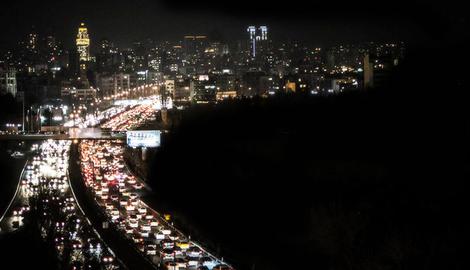
Tehran’s wealthy northern neighbourhoods face only 1 per cent of the city’s blackouts, while the poorer southern districts endure 32 per cent of them.
Despite government promises of “fair distribution” of outages during Iran’s energy crisis, residents of poorer areas face more frequent and longer blackouts.
Meanwhile, Masoud Pezeshkian’s administration denies that any discrimination exists.
Yet the reality experienced by millions of Iranians tells a different story - one where your postal code determines your comfort.
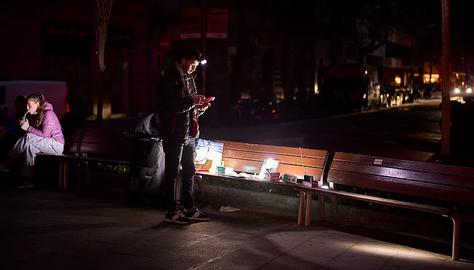
From Qods City to Islamshahr, from Shahriar to Shahr-e Rey, residents in southern and suburban areas of Tehran endure lengthy power outages that disrupt daily life and livelihoods.
Meanwhile, in the tree-lined northern districts of the capital, the energy crisis remains largely theoretical - something heard about on the news rather than experienced firsthand.
The response from authorities has done little to quell growing public frustration.
Tavanir, the power generation and distribution company, officially denies any discrimination, insisting that “power outages due to energy imbalance have been the same in all 22 districts of Tehran with no discrimination.”
This position becomes difficult to maintain when confronted with the company’s own published statistics.
Moreover, the disparity has caught the attention of parliament members like Hossein Haghverdi, who addressed the issue directly in a letter to Abbas Aliabadi, the Minister of Energy.
Haghverdi highlighted the quota notification showing that Tehran city’s blackout allocation is just 50 megawatts, specifically for small industries and factories, while other cities in Tehran province face 200 megawatts of cuts that include residential homes.
Public discourse has increasingly focused on what many see as a fundamental breach of fairness.
The consequences of this unequal power distribution extend far beyond discomfort. For residents in southern Tehran, prolonged blackouts translate into concrete economic harm.
Many southern residents depend on small businesses and services within their neighborhoods for income.
When these areas experience disproportionate power cuts, it directly impacts livelihoods.
Refrigeration fails, electronic payment systems go down, production stops, and customers stay away, creating a series of financial challenges that compound existing economic pressures in these already disadvantaged communities.
With a high share of blackouts allocated to these areas, their income generation is practically hampered and reduced significantly.
This situation, along with general inflationary problems and rising prices, could have irreparable economic, health, security, social, and family consequences.
What explains this disparity? Tavanir has offered no technical justification, but several theories circulate among experts and in media discussions.
Some point to population density factors, arguing that southern and eastern areas of Tehran have higher concentrations of residents, placing greater strain on the power grid.
Others suggest that northern areas benefit from more modern urban infrastructure and updated electrical networks that reduce consumption pressure.
Critics counter these explanations by noting that households in low-income areas typically consume significantly less electricity per capita than their wealthy northern counterparts, yet still face multiple daily outages.
The northern districts house military and political institutions, large companies, and influential individuals who can exert “much greater public and political pressure on the Ministry of Energy and the government.”
As Nasrollah Pejmanfar, head of the parliament’s Article 90 Commission, said, certain “sensitive areas” are deemed exempt from blackouts due to their “special demographic and religious conditions.”
While Tehran’s disparities have drawn attention, the situation in other cities, particularly in Iran’s southern regions, is even more dire.
Government promises of limiting outages to two hours contradict reports of four-hour blackouts in residential areas and seven-hour cuts in agricultural zones.
In southern coastal cities where temperatures regularly exceed 45°C (113°F), the combination of extreme heat and power outages creates potentially life-threatening conditions.
Politicians from several provinces have demanded exemptions for southern regions from the electricity rationing program, but in some areas, outages have only increased.
“Even during the war, we did not witness such frequent power outages,” said Mojtaba Yousefi, a member of parliament, referring to the Iran-Iraq war of the 1980s. “Unfortunately, due to the management crisis, especially in the Ministry of Energy, we are witnessing frequent power outages.”
Ahmad Jabbari, representing Hormozgan province, added that “cutting off people’s electricity in the 50-degree heat of the south has no logical or rational justification.”
What began as an energy shortage has evolved into something more fundamental: a crisis in governance and equality.
Article 68 of Iran’s Civil Rights statutes expressly states that “Citizens are equal in the right to access economic opportunities and public and government facilities and services.”
Yet the current blackout distribution clearly contradicts this principle.

Interested in writing for IranWire?
Share your stories.



comments