



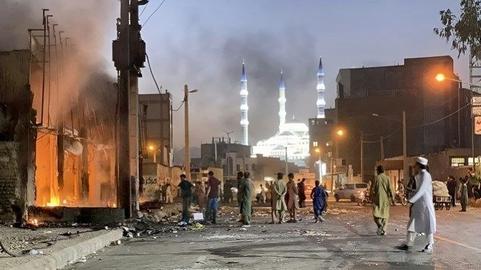
Monday marks the second anniversary of the attack by the Islamic Republic's forces on Baluch worshippers, known as the Bloody Friday of Zahedan.
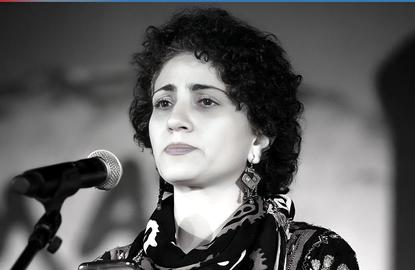
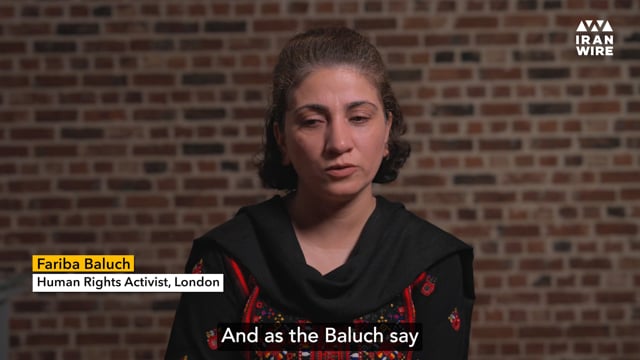
IranWire spoke with Fariba Baluch, a former teacher in Baluchistan and a human rights activist. Here is what she said:
On September 30, 2022, the armed forces of the Islamic Republic opened fire on Baluch citizens who had gone to the Makki Mosque for Friday prayers. In the widespread shooting, more than 100 people were killed, including 16 children. At least 300 people are still living with wounds, some of which have never healed.
Before the Bloody Friday of Zahedan, protests had already erupted across Sistan and Baluchistan, fueled not only by the death of Mahsa Amini but also by reports that a 15-year-old girl from Chabahar was raped by a police colonel. The outrage over these events had been building, setting the stage for the violence on Bloody Friday.
A few days earlier, after Amini's death, there were disturbances in Zahedan. In Chabahar and on social media, young girls and boys, in solidarity with nationwide protests, voiced their opposition. But a few days after Amini's death, news broke that a Baluch girl from Chabahar had been raped by a police commander.
Initially, the claim sparked debate on social media, but two days later, Molavi Abdul Ghaffar Naqshbandi, the Friday prayer leader of Khash, confirmed the news after speaking with the girl's family. He demanded justice and publicly called on the authorities to address the issue.
Years of suffering, discrimination, and pain had accumulated, and the protests over Amini's death intensified the public's fury. On September 27, 2022, people in Chabahar took to the streets.
The protests started there.
On September 27 and 28, young men and women across various cities protested, demanding the perpetrator's prosecution. During this time, at least 12 girls were arrested, though many chose to remain unidentified.
Two days later was Friday. The people were enraged, both because of the arrests and because of the rape of the Baluch girl and Amini's death. Instead of calming the people or punishing the wrongdoer, the government only made more arrests.
But the issue was not just about these events. I believe that the discrimination and suffering that the Baluch people experience daily, combined with the coincidence of the rape and the government-sanctioned murder of Jina [Mahsa Amini] and the nationwide protests, led to the gathering of people. I remember that before Bloody Friday in Zahedan, young people would come out at night and chant, ‘Kurdistan, Kurdistan, we support you.’
Were the protests in Baluchistan similar to the nationwide protests?
The protests in Kurdistan and across Iran influenced Baluchistan. Another point is that Jina’s revolution was the revolution of marginalized people. It was the revolution of those exiled in their own country. We all experienced that feeling, the same feeling Jina's brother expressed when he said, "We are strangers here, let us leave." This feeling is very prevalent among the Baluch people. For years, the Baluch have been treated like second-class citizens.
Do you think the protests in Baluchistan would have happened even without the nationwide protests?
Perhaps they would have occurred, but not to the same extent or duration. All the cities of Baluchistan - Zahedan, Iranshahr, Chabahar, and Dashtyari - reacted. More importantly, Baluch women and girls played a significant role, especially on social media. In past events, it was usually the men who took to the streets, but this time, it was different. On September 27, the girls came out. The unity of Baluch men and women, especially the angry young generation, was crucial.
Two years have passed since Bloody Friday in Zahedan. The shock of those early days has faded, and many truths have emerged. What happened on Bloody Friday?
Friday prayers hold great significance in Baluchistan, drawing even those who don't usually attend. It's a time of solidarity, where people gather, often bringing their children. One child killed on Bloody Friday was a balloon seller. In Zahedan, the larger Makki Mosque allows more people to attend, and Molavi Abdulhamid, a respected figure, played a crucial role in supporting the people during the protests.
You mentioned Molavi Abdulhamid. The government has repeatedly claimed that people were incited by him to come out and get killed, but his stance has usually been more moderate.
Yes, Molavi Abdulhamid has always encouraged peace and calm. He has said that people are angry and that the government needs to address this issue.
On Friday, September 30, when the Friday prayers ended, and many were still having their prayers, some of the younger people had come out early, still enraged over the Baluch girl’s case, and began chanting slogans - just slogans. According to eyewitnesses, it seems the government was already prepared, knowing that the people were upset and ready to make that Friday a bloody one.
The people had no idea. They thought it would be like in other cities, where they would go out, shout a few slogans, and maybe throw a stone or two. They had no clue about the sinister plan that had been laid out for them or the immense tragedy that was about to unfold. As soon as they began chanting, shots were fired at the crowd from the direction of Police Station 16.
At first, the people were confused, which is clear in the videos. They didn’t know which direction to run because the shooters were dressed in traditional Baluch clothing. Some even thought maybe the Baluch themselves were responsible. Later, they began throwing stones at the shooters. Photos and videos show the shooters firing from atop the police station’s walls, wearing traditional clothing. In the videos, it is clear that when the gunshots started, more than half of the crowd was still praying.
Several of those killed on Bloody Friday died inside the prayer grounds. Were people shot inside the prayer hall too?
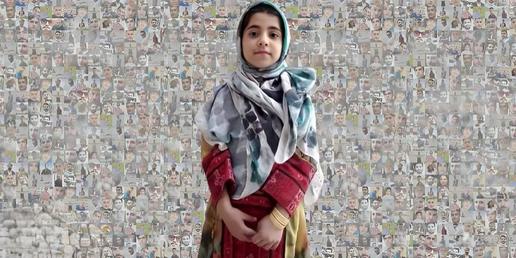
Police Station 16 is close to the Makki Mosque. The gunfire was such that bullets entered the prayer hall. Some of the people who were martyred were hit by bullets as they were putting on their shoes. Hasti Naroui, a six-year-old child, was killed by tear gas, and three women were suffocated by tear gas inhalation.
Many of those who were martyred that day were helping the wounded into the mosque when they were shot. Even cars transporting the injured to the hospital were targeted, with one driver being shot. The wounded were so numerous that some were placed in the trunk, but roads were blocked, and the driver was also injured.
You mentioned the killing of worshipers. Human rights sources repeatedly noted that some of the dead were passersby or people who lived nearby and were shot.
There’s a saying in Baluchistan that people often say: "For the Islamic Republic, a Baluch life is cheaper than water." During those days, this saying was frequently heard: in Baluchistan, there was no water, no bread, no jobs, but plenty of bullets. A country that claims to be Islamic shot at its own Muslim citizens during Friday prayers. The scenes that emerged from Zahedan that day were like those from Palestine. It was as if Zahedan was Palestine. The people had nothing but stones, while they were being shot at with military weapons, and helicopters fired on the people from above.
A middle-aged woman was shot while holding her grandchild in her yard. The shot was fired from a helicopter. These helicopters circled the city. That woman suddenly felt something hot hit her back. She was bedridden for a month or two before she passed away. Jalil Rakhshani was shot by a sniper on the roof of his house, targeted in the heart.
There are many other people we could talk about for hours. It is incredibly painful. The difference between those killed in Zahedan and those in other parts of Iran was the horrific poverty that these families faced. You wonder what the Islamic Republic gave to our people, what it did all these years that allowed them to so easily kill them. None of the wealth and resources of this country belonged to these people. Many of Zahedan's wounded were never identified because they didn’t have birth certificates. Their situation was so dire that they didn’t even have 3x4 photos. They didn’t have smartphones.
Think about it, they didn’t even have photos. For the anniversary, we were printing pictures, and we prepared photos for about 40 people. That means they didn’t even have pictures, their situation was that bad. They didn’t have birth certificates and were not considered citizens at all. People who were born in that country, whose ancestors lived there, whose grandfather’s name is even on surrounding villages, but they didn’t have a birth certificate.
Tell us about the situation of the families of those killed and wounded. Many of them were the breadwinners of their families. They lived in poverty or didn’t have identification. How has the loss of their loved ones or their injury and inability to work affected their situation?
Most of these martyrs, maybe 90 per cent of them, were from the lower class of society. Many were child laborers, undocumented children, or the heads of several families. The lives of their entire families were turned upside down. When one person is killed or executed, it’s not just the life of that person that is taken away, but the lives of several families are destroyed. After the Bloody Friday in Zahedan, the lives of hundreds of families were ruined.
More has been said about those killed. We know the pain of the families, and we know their situation has become even more critical than before their loved ones were martyred. However, the situation of the wounded is something that, unfortunately, hasn’t been discussed enough over these two years.
Many of the wounded from Bloody Friday in Zahedan are undocumented. They don’t have the money for even basic medical treatment. They can’t afford to see a doctor to treat their injuries. Only 25 people have been identified as blinded by government bullets. Three hundred people - these are not just numbers, they are human beings. Many have lost limbs. We know of wounded people who have four children and are paralyzed from the waist down. They are young. We have a 20-year-old who had one leg amputated and the other is also injured. This requires money for care.
Before Bloody Friday in Zahedan, you didn’t engage in public activism. What changed, even though your children are in Iran, despite your son’s arrest and the pressure you faced? How did you become the voice of the Baluch people?
Before Bloody Friday in Zahedan, I was in London. We were out on the streets protesting, and it was hard because my children were in Iran. At that time, I didn’t feel like just a Baluch person living in London. All that pain and suffering came alive in me when Jina’s brother said, “We are strangers here.” That’s when I decided, out of a sense of motherhood and humanity, to take to the streets.
On Bloody Friday in Zahedan, I was at work. When I saw the photos, I broke down. I was like those people who keep asking, “What can I do right now?” Nothing else mattered to me anymore. At Piccadilly Square, feminist groups had gathered. One of my friends, Samaneh Savadi, was reading the names of the martyrs of Zahedan, and I was crying. I went forward and said I wanted to speak. That was my first public speech in London. I started by saying, “I am Iranian. What is my share of my country?”
That’s when I realized this was my path. I understood there was wisdom in this, that I had a mission, and after all these years, I had ended up in this position and place for a reason. Part of me was thinking of my children, but I kept telling myself, “You are responsible to your people. You are a Baluch who has been fortunate enough to live in a free country now.” I had been a teacher for 16 years and had seen the pain and suffering of my girls. I had witnessed firsthand how, because of poverty, they couldn’t continue their education despite their talent. In Baluchistan, there isn’t a single family where this government hasn’t left a scar. That pain was in me and in all my compatriots.
I was a Baluch person who, like them, had endured years of discrimination. My situation may have been relatively better, but I was one of them. I felt it was my duty, especially toward the children. I kept feeling that these were my children, and I kept asking myself, if they were my children, what would I do? From that day on, I told myself I would bear whatever came my way. I knew there was a chance my children wouldn’t be able to come here, but I chose this path.
After the Berlin protests in October and my speech there, the pressure on my family increased. They sent a message saying, “Tell Fariba that her children are here.” My mother and sisters were very scared. I hadn’t seen my children for three and a half years. It was very hard for a mother. I kept telling myself, “I am a mother.” They said, “You are a mother; you should stay quiet,” but I said, “Precisely because I am a mother, I cannot stay quiet,” and of course, I was very scared and stressed for my children.
In these two years, many obstacles have been placed in the way of justice for the people of Baluchistan.
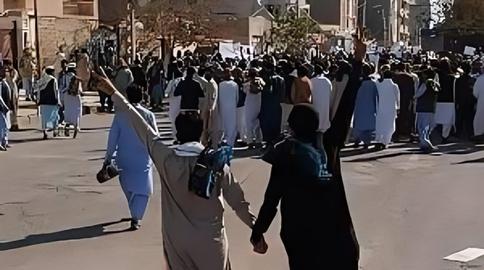
After Bloody Friday in Zahedan, for about a year and a half, people held peaceful protests every week after Friday prayers. Every week, Molavi Abdulhamid called for justice. The people’s slogans demanded that those responsible for, and those who ordered, the shooting be prosecuted.
At first, the government resisted, then later said it was a mistake made by a few police officers. The people said, “Well, those individuals should be prosecuted.” But apparently, over the past two years, only a few have been tried in court and given five- or six-year prison sentences, which, according to what we’ve heard, haven’t even been carried out. Eyewitnesses who identified some of the officers were not allowed to testify in court. I’ve heard this from informed sources. You could say it was a show trial, without anyone truly being held accountable.
Even in the case of Koochakzahi, who raped Maho Baluch, at first, they denied it, and after it was confirmed, they said he was prosecuted. But later, we heard that he had been transferred from Chabahar to another city.
On Bloody Friday in Zahedan, the Provincial Security Council had to make a decision, but not a single Baluch person was part of the council. It’s clear that such a council would make decisions against the people under those conditions. The killing of more than 100 innocent people, including 16 children and 300 wounded, whose lives have been paralyzed for two years, cannot be called a human error.
Why do you think the government so openly and broadly killed people in the Bloody Fridays of Zahedan and Khash?
This wasn’t the first time the government had done this. In 2020, they also opened fire on and killed a group of fuel carriers in Saravan. This time, too, they saw the Baluch people as outsiders. They believed that, as in the past, when they killed, tortured, and deprived the Baluch people of everything, no one would speak out. In reality, killing the Baluch people has never had any political cost for the government, and the world has never reacted. The regime has always tried to divert public opinion by labeling them as separatists, terrorists, and smugglers.
I think the simultaneous timing of the protests in Baluchistan with those in other parts of Iran, along with the low value placed on Baluch lives, led the government to believe that if they carried out a massacre, it would serve as a warning to people in other cities: If you continue your protests, this could happen to you too. But they saw that people weren’t scared and condemned them.
The protests increased. Despite many arrests every week, for a year and a half, people protested every Friday. For the first time, the world saw the Baluch people, and the massacre they endured was met with a reaction.
Interested in writing for IranWire?
Share your stories.


comments