



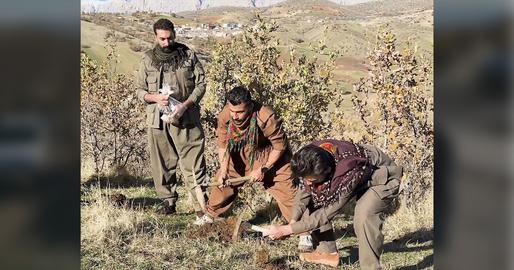
Standing atop a mountain in Marivan, Aalan feels the cool breeze against his cheeks as he gazes at the oak-covered hills stretching before him.
The view fills him with both fear and urgency.
These ancient Zagros forests are under threat, and protecting them has become his mission - and the mission of hundreds of others through the Zagrosana Campaign.
This autumn marks the sixth year of the campaign, a grassroots environmental movement founded by the Green Chia Association.
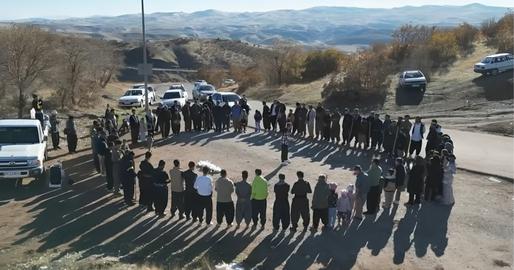
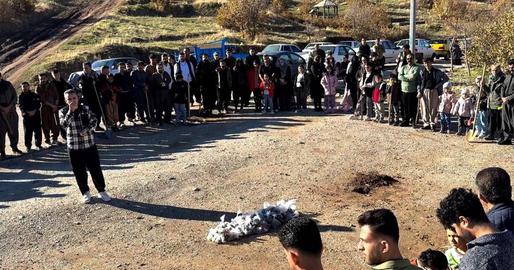
As autumn draws to a close, the campaign has once again mobilized hundreds of forest enthusiasts from cities and villages across the western region of Iran.
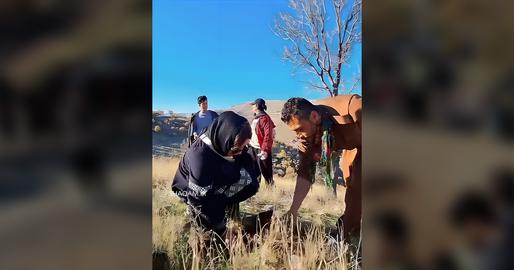
Their goal is clear: to combat the destruction of the Zagros forests by planting carefully selected seeds and saplings suited to the local environment.
On November 22, the Green Chia Association - pioneers in environmental protection and campaign founders - chose a particularly poignant location for this year's ceremonial planting.
The village of Hasan Avleh stands as a stark reminder of the crisis at hand.
Once home to lush forests, the area has suffered extensive destruction, making it a symbol of the challenges facing the Zagros woodlands.
The annual campaign has become a beacon of hope and collective action.
From cities and villages, concerned citizens gather in the mountains and foothills during the final days of autumn.
United in purpose, these volunteers transform into guardians of an ancient landscape, each planted seed and sapling a small but vital step toward preserving these irreplaceable forests for future generations.
An influential environmental activist from Kurdistan believes the Zagrosana Campaign fosters solidarity among environmental activists and concerned citizens.
They find comfort in knowing that the seeds and saplings planted today will bear fruit for future generations.
Aalan, a resident of a village near Marivan in Kurdistan Province, has 17 years of experience in combating forest fires and protecting the environment.
“In the past four or five years, environmental activities have gained more public traction,” he says.
Alan recalls, “A few years ago, the forests near one of Marivan’s villages were ablaze. We were on our way to rest when a local resident leaned out his window and hurled every curse he knew at us. Last year, the forests near the same village caught fire again."
"I was waiting along the Marivan road for a ride to the village when a young man stopped his car. He told me the mountains near his village were burning, and he was headed there to help extinguish the fire."
"When I got in, he introduced himself, and I realized he was the son of the same man who had cursed us.”
When Aalan arrived at the fire site, he was surprised to see the same man handing out drinking water to the environmental activists from a flask.
“Even his brother was there,” Aalan recalls, “so three members of that same family were working together to extinguish the fire.”
In the first year of the campaign, around 15 environmental organizations participated. This year, the number has grown significantly, with at least 100 environmental and mountaineering groups from across the Zagros region and even from other provinces joining the campaign.
Erfan Hosseini, a board member of the Green Chia Association, says, “We hope the Zagrosana Campaign can stop the destruction of forests. However, it’s important to note that Zagrosana is not just a forest restoration project - it also has other goals.”
He adds, “One goal is to promote unity among environmental organizations, and another is to send a clear message to those invading the forests that we will not allow their exploitation.”
Amanj Ghorbani, an environmental activist from Kamyaran in Kurdistan Province, says, “The campaign’s goal is to instill a sense of responsibility in society towards natural resources and mobilize public opposition to the consequences of deforestation. The ecological damage will not only impact wildlife but also humans.”
Over the past few decades, Iran's forests have been in decline.
According to the Natural Resources and Watershed Management Organization, the Zagros forests cover around six million hectares, representing 45 percent of Iran’s forests.
However, between 2001 and 2016, around 1.35 million hectares of these forests experienced significant degradation.
Several factors contribute to the forests' plight, including wildfires, climate change, droughts, unsustainable development, conversion of forest lands into agriculture, construction of houses and villas, and deforestation for paper production.
According to Erfan Hosseini, there were 250 recorded wildfires in the forests of Marivan alone this year, resulting in the loss of around 2,500 hectares of forest.
“While the number of wildfires has increased, the area burned has decreased compared to previous years, thanks to greater public awareness and efforts to extinguish the fires,” he says.
Amanj Ghorbani suggests creating an academic center dedicated to natural resource studies, where university graduates can conduct research and develop effective solutions for forest restoration and protection.
He also advocates for establishing a legal body to address threats to forests, potentially implicating government entities.
Human activity plays a critical role in forest destruction. Environmental activists have repeatedly witnessed forests being destroyed for gardens, agricultural lands, or residential buildings.
Some activists in Kurdistan have accused certain employees within the Department of Natural Resources of failing to confront those responsible for the destruction and, in some cases, even working with them.
One environmental activist from Marivan, who wished to remain anonymous, shared a troubling story: “In 2022, they set fire to Qaleh Mountain in Marivan at least 17 times. Despite the presence of dozens of surveillance cameras in the area, not a single person was arrested or summoned.”
Amanj Ghorbani believes that although Iran is a member of the UN Environment Program, environmental issues are not effectively prioritized.
“Officials have said that environmental concerns should not hinder economic development, and ministries allocate minimal budgets to environmental issues,” he says.
Given the current state of affairs, Aalan remains pessimistic about saving the forests or achieving full restoration.
“Environmentalists’ efforts only slow down the destruction,” he says.
"Those who destroy forests have never truly experienced the sweetness of life. If they thought like us and found joy in forests as we do," he adds, "they wouldn’t even break a single branch.”

Interested in writing for IranWire?
Share your stories.




comments