



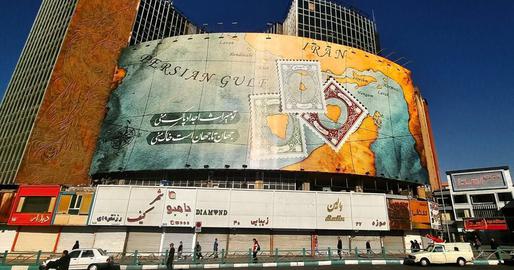
A menacing Yemeni dagger - Jambiya - plunges into Israel’s map as bold Persian and Hebrew text declares: “All targets are accessible, currently with Yemeni missiles.”
The latest mural at Tehran’s Palestine Square was unveiled within hours of Houthi missiles striking Tel Aviv’s Ben Gurion Airport.

It is the newest salvo in Iran’s decades-long campaign of visual propaganda.
Since the 1979 Islamic Revolution, Iran’s city walls have been transformed into ideological canvases.
The earliest examples appeared on the walls of the U.S. Embassy, featuring slogans like “Death to America” and graphic images of the American flag adorned with skulls instead of stars.
Over the decades, several government organizations and municipal departments have continued this practice, many with ties to the Revolutionary Guards or Basij forces.
While some permanent murals exist, most are quickly designed and installed in response to current events or policy priorities.
They appear in central locations across major Iranian cities, particularly in Tehran’s Palestine Square and Valiasr areas.
The majority focus on anti-American and anti-Israeli sentiment, often glorifying violence and normalizing warfare through imagery featuring weapons, skulls, and those killed during different wars.
Critics say these violent public displays create an uncomfortable environment, especially for children.
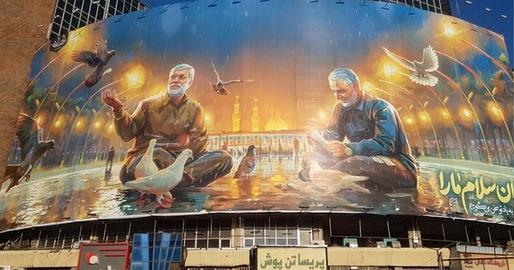
The former Quds Force commander, killed in a 2020 U.S. drone strike, has been featured prominently in several murals celebrating his role in establishing the “Axis of Resistance.”
The installations continue to emphasize Iran’s regional military involvement, even as official rhetoric has shifted toward denying support for proxy groups, particularly after the fall of the Assad regime in Syria.
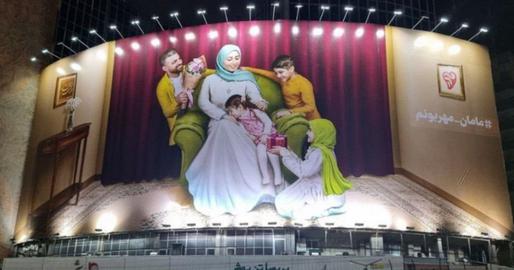
The propaganda apparatus also produces numerous murals focused on enforcing the Islamic Republic’s ideal vision of women, predominantly portraying them in mandatory hijab while fulfilling motherhood and housekeeping roles..
These installations typically appear during specific religious observances marked as “Mother’s Day” or “Daughter’s Day” in the Islamic Republic’s calendar.
In these depictions, women lack independent identity, with their value defined exclusively through family roles and religious compliance.

Interested in writing for IranWire?
Share your stories.


comments