



For over 20 years, Iran’s uranium enrichment program has held back the country’s development, increased poverty, and darkened the future for its people, without bringing any real benefit.
The Islamic Republic calls uranium enrichment a “legitimate right” and considers it necessary for “development” and use as fuel for nuclear power plants.
However, the reality is that Iran has no nuclear power plant to use this fuel, and as long as sanctions remain in place, no country will build a nuclear power plant for Iran.
Even Russia, despite repeated promises, has not yet begun construction of the second Bushehr power plant.
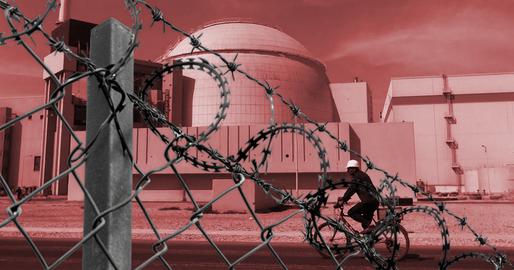
The thousand-megawatt Bushehr plant is Iran’s only nuclear power plant, which, when active, supplies less than one-eightieth of Iran’s electricity consumption.
Russia has not allowed the Islamic Republic to use its own nuclear fuel in this plant and has forced Iran to commit to purchasing Russian-produced fuel for it.
Russia has the power to impose such demands on Iran because it built the Bushehr power plant and must approve its fuel before it enters the reactor.
However, Russia has not approved the quality of Iran’s nuclear fuel. Ali Akbar Salehi, who headed the Atomic Energy Organization during the presidencies of Mahmoud Ahmadinejad and Hassan Rouhani, has said that Russia has not even allowed Iran to introduce its nuclear fuel into the Bushehr plant for testing purposes.
Therefore, Iran’s enriched uranium will not be usable in the country’s only nuclear power plant.
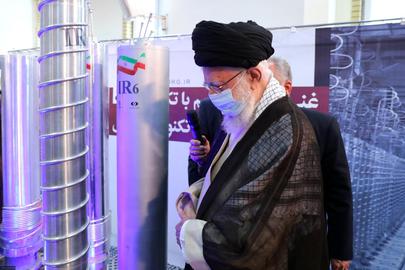
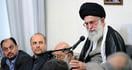
Ali Khamenei, the Supreme Leader of the Islamic Republic, has previously said Iran produces enriched uranium so that if other countries refuse to sell enriched uranium to Iran, Iran can use its fuel in power plants it will have in the future.
The reality that the Islamic Republic does not acknowledge is that as long as Iran’s nuclear program remains under U.S. sanctions, no country will build a nuclear power plant for Iran.
Since nuclear power plant construction technology also requires technical knowledge transfer and equipment purchases from producing countries, sanctions again prevent Iran from building nuclear power plants itself.
Currently, the Islamic Republic has enriched uranium at three levels: 3.67 percent, 20 per cent, and 60 per cent.
The 3.67 per cent level relates to power plant fuel that Russia forcibly sells to Iran, making its production practically useless.
According to the International Atomic Energy Agency, 60 per cent enriched fuel has no specific peaceful application.
The 90 per cent purity of enriched uranium, which has little technical difference from 60 per cent, is used for producing nuclear weapons.
The Islamic Republic doubled its 60 per cent enrichment at a time when it had agreed to negotiate with Donald Trump’s administration. Its production has continuously fueled existing suspicions.
Twenty per cent fuel has specific applications in Tehran’s research reactor, including for producing radiopharmaceuticals.
Continuous production beyond this reactor’s needs has become another reason for suspicion about the Islamic Republic’s nuclear program.
Therefore, as long as the Islamic Republic intends to enrich uranium in the current inflamed and suspicious atmosphere, it will remain under sanctions or under severe suspicion from international powers regarding its nuclear program and will practically be unable to build nuclear power plants.
And as long as it lacks nuclear power plants, uranium enrichment with the announced goal of producing nuclear fuel is meaningless.
UN sanctions and European and American sanctions were lifted in January 2016 with the JCPOA agreement, but this opportunity was very brief because the United States withdrew from the agreement in May 2018 and imposed sanctions whose economic impact was practically similar to the pre-JCPOA situation.
Now the U.S., in Trump’s second presidential term, says the Islamic Republic must end uranium enrichment.
After the end of the 10-year period that UN Security Council Resolution 2231 had determined, October 2025 is the final deadline when UN Security Council member governments can use the “snapback mechanism” or automatic return of previous Security Council resolutions.
Given that the Islamic Republic’s disputes with permanent Security Council members - except China and Russia - over Tehran’s nuclear program are at their most unprecedented level, the likelihood of using the snapback mechanism and re-imposing Security Council sanctions against the nuclear program is very high.
Those resolutions prohibit uranium enrichment and would return the ballistic missile program, which had been removed from Security Council matters, back to the council’s agenda.
Thus, uranium enrichment - which is currently permitted for Iran under Resolution 2231 - would again be prohibited by Security Council order.
Should this situation occur, since Iran insists on continuing enrichment as a matter of prestige, the level of disputes after the 12-day war over enrichment will be reignited.

Interested in writing for IranWire?
Share your stories.



comments