



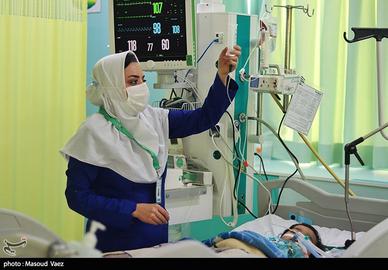
The war lasted just 12 days, but it took only hours to expose a crisis that had been decades in the making.
As Israeli and Iranian forces exchanged fire across 26 provinces, something unexpected happened in Tehran's hospitals.
Despite treating more than 4,000 war casualties, the capital's medical centers never reached capacity.
The reason wasn't military efficiency or superior planning - it was a mass exodus. Millions of residents had fled the city, inadvertently creating space in hospitals needed for the wounded.
The real emergency unfolded in Iran's smaller cities, the supposed safe havens where refugees sought shelter.
These communities, already struggling with doctor shortages and outdated equipment, suddenly faced populations that doubled or even tripled overnight.
Patients needing dialysis, cancer treatment, or emergency surgery found themselves in towns that couldn't adequately serve their own residents, let alone handle a wartime influx.
"We had no experience managing this kind of situation," said Hossein Karmanpour, head of the Ministry of Health's Information Center, describing the chaos as millions of war refugees fled to smaller cities ill-equipped to care for the sudden influx of dialysis patients, people living with cancer, and pregnant women.
The 12-day war ended, but the underlying crisis it exposed continues.
Iran's healthcare system suffers from geographic inequality so severe that 42 percent of the country's medical specialists are concentrated in just five major cities - Tehran, Mashhad, Isfahan, Shiraz, and Karaj - while vast swaths of the country lack even basic specialist care.
Behnam Saeedi, a member of parliament and former deputy of the Red Crescent, points to Jiroft Hospital as emblematic of the problem.
The facility serves as the only major medical center in its region, yet it operates at such a capacity that patients are forced to sleep in the hallways.
Specialist doctors arrive through government programs aimed at underserved areas but rarely stay beyond their mandatory one- or two-year commitments.
"Many cities don't even have a single hospital," Saeedi said, describing how patients risk their lives traveling rocky mountain roads to reach provincial centers for treatment that should be available locally.
This geographic disparity reflects deeper systemic problems.
More than 30 percent of Iran's newly graduated doctors and nurses never work in the country at all, choosing instead to emigrate immediately to Persian Gulf states or Western nations.
Those who remain often cluster in major cities, leaving rural areas medically abandoned.
Nooreddin Pirmoazzen, a former head of the surgery department at Tehran's Modares Hospital, said that the Ministry of Health had once successfully incentivized specialists to work in impoverished areas by offering benefits and facilities.
But as international emigration increased, even doctors in remote regions began planning moves to Tehran or abroad.
"When medical students are unwilling to enroll in specialized courses and the capacities of most specialties remain unfilled, it means they prefer to migrate," Pirmoazzen said, adding that specialty training once required intense competition.
The nursing shortage has reached critical levels. Ali Jafarian, the former president of Tehran University of Medical Sciences, said that the institution took an unprecedented step by guaranteeing immediate employment to any nurse who applied.
The response was minimal.
"Currently, in one of the major hospitals opened in Tehran, there's a department with residents and interns but no nurses, so it remains closed," Jafarian said.
Operating rooms sit idle despite having medical staff simply because nursing positions remain unfilled.
During the 12-day war, these structural weaknesses created a paradox. Tehran, despite suffering the heaviest casualties, managed better than expected because millions fled the capital, freeing up hospital beds for the wounded.
The real crisis struck smaller cities, suddenly overwhelmed by people seeking safety.
Rahim Seyedpour, who directs healthcare in the northern Nowshahr district, had warned before the fighting that his region's lone government hospital couldn't even handle the regular tourist season.
Emergency medicine specialists were scarce, forcing general practitioners to take on roles for which they weren't trained.
Patients in need of neurology, ophthalmology, or ENT care had no choice but to travel elsewhere.
"In such conditions, a sudden influx of population to a province equals a sudden increase in patients," Karmanpour explained.
Provincial medical supplies and hospital beds are allocated based on resident populations, with only modest buffers for unexpected demand.
The funding crisis compounds these challenges. Karmanpour said Iran's healthcare spending has dropped from 9 percent of gross national product 16 years ago to less than 4 percent today.
The current budget barely covers salaries and maintenance, leaving nothing for modernization or expansion.
"When this share is reduced to less than half by uninformed and unplanned decisions, we shouldn't expect the health system to pull itself together during times of danger and crisis," he said.
International comparisons underscore Iran's struggles.
According to IranWire's analysis, the country ranks below Jordan, Qatar, Saudi Arabia, the UAE, Kuwait, Lebanon, Sudan, Bahrain, Palestine, Oman, Libya, and Syria in terms of accessibility to doctors and nurses.
The United Nations estimates Iran has 1.9 hospital beds per 1,000 residents, but officials argue this figure is misleading, as many beds remain "inactive" due to staffing shortages.
Mohammad Raeiszadeh, head of the Medical System Organization, said, "We have a shortage of specialists, but more importantly, the issue is the inappropriate distribution of doctors. 45 percent of doctors live in five major cities."
The war's short duration may have spared Iran's healthcare system from complete collapse, but it also offered a grim preview of what a prolonged conflict could bring.
As Karmanpour warned, "If this war had lasted longer, we would have faced other events."
For now, newly built hospitals across Iran sit partially empty, their beds unused, not because of damage from war, but because of a peacetime crisis that has left entire regions without the doctors and nurses needed to heal the sick.

Interested in writing for IranWire?
Share your stories.


comments