



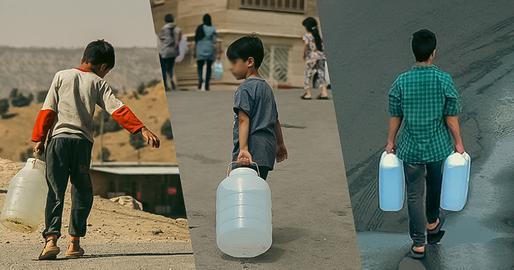
The people of Isfahan saw it coming first.
In 2007, they watched the Zayandeh Rud river lose its permanent flow and dry up completely.
They, along with residents of Sistan and Baluchistan province - who witnessed the drying of the Hamoun wetlands - were the first to face what experts call “Day Zero”: the day when water stops flowing through municipal pipes.
Now, Day Zero looms over Iran’s capital.
The Energy Minister of Masoud Pezeshkian’s government has warned that unless Tehran residents drastically reduce consumption, the city will lose the Mamloo Dam in September, followed by the Lar and Karaj dams.
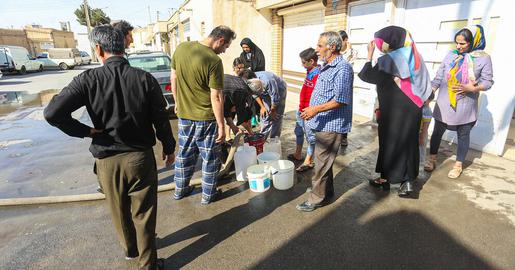
The capital’s 10 million residents already experience days without water, though the Energy Ministry insists service hasn’t stopped - just that water pressure has decreased.
The concept of Day Zero entered water management vocabulary when Cape Town, South Africa, faced the near-depletion of its water supply dams in 2018.
The question now facing Iran: if Day Zero arrives, which segments of society will suffer most?
Three years ago, an Iranian water industry spokesman declared after Hamedan’s water crisis, “Tehran’s path is separate from Cape Town’s.” That confidence has evaporated.
Mansour Sohrabi, an agroecologist and environmental researcher, attributes Iran’s water crisis to years of mismanagement.
“In the absence of proper education and programs for optimal consumption, the Islamic Republic’s policy has focused on supplying water at any cost,” Sohrabi told IranWire.
Nikahang Kowsar, a water resources analyst with experience studying California’s drought and Cape Town’s Day Zero crisis, points to deeper societal issues.
He said, “Although Iranians had managed to survive for thousands of years through groundwater management, modern development - accompanied by social structural changes, marked by growing public distrust toward rulers and various sectors of society - has brought the situation to a point where even if responsible officials give people the most realistic reasons and best suggestions for water conservation, most people have no interest in cooperation.”
The burden falls disproportionately on women, according to Zahra Bagheri-Shad, a gender studies doctoral student who has interviewed Iranian women in water-crisis areas, including Tehran, Ahvaz, Turkmen Sahra, and cities in Kurdistan and Sistan-Baluchistan provinces.
“In practice, it is women who must manage the water crisis at home,” Bagheri-Shad said. “The first effect on them is the added responsibility of collecting and storing water in large barrels, while they’re already primarily responsible for household management - from buying groceries to cooking and caring for children.”
The health impacts on women receive little attention in crisis planning.
Women face particular challenges during menstruation when water is cut off, struggling with hygiene needs and workplace bathroom closures that prevent changing sanitary pads.
In Sistan and Baluchistan province, women develop skin diseases due to a lack of water for basic hygiene.
Working women must wake earlier to cook and store water before leaving for work, when cuts might happen during their absence.
“Women generally don’t participate in decision-making and policymaking, even though their lived experience could help ensure their demands are considered in addressing the water crisis,” Bagheri-Shad said.
Iran’s path to crisis contrasts sharply with international examples of successful drought management.
In California, when the drought began in late 2011, Governor Jerry Brown didn’t wait. He declared a state of emergency in January 2014 and formed a special drought task force in December 2013.
One key initiative replaced 50 million square feet of decorative lawns with drought-resistant landscaping.
“What changed more than anything was the public understanding of water’s value,” Kowsar explained. “Even after immediate concerns subsided, people continued to approach water consumption cautiously.”
Cape Town’s success story involved intensive public awareness campaigns, continuous information sharing about water reserves, extensive education programs, and infrastructure projects like flood collection ponds to recharge aquifers.
“Despite widespread distrust of Jacob Zuma’s government and central authorities, people listened to warnings from Western Cape provincial officials, local parliament representatives, credible figures, and civil society leaders,” Kowsar said.
Sohrabi said Iran’s water crisis varies significantly by region.
“While all areas face problems with their specific climatic conditions, in some regions like Isfahan, Yazd, and Kerman, excessive industrial and agricultural water consumption caused the situation.
“In places like Tehran, excessive drinking water consumption due to population concentration and neglect of consumption optimization caused it,” he said.
Without prioritising consumption management, Sohrabi warns of land subsidence, wetlands turning into dust storm centres, and potential territorial collapse.
Kowsar sees broader implications in Iranians’ indifference to fellow citizens in border and drought-affected provinces who have struggled with water shortages for years.
“From an outside observer’s perspective, this could be a sign of weakened national solidarity,” he said. “Perhaps before worrying about territorial collapse from the water crisis, we should worry about social collapse and losing the shared values that once made us a nation.”
The warning signs appeared years before Tehran’s current crisis.
People in Hamedan experienced sudden water shortages in August 2022 when the Ekbatan Dam ran dry.
Shahr-e-Kord residents also faced water cuts in August 2022 due to treatment plant problems.
When Ahvaz’s Gheyzanieh district lost water and residents blocked roads, emergency response teams quickly arrived with bottled water.
None of these experiences translated into lessons learned at the highest levels of government, experts say.
For now, Day Zero approaches Tehran while its residents wait to see whether collective action can prevent the taps from running completely dry.

Interested in writing for IranWire?
Share your stories.



comments