



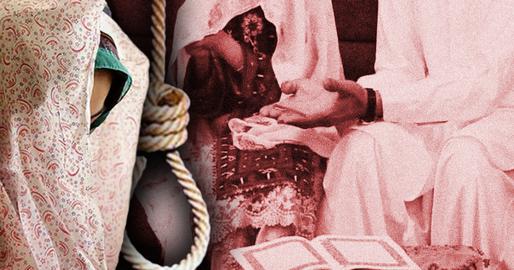
Goli Koohkan was 12 years old when her family married her to her cousin without asking her consent. At 13, she was pregnant. By 18, she was in prison facing execution for her husband’s death.
Now 25, Koohkan has spent seven years in Iran’s Amirabad Prison in Gorgan, making her the longest-serving female inmate there.
In an audio message smuggled from prison, she pleads with Iranians for help, saying she “cannot leave this prison alone.”
Her case highlights the intersection of child marriage, domestic violence, and Iran’s justice system, where executions for murder can only be avoided if victims’ families agree to accept blood money instead of demanding death.
Prison officials recently negotiated a deal with the victim’s family: they will spare Koohkan’s life in exchange for 10 billion tomans ($112,000) in blood money, plus conditions that she not live in Gorgan and that her 11-year-old son receive identity documents.
Former cellmates have launched a campaign to raise the money by December, when the agreement expires. So far, they have collected about 154 million tomans - roughly 1.5 per cent of what they need.
Koohkan comes from Iran’s Baluch minority, one of the country’s most marginalized communities.
She grew up in villages around Mashhad despite her Baluch ethnicity. Like many in her community, she lacks official identity documents.
At 12, her family married her to a cousin without consultation. A year later, she became pregnant and nearly died giving birth to her son under difficult conditions.
“Her pelvis was too small, so she was afraid, and this became the reason for violence against her,” said a former cellmate who spoke to IranWire.
The violence centered on pressure for her to have more children.
When she returned to her parents’ home seeking help, her father refused to speak to her, and her mother told her she had left for her husband’s house “in white clothes and would go to the cemetery in a white shroud.”
By 18, Koohkan was isolated in her husband’s home, her phone confiscated, and forbidden from leaving the house.
On the day her husband died, Koohkan returned home to find he had beaten their 5-year-old son.
When she confronted him, a fight started. As violence escalated, she called her husband’s cousin for help, but his arrival made things worse.
“Suddenly she opened her eyes to find blood everywhere,” the former cellmate said. “She panicked, called the ambulance herself, didn’t even flee, and took responsibility for everything.”
Koohkan’s supporters say her actions - calling an ambulance and staying at the scene - indicate she did not intend to kill her husband.
They describe the death as accidental, happening during a domestic dispute that spiraled out of control.
“Someone who kills with intent and premeditation doesn’t call an ambulance,” said a civil activist and former political prisoner who knew Koohkan’s case. “This child really isn’t a killer, and structural discrimination, poverty, and bad luck brought her to this point.”
At the police station, officers called the frightened 18-year-old and directed her to sign documents she likely could not read - Koohkan was illiterate at the time. Without legal guidance or family support, she confessed.
A judge quickly sentenced both Koohkan and her husband’s cousin to death for murder. The death sentence was upheld by Iran’s Supreme Court.
Because of her poverty and lack of family support, Koohkan had only a court-appointed lawyer who, according to sources, did nothing for her case - a common problem with appointed counsel in Iran.
“Though the judge knew it was impossible for a little girl to kill a man with such force, he sentenced both to death,” the activist said.
Despite facing execution, Koohkan has used her time in prison for self-improvement. Former cellmates describe her as the calmest inmate in the women’s ward, someone who helps newcomers understand prison rules and teaches skills like knitting and handicrafts.
She learned to read and write in prison literacy classes and eagerly participates in any available educational programs. She even attends religious classes, hoping to be seen as a model prisoner.
“She’s very active and loves to learn everything,” said a former cellmate. “If someone went to exercise, Goli would rush to exercise too. If someone read a book, she’d go ask what the book was about.”
Koohkan supports herself through tailoring work, as she receives no family visits or financial support.
Her son, now 11, is cared for by his paternal grandparents and has seen his mother only once or twice since her imprisonment.
She has become an avid fan of Tehran’s Esteghlal football team, watching games and following players - small joys that former cellmates say demonstrate her determination to live despite her circumstances.
Human rights activists say Koohkan’s case shows broader problems affecting women and minorities in Iran, where child marriage remains legal and domestic violence protections are limited.
Fariba Baluch, a human rights activist and 2024 International Women of Courage Award winner who joined the campaign, called Koohkan representative of “hundreds and thousands of women whose names we don’t know.”
“Goli is one of us who became a victim of child marriage at 12 without being asked, endured domestic violence for years, was beaten from a young age, became a mother in childhood, but even her family didn’t hear her voice,” Baluch said.
The campaign to save Koohkan faces a December deadline. If organizers cannot raise enough money to satisfy the victim’s family, she could be executed.
The 10 billion toman demand represents an enormous sum in Iran, where the average monthly salary is roughly 15–20 million tomans.
Campaign organizers hope to negotiate a lower amount, noting that a judge indicated willingness to accept less.
“Since the reconciliation agreement was approved in July, there are only six months left,” said an organizer. “If this money isn’t raised by then, they might execute her, and we must not let that happen.”
Supporters have established fundraising networks inside and outside Iran, using social media to spread awareness of Koohkan’s case.
For former cellmates who knew her personally, the campaign represents more than saving one life - it’s about addressing systemic injustices that affect Iran’s most vulnerable populations.
“Saving Goli should be everyone’s concern, men and women,” said a former cellmate. “We know how much these marginalized people, deprived of everything, were discriminated against for years. She’s reached out for help to people, and I think it’s time we stand by her because she doesn’t have much time.”
In her audio message from prison, Koohkan acknowledges making a “mistake in her youth” but emphasizes her remorse and desire to live.
For supporters, her case embodies the intersection of poverty, gender discrimination, and a justice system they say fails society’s most vulnerable members.

Interested in writing for IranWire?
Share your stories.



comments