



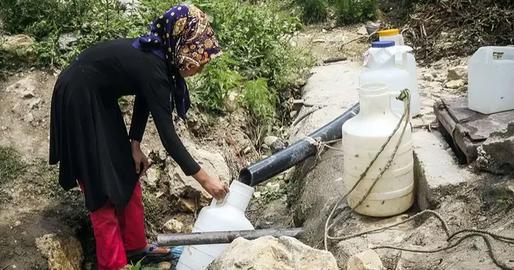
Sima climbs four floors of stairs to her apartment with her hands gripping plastic water jugs filled from the building's storage tank below.
At 38, she has lived her entire life in Gilan Province, where locals boast about "silver rains" and rivers that never run dry.
Not anymore.
"Every morning we have to turn on the pump for water to reach the house," Sima says. "Now, when electricity is cut off, we have no water at all until electricity comes back, and we save those few drops of water so we don't die of thirst."
Gilan, Iran's northern province along the Caspian Sea, has long been synonymous with abundant rainfall and lush green landscapes.
Rice paddies stretch across the countryside, and until recently, residents rarely worried about water shortages that plague much of Iran. This summer changed everything.
Public protests over water cuts have erupted across Gilan, with residents of Khoshkbijar and Khomam repeatedly taking to the streets.
The province that once served as a refuge for drought-stricken Iranians now faces its own water crisis, straining infrastructure never designed for current demand.
As drought forces migration from Iran's central provinces to Gilan, the influx is overwhelming the very water systems people came seeking.
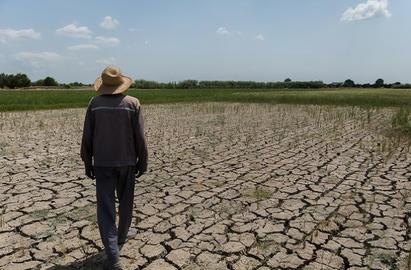
"I thought this place would have plenty of water, but now I see that agricultural water is also scarce," says Mohammad, a 45-year-old farmer who moved from drought-stricken Yazd three years ago.
Standing beside his withering crops near Lahijan, he adds, "Old wells don't work anymore - we're forced to buy water by tanker."
He represents thousands who fled water shortages in central and southern Iran, believing Gilan's reputation for endless rain meant guaranteed water security.
Instead, they've contributed to a crisis that has transformed daily life across the province.
In Rasht, Gilan's capital, the constant hum of water pumps echoes through apartment buildings as residents struggle with low water pressure.
Pump shops along Saadi Street report sales have doubled as both longtime residents and newcomers install equipment to boost water flow to upper floors.
"Since tourists and new migrants came to the city, water pump sales have doubled," says one vendor. "Many people don't trust the piped water."
The numbers tell the story of strain. According to Gilan Water and Wastewater Company reports, drinking water consumption has jumped from 8,939 liters per second to 9,262 liters per second.
Officials attribute the increase to tourist influx and extreme heat, but residents say the infrastructure simply cannot keep pace.
Matin, a young villager, describes the dramatic change in his rural community, "Drinking water is cut off almost all day. Water drips drop by drop, and its quality is so low that it cannot be used for drinking."
The crisis extends beyond human consumption. Matin watches helplessly as his family's orange trees, once thriving in Gilan's humid climate, drop dried fruit onto parched soil.
"The oranges dried up and fell from the trees. Several trees in the yard dried up from the roots because of this year's heat - I had never seen such a thing before," he says.
Springs that villagers relied on for generations have disappeared. Where families once filled containers with fresh mountain water, Ahmadi now finds only dry rock.
His family, like many others, has resorted to buying bottled water for drinking.
The water shortage intertwines with electricity problems, creating a cascade of difficulties. Power outages lasting up to four hours daily in cities like Someh Sara disable water pumps, leaving residents without either essential service.
"Power outages happen every quarter hour, and they're no longer even adhering to the power outage schedule they provided themselves," says one Someh Sara resident. "Yesterday, from near noon until sunset, electricity would connect for a quarter hour and then cut off again."
For the third-floor resident, the combination proves devastating: "We're on the third floor and have no water."
Some residents have turned to desperate measures. In Rasht's suburbs, 50-year-old Zahra relies on a yard well that she fears may not last another year.
A neighbor has installed a barrel to collect rainwater, though August brought no precipitation to fill it.
"It might be little, but it's better than nothing," the neighbor says of the empty barrel. "Although in August, no rain came."
The crisis reflects broader challenges facing Iran's water management. Unofficial reports suggest migration from water-scarce provinces like Yazd, Kerman, and Isfahan has accelerated, driven by social media narratives promoting northern Iran as a water-rich refuge.
The influx strains not only water systems but also electricity networks that power pumps and treatment facilities.
Rasht's water supply network, designed decades ago for a smaller population, now buckles under increased demand and ageing infrastructure.
According to Gilan Water Authority officials, even with all facilities operational, water consumption in some areas has reached critical levels.

Interested in writing for IranWire?
Share your stories.




comments