



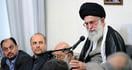
“Almighty God spoke just like this. In fact, it was my tongue, but it was the word of God.” These statements were made by Sayyid Ali Khamenei, the former leader of the Islamic Republic, in 2023. He is now neither the tongue of God nor the leader of the Islamic Republic. He neither handed the flag of Islam to the Mahdi nor was he able to build a “New Islamic Civilization.”
During his 37-year reign, many shed blood to keep him as leader; now, they are happy in his absence and are celebrating in the streets - rejoicing at the killing of an 86-year-old dictator who died on February 28 as a result of joint U.S. and Israeli attacks on his official residence.
Many Islamic Republic media outlets denied the “news of the death” of Khamenei - which was announced by the Israeli Prime Minister and the U.S. President - for hours. But once the confirmation came from Washington, that was enough. People poured into the streets.
Across different cities, many began speaking of the start of a new chapter for Iran - one in which Ali Khamenei no longer holds power. An era without a “Supreme Commander” whose order to “put the rioters in their place” became the justification for a crackdown that cost thousands of protesters their lives in January.
Joy in the Streets, Denial and Threats from Supporters
In Fars Province, a young man screams: “Am I dreaming? Hello, new world!” The moment of Khamenei’s death is considered by many Iranians as a symbol of the beginning of a new age; an age in which “Zahhak” is no longer in power.
Zahhak is a dark figure from the Shahnameh, Iran’s national epic - a cruel ruler known as the “Serpent King,” with snakes growing from his shoulders that had to be fed the brains of young men to keep him alive. Over time, his story became more than mythology. In today’s protest culture, many Iranians use Zahhak as a symbol for tyranny itself. When they invoke his name, they are describing a ruler who survives by sacrificing the country’s youth - a metaphor they have often applied to Khamenei.
Following the announcement of his death, the streets of various Iranian cities, from Tehran and Shiraz to Isfahan and Tabriz, were filled with passion and spontaneous celebration; people danced and cheered through the night, lit fires, and celebrated the end of Khamenei’s 37 years of absolutist leadership with slogans against the regime. This joy was not limited to the interior of the country; Iranians around the world, from Los Angeles and Toronto to London and Paris, took to the streets to celebrate this historic event and shout the accumulated dissatisfaction of these years. Many believe that with Khamenei’s departure, the doors to fundamental change have been opened for the country.
In his final speeches, Khamenei had called the protesting people of Iran “rioters,” “U.S. infantry,” or even “trained terrorists,” and with these words and orders for suppression, he led thousands of people to their deaths in the January protests. Now, some speak and write of his absence with a mix of disbelief and happiness. The joy over his death was expressed in cyberspace with short phrases such as “He’s gone forever,” “He is no more,” “Khamenei is finished forever,” and “He finally went to join his right hand.”
“His right hand” is a double-edged reference. Physically, Khamenei’s right arm was paralyzed in a 1981 assassination attempt. Symbolically, it refers to Qasem Soleimani, the IRGC commander killed in 2020, whom Khamenei deeply mourned.
However, his supporters do not believe in his absence and are even in conflict with those who rejoiced at his death. Some citizens from Isfahan and Tehran have reported that military and Basij forces attacked people who were celebrating his death.
Some figures close to the IRGC have also said, “Go into the streets and whoever you see celebrating, take care of them,” and they threatened, “If we catch you, we will chew you alive.” In the streets, some demonstrated in support of Khamenei, saying, “Khamenei is the Husayn of this era, and we stand by him against the Pharaoh represented by America and Israel.”
In the language of regime supporters, Khamenei is often elevated to the level of Imam Husayn, the most revered martyr in Shia Islam, while those who oppose him are cast as Pharaoh, the symbol of tyranny, or Yazid, the historical oppressor. By framing the conflict in these deeply religious terms, loyalists turn political dissent into a battle between sacred righteousness and evil. This narrative is powerful, and it is often used to energize the regime’s most committed base, especially when tensions spill into the streets.
On the other hand, other political and media figures claimed that Khamenei’s death was merely a rumor. Khamenei’s brother-in-law said: “The involvement of Trump and Netanyahu themselves in a psychological operation to spread the rumor of the Supreme Leader’s martyrdom is an attempt to deceive and lure opponents of the system into the streets!” Hamid Rasaei, a representative from Tehran, said: “I write with knowledge that Imam Khamenei is in complete health.” He emphasized that the banner of this revolution would reach the Mahdi through Khamenei’s hand. The public relations director of Khamenei’s office emphasized: “In a situation where the American-Zionist enemy has come under heavy blows from the brave men of the Armed Forces, they have turned to psychological warfare.”
But this media war spoken of by Islamic Republic officials did not last long. Around 5:00 AM Iran time, a broadcaster for the Islamic Republic of Iran Broadcasting (IRIB) appeared before the camera with tearful eyes and said: “The great nation of Iran, the lofty soul of the leader of the great nation of Iran and the vanguard of the Islamic Ummah, His Holiness Imam Khamenei, has joined the supreme kingdom by drinking the sweet nectar of martyrdom in the holy month of Ramadan.” His supporters wrote: “Congratulations on his martyrdom; the reward for a lifetime of struggle for him should have been nothing but martyrdom.”
The End of the Dream of Resistance
What led to Khamenei’s death was years of warmongering. He saw the path to victory for himself and his political system in confronting the U.S. and Israel. In 2016, he said the Americans wanted to “pretend the Iranian nation is at a crossroads and has no choice but to choose one of two paths. That crossroads is that they must either come to terms with America or permanently endure the pressures of America and the problems resulting from it.” He emphasized that Westerners wanted to inject the idea into the minds of the country’s elites that “we must either shorten our reach in the face of America and its demands in many cases, or we must endure America’s pressures, America’s threats, and the losses resulting from opposing America.” In his view, “the meaning of this talk is that the Islamic Republic should abandon the fundamental issues it is committed to by the decree of Islam.” But the path he proposed was Resistance.
The “Policy of Resistance” was not just one of his strategies toward the West - it was the strategy. He directed the country’s political, economic, and military energy toward it, driven by a deep distrust of America, a belief that negotiations were pointless, and a constant fear of infiltration.
For him, infiltration was not limited to diplomacy or security. It extended into culture. He repeatedly warned of a “cultural onslaught” and positioned himself against intellectuals and independent thinkers, positions that, in practice, created an atmosphere in which dozens of journalists and writers were killed.
Over time, he expanded this view to cyberspace, framing it as another battlefield and calling for a “Jihad of Clarification” against what he described as the enemy’s soft war. He consistently argued that the West and America were trying to penetrate Iran through avenues such as UNESCO’s 2030 Agenda or even foreign investment. The more he feared infiltration, the more tightly he clung to resistance.
In 2018, he said, “Let the whole Iranian nation know; there will be no war, and we will not negotiate.” He took pride in the fact that “the Islamic Republic has started no war” and instead spoke of “Resistance” as a model of persistent and comprehensive struggle against “compromise” that keeps the “Palestinian issue alive,” creates a “fundamental obstacle against Zionist projects,” and thwarts the main plan of the “Zionist regime” to dominate the entire region by “imposing a war of attrition.” It was in line with this idea that he infiltrated various countries in the region with IRGC forces through the “Axis of Resistance.”
The “Axis of Resistance” is the name given to Iran’s network of regional allies and armed groups - including Hezbollah in Lebanon, Hamas in Gaza, the Houthis in Yemen, and various militias operating in Iraq and Syria.
Khamenei described this network as a form of “forward defense” - a strategy meant to push confrontation beyond Iran’s own borders so that any conflict with its adversaries would be fought elsewhere rather than inside the country.
In June 2016, Khamenei said the main cause of pressure and accusations by the U.S. and “Arrogance” against the Islamic Republic was not missiles, nuclear issues, or human rights, but the refusal to accept submission to the front of infidelity and arrogance. If Iran accepted submission, they would get along with all these issues and wouldn’t even mention human rights. He added that the opposing side usually hides this motive but sometimes gives itself away by referring to “ideology” - that is, the independent-seeking Islamic thought that does not go under the enemy’s burden. At the same time, he emphasized that this approach does not mean cutting ties with the world, but rather interacting with the world while maintaining an independent identity.
The main goal of his resistance was to stand against Israel. Confrontation with Israel was an idea he had in mind even before his presidency. While he was the Friday Prayer Leader of Tehran, he said: “As long as this fetid wound, this cancerous tumor called the usurping state of Israel exists in the heart of Islamic and Arab lands, we cannot feel that we have won.” Reaching the position of Leadership in 1989 was an opportunity for him to pursue his desire. The IRGC was his arm to reach this goal. In 2013, Khamenei saw himself in such a position that he said: “If any mistake is made by them [the leaders of the Zionist regime], the Islamic Republic will level Tel Aviv and Haifa to the ground.” They attacked Iranian positions several times, but he never fulfilled his promise. In June 2025, he achieved the war he wanted with Israel; he suffered many casualties, but in July 2025, he said: “The Zionist regime, with all that hullabaloo and all those claims, was almost incapacitated and crushed under the blows of the Islamic Republic.”
Now, the very system he once claimed was “crushed” is, on February 28, what brought his life to an end = a life shaped by decisions that had already extinguished the candles of thousands of others.

Interested in writing for IranWire?
Share your stories.


comments