



In a meeting at the White House Oval Office, U.S. President Donald Trump and Israeli Prime Minister Benjamin Netanyahu discussed potential diplomatic approaches to Iran’s nuclear program.
During the televised meeting, Netanyahu said, “We’re both united in the goal that Iran does not get nuclear weapons." He added, “If it can be done diplomatically, in a full way, the way it was done in Libya, I think that would be a good thing.”
Just hours later, Iran’s Foreign Minister Abbas Araghchi, speaking from Algeria, responded, “What the officials of the Zionist regime have said [regarding the Libya negotiation model] are their dreams that will never come true.”
Iran now faces a critical, potentially fate-defining choice: war or agreement.
While references to the “Libya model” are not new in U.S.-Iran relations, it has resurfaced as a particularly contentious diplomatic concept.
The term has been used in discussions about Iran since the presidency of George W. Bush. For American and Israeli officials, the Libya model represents an ideal example of complete disarmament.
From the perspective of the Islamic Republic and its supporters, however, it serves as a cautionary tale about the dangers of trusting Western promises.
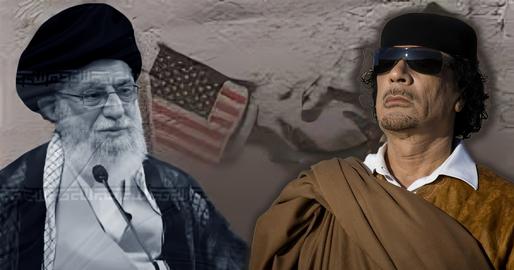
The IRGC-affiliated Tasnim News Agency described Libya’s agreement as “an obvious deception,” arguing that Western assurances deceived Gaddafi.
After abandoning its nuclear and missile programs, Libya did not gain prosperity or security - instead, it descended into civil war and chaos.
According to Tasnim, the United States and Israel are now attempting to repeat this scenario with Iran.
The Iranian news website Fararu characterized the Libya model proposal as a deliberate attempt to lead Iran down the same path of destruction that ended Gaddafi’s rule.
It wrote that when Libya “loaded its nuclear equipment, infrastructure, and documents onto ships and handed them over to Westerners,” it became defenseless against NATO attacks and domestic rebellion just eight years later.
According to the publication, Netanyahu is now advocating the same scenario for Iran.
Supporters of the Islamic Republic are deeply concerned about this proposal, viewing even the consideration of such a model as tantamount to accepting the end of the regime.
This comes even as Iranian President Masoud Pezeshkian said at the United Nations last year, “We are ready to put aside all our weapons if Israel does the same, and an international organization ensures security in the region.”
Libya’s 2003 agreement remains a prominent example of unilateral disarmament.
On December 19 of that year, Muammar Gaddafi surprised the world by announcing that his country would voluntarily abandon all weapons of mass destruction programs.
The decision followed months of secret negotiations between American, British, and Libyan officials.
International inspectors were deployed to oversee the complete dismantling of Libya’s nuclear and chemical programs.
In return, Tripoli expected the lifting of sanctions, restoration of diplomatic relations, and reintegration into the international community.
Gaddafi’s motivation stemmed from a mix of pressures and strategic calculations. Libya had endured severe UN and U.S. sanctions for years due to its support for terrorist activities, including the 1988 bombing of Pan Am Flight 103 over Lockerbie.
The economic pressure was intense, with the country’s oil revenues significantly restricted.
In October 2003, the seizure of a ship carrying centrifuge parts from the Abdul Qadeer Khan network en route to Libya raised serious alarms.
Most significantly, the U.S. invasion of Iraq in March of that year sent a strong message to countries like Libya about the potential consequences of resisting Western demands.
Gaddafi concluded that disarmament might be the only path to ensuring his regime’s survival.
For Washington and London, the agreement was a diplomatic victory. The Bush administration presented it as evidence that political pressure and military threats are effective.
Gaddafi surrendered sensitive documents, shut down suspicious facilities, and shipped out centrifuge components and nuclear materials. In return, sanctions were lifted.
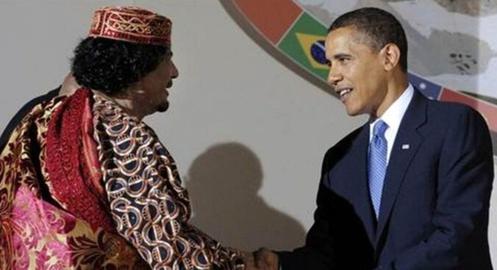
Western oil companies returned, and diplomatic relations were gradually restored. Gaddafi even met with American and European leaders.
In 2003, the International Atomic Energy Agency confirmed that Libya’s nuclear program was still in its early stages.
IAEA Director General Mohamed ElBaradei announced that no enriched uranium or industrial-scale facilities had been found. However, the discovery of advanced centrifuge parts from the black market raised concerns among Western powers.
The agreement was not just technical - its political dimensions were even more extensive. As Elliott Abrams, a former senior White House advisor on Middle East affairs, wrote in The Wall Street Journal, Gaddafi gave up his weapons programs in exchange for international legitimacy and to remain in power.
However, the promises of that deal did not last.
In 2011, following popular protests and violent crackdowns by forces loyal to Gaddafi, the UN Security Council authorized military intervention to “protect civilians.”
NATO acted. Western warplanes struck. At the time, U.S. President Barack Obama said, “We knew that if we waited one more day, Benghazi could suffer a massacre that would have reverberated across the region and stained the conscience of the world.”
As a result of the intervention, Gaddafi was captured and killed in October 2011.
Initially, the Libya model seemed successful. Libya was removed from the list of state sponsors of terrorism in 2006, diplomatic ties expanded, and by 2008, the IAEA closed its case on Libya.
Iranian leaders - who once received missiles from Libya - have never forgotten that country’s fate.
Supreme Leader Ali Khamenei has frequently referenced Gaddafi’s downfall. In a 2011 speech, he portrayed Gaddafi as someone who failed to resist, noting that in his final years, Gaddafi willingly surrendered all nuclear programs, while Iran, despite intense threats and sanctions, not only refused to back down but expanded its nuclear capabilities.
Netanyahu and Trump continue to emphasize the Libya model because it embodies the idea of complete, verifiable, and irreversible disarmament, with no room for ambiguity or manipulation of the agreement's provisions.
Tehran officials, however, strongly reject such an agreement, highlighting their missile and military capabilities.
IRGC Commander-in-Chief Hossein Salami said last month, “We are not worried about war. We will not start a war but are prepared for it.” He added, “The thirst for jihad to defend our foundation, identity, and existence is a reality among our armed forces and people.”

Interested in writing for IranWire?
Share your stories.


comments