




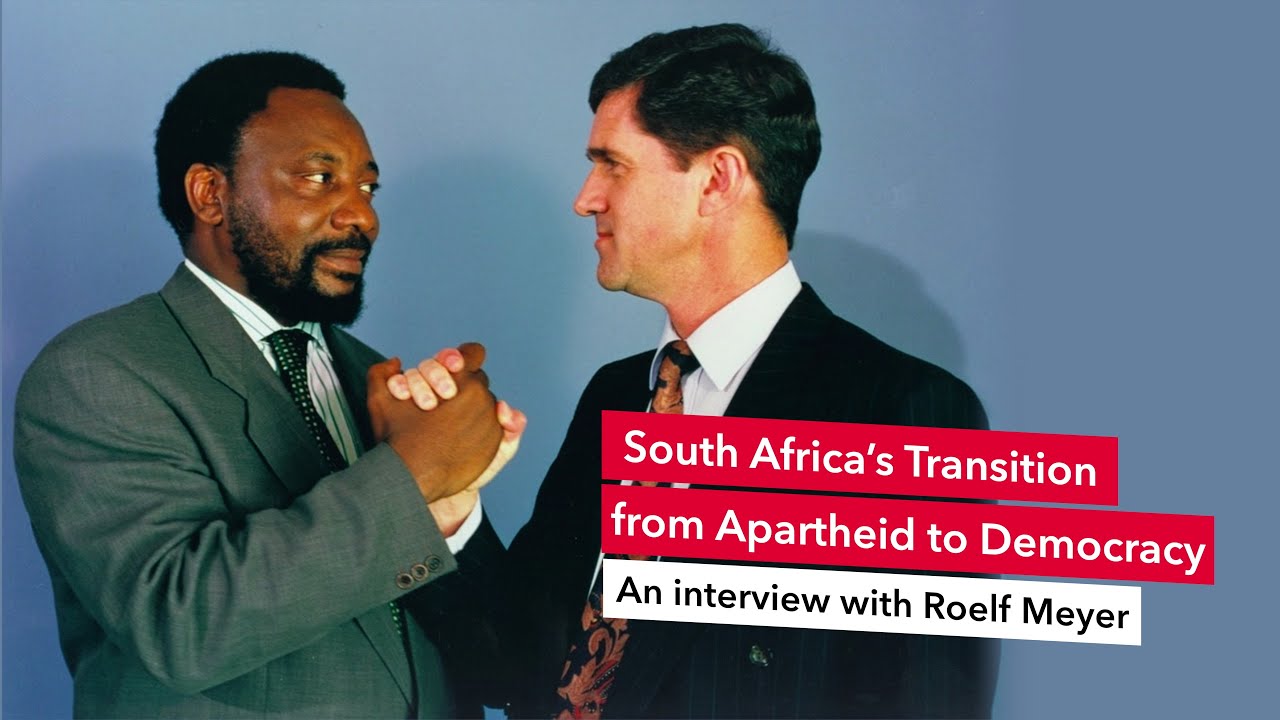
Roelf Meyer is the kind of leader many Iranians dream of having in their own country. He was a South African apartheid regime insider who knew the situation was untenable: so he negotiated with representatives of the African National Congress (ANC) in the 1980s to turn his country from a racist, authoritarian state into a democracy.
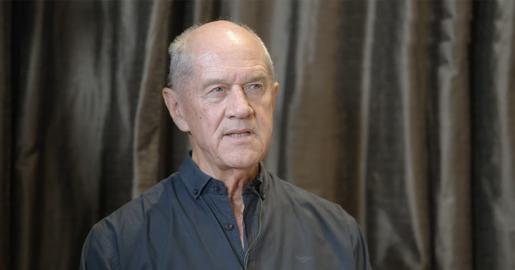
I interviewed Meyer during the World Movement for Democracy Assembly, held in South Africa in November 2024. A former member of parliament and deputy police commissioner during the apartheid regime, he was appointed Minister of Constitutional Development in 1994 by the new president, Nelson Mandela. He later resigned from government and has since become an important voice, in South Africa and internationally, telling people the truth about the transition from apartheid to democracy and what has gone wrong.
Many Iranian opposition activists and groups, who hope to establish democracy in their country, have tried to understand what happened in South Africa before the fall of the apartheid regime and to follow the same model in Iran. But, as with most historical events in other countries, various activists interpret the events in South Africa according to their own agendas, missing or disregarding the reality. Some Iranian activists over-emphasize the role sanctions can play, while others are preoccupied with ANC’s earlier armed struggle, and still others say the system must be reformed from within.
During my interview with Meyer, my conversations with Iranian activists or their public statements were in my mind, so I tried to ask questions that could inform our audience inside Iran, especially human rights activists and civil society groups, about South Africa’s struggle for a democratic and accountable government.
My first question was a white-privileged Afrikaner, who had entered politics as a member of the ruling class of the country, then decided to turn against a regime that supposedly represented people like him.
"To a large extent, my generation was the first beneficiary of this,” Meyer told me, referring to the apartheid regime. “And there were no reasons why I would question apartheid – until I got to my senses."
Meyer trained as a lawyer and said that, early in his career, his experiences of writing opinions on South Africa’s laws pushed him to think about the laws that limited the rights of Black people living in urban areas.
"Then the question came to me as a lawyer, to say, how do I interpret certain laws that are on the law book in regard to Black people working in the urban areas, and not being able to exercise their rights, or any rights?,” Meyer told me. “And that is what started to develop the question in my own mind – and also the realization that apartheid is indefensible and this is something we can't tolerate."
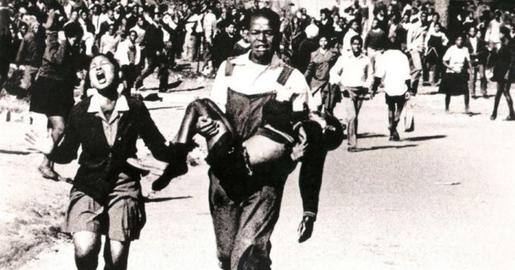
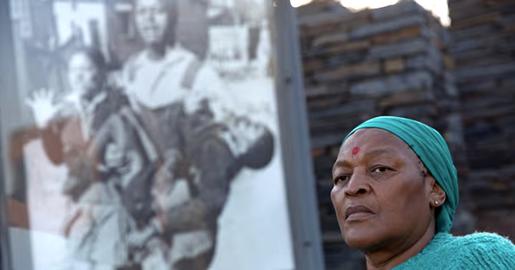
And indeed a multifaceted resistance was underway in response to the injustices Meyer was beginning to see. The ANC was founded in 1912 and, while it initially led peaceful protests, including the civil disobedience campaign of the 1950s, the Sharpeville massacre of March 1960 was a turning point. South Africa’s apartheid-era police killed 69 unarmed protesters while suppressing a protest.
The carnage led to the government banning the ANC, prompting it in turn to form its military wing, uMkhonto weSizwe, and to escalate its resistance against the apartheid regime.
The ANC’s leaders, such as Nelson Mandela and Oliver Tambo, became symbols of the struggle during this upheaval despite their imprisonment and exile.
"The ANC was the main resistance movement against apartheid since the regime was established in 1948," he said. "It was one of the oldest political organizations on the whole continent of Africa, and, initially, it was formed to advocate for Black participation in government. And that was the policy, in other words, a peaceful policy that was exercised for decades thereafter.”
"It was only in the 1960s that there was an addition to that, and that became known as a military wing that was established,” he added, “with the ANC in command to try and exercise obstructionist measures against the apartheid regime."
International condemnation of apartheid intensified in the 1970s and 1980s. One factor contributing to increased sanctions by world powers was the human rights approach of U.S. President Jimmy Carter. Economic sanctions, cultural boycotts, and the Comprehensive Anti-Apartheid Act passed in the U.S. in 1986 were all results of Carter’s focus on human rights, isolating the South African regime.
Popular campaigns around the world also pressured multinational companies to leave South Africa and applied even more economic pressure to the apartheid government.
"The ANC was much stronger on the political and diplomatic side,” Meyer said, than it was in its military or a paramilitary effort against apartheid. And extraordinarily, “that political and diplomatic campaign was exercised by the ANC around the world in more countries and more cities than South Africa's official representation in terms of diplomatic missions," he said.
These factors, combined with domestic unrest, including strikes and widespread protests, further weakened the apartheid government. Meyer believes the ANC played an effective role in mobilizing international support. He also said there was a second key factor in the global community's reaction that led to the fall of apartheid.
The "ANC was very effective in mobilizing that international support, and I think this is something one should also keep in mind as a specific tool,” Meyer said. “The second factor was the reaction from the international community by saying there's only one way that we can change and force change in South Africa, and that is through punitive measures. So a broad debate about sanctions was leveraged in the international community. Both at the bilateral level as well as at the multilateral level."
Under intense international and domestic pressure, President Pieter Willem Botha resigned in 1989, and his successor, Frederik Willem de Klerk, began significant reforms. In 1990, de Klerk legalized liberation organizations, freed political prisoners, including Mandela, and repealed key apartheid laws. These dramatic changes set the stage for negotiations between the ANC and the government, ultimately leading to South Africa's first multiracial elections in 1994.
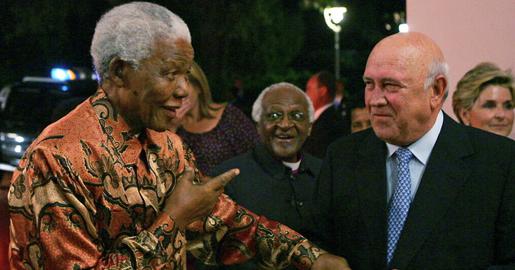
Mandela was elected as the country's first Black president, marking the official end of apartheid. But what allowed South Africa to experience this transition with relatively little violence was the presence of individuals like Meyer, who mediated for justice between the two political systems.
Meyer told me he was able to play such a role because of two intersecting factors. On the one hand, part of the ruling system believed in change, and on the other, South African civil society was demanding this transformation. However, he acknowledges that mutual trust between the two sides was nearly non-existent. He emphasized that the threat of civil war in the streets of South Africa every day was very real, and it was this threat that prompted both sides to work to avoid a war. Two key elements played a crucial role in these negotiations, he said: "curiosity" and a "belief in dialogue.” He explained that the curiosity of the parties to explore new ideas and proposals created the necessary space for dialogue and paved the way for negotiations.
Meyer believes that the apartheid government agreed to the release of Nelson Mandela from prison in 1990 because of this need for change alongside other pressures. He considers this event fundamental, as Mandela was recognized as a leader of the ANC both inside and outside the country and the one to negotiate with.
In comments that may shock many Iranians (and non-Iranians), Meyer insists that it was South Africa’s apartheid intelligence services that first initiated these negotiations. He said, "It was the intelligence in South Africa that was mandated in the first instance to go and speak to Mr. Mandela in prison and also to exiled leaders in Europe. And that was a very important first step towards creating space for a possible negotiated settlement in South Africa.” Meyer also stresses that Mandela’s approach was crucial in preventing violence.
For Meyer, while the process was successful, it was not without its challenges. Many victims felt that full justice was not achieved, as some perpetrators were granted immunity from punishment in exchange for revealing the truth of apartheid crimes. This personal realization, along with domestic and international pressures, paved the way for significant changes. According to him, this process was not only a political responsibility but also a moral obligation, to which both he and his colleagues in the National Party were committed.
Transitional Justice in Practice
Transitional justice refers to a set of processes and mechanisms designed to address the legacy of widespread human rights violations in societies transitioning to democracy. The concept includes several key elements, such as truth-finding, accountability for past crimes, reforming state institutions, and creating a foundation for national reconciliation. The ultimate goal of transitional justice is to create a balance between compensating victims, punishing perpetrators, and ensuring that violence does not happen again.
Although this process was successful for South Africa, it was not without challenges. Meyer said that trust needed to be built, even among victims who believed justice had not been fully achieved. He insisted that it is through this trust-building process that parties reach decisions of "no" or "yes," and this is how the transitional period can come about and succeed.
South Africa's experience with transitional justice has become one of the world's key models. Meyer believes this process demonstrated that a society can emerge from crisis and move toward reconciliation. He points to the roles of prominent leaders like Mandela and Tambo in advancing this process, saying that the ANC, due to its long history, was able to effectively mobilize both domestic and global support.
As a result of these efforts, many people around the world heard Mandela's name. Meyer said, "I can recall in the 1980s, wherever I went in the world, I was faced with one message from the outside, and that was ‘Free Mandela.’ That shows how successful they were around the world."
Meyer identifies four key factors in the process of achieving transitional justice in South Africa. "First, the international sanctions, the second was how the ANC mobilized diplomatic and political support around the world all over. It was very comprehensive. The third thing was the internal unrest that I described, and the fourth fact was the white people themselves in the majority started to realize we have to change."
Since this interview was published in Persian a few days ago, I’ve been contacted by several Iranian activists who want to learn more about the details of negotiations between South Africa’s apartheid regime and the opposition. They’re hoping to develop a series of tools that may help Iranians achieve a peaceful transition of power during the inevitable demise of the Islamic Republic – an ideological and corrupt regime that can only remain in power through suppression and brutal force.
My conversation with Roelf Meyer will therefore be the first of a series published on IranWire on this topic. What Meyer has told us, and what many other activists and politicians with the experience of transitions will tell us, will not be prescriptions or a formula that Iranians can just copy. But they will be tools that Iranian individuals and groups can adopt according to the unique needs of our country at a certain historic juncture. Understanding these tools will help them better understand their options and historic responsibilities to the future.

Interested in writing for IranWire?
Share your stories.






comments