



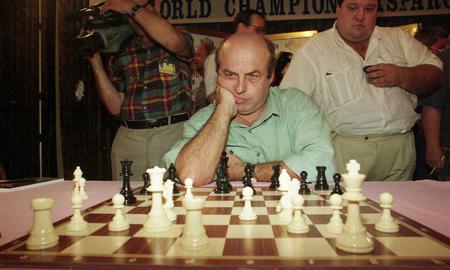
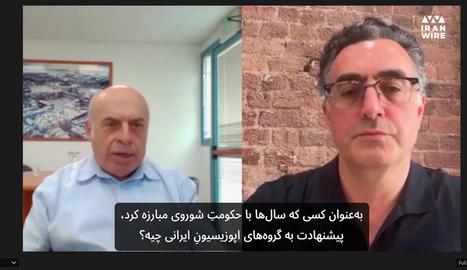
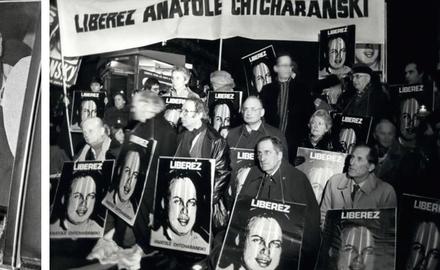
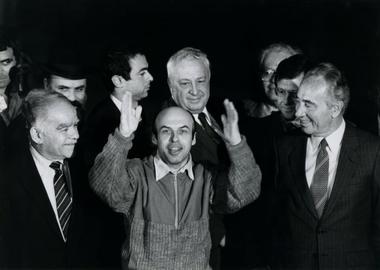
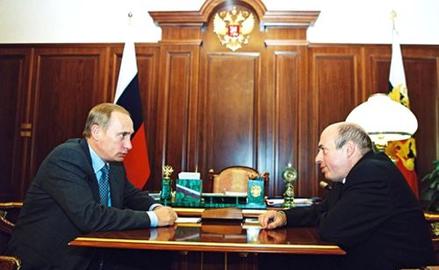
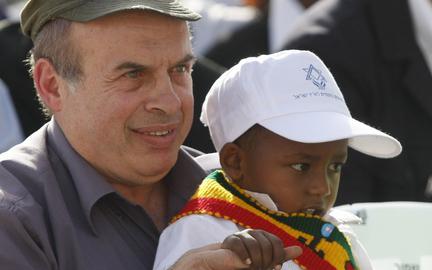

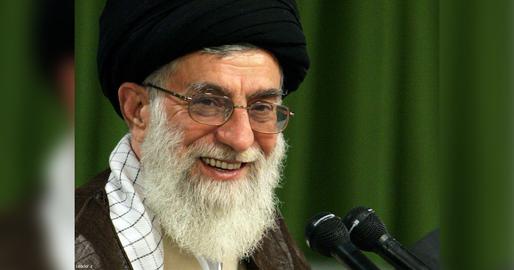
Former Soviet political prisoner and human rights activist Natan Sharansky says dictatorships collapse when double-thinkers (citizens who privately oppose the regime) finally lose their fear and take to the streets.
I’ve been amazed by the infighting within the Iranian opposition and the way they have been missing opportunities to mobilize double-thinkers in Iran and challenge the Islamic Republic government. So, I thought it would be interesting to speak to a man who was involved in one of the most successful campaigns that challenged an authoritarian regime.
Natan Sharansky was one of the Soviet Union’s most prominent dissidents in the 1970s and ’80s. Growing up in the Soviet Union, he didn’t know anything about his Jewish identity except that he was hated by antisemites. In 1973, Sharansky unsuccessfully applied for an exit visa to emigrate to Israel. This rejection marked the beginning of his struggle as a refusenik, a term used for Soviet Jews fighting for the rights of their people.
While fighting as a refusenik, Sharansky worked closely with Andrei Sakharov, the legendary nuclear physicist and human rights activist, and Yuri Orlov, the founder of the Moscow Helsinki Group, to document and protest violations of the human rights provisions of the Helsinki Accords within the USSR. The Helsinki Group has been a role model for opposition groups across the world to hold authoritarian regimes accountable for their actions.
Sharansky spent nine years in Soviet prisons after being sentenced in 1979 to 13 years of imprisonment and forced labor. He was released in 1986 following international pressure and immediately emigrated to Israel.
In Israel, he used his international celebrity status to advocate for Soviet Jews’ rights to religious practice and emigration to Israel. He also co-founded the Yisrael BaAliyah party and served nine years in the Knesset, the Israeli parliament.
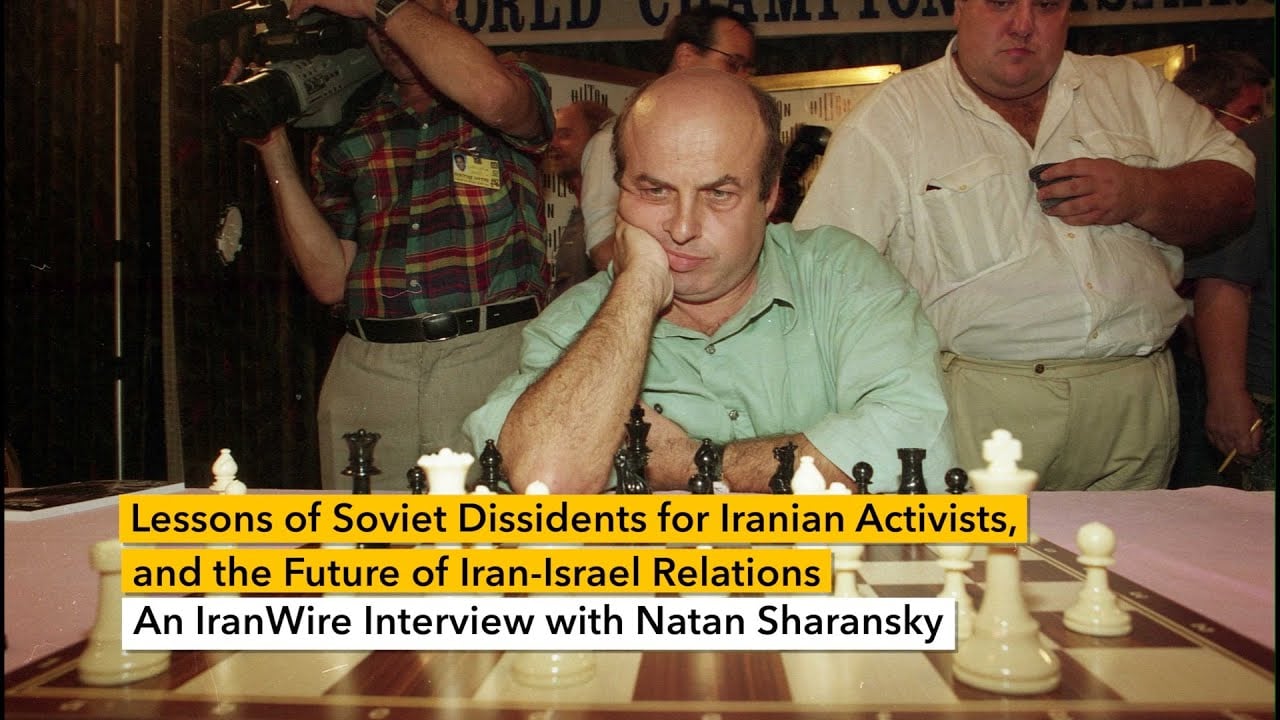
I interviewed Sharansky a few weeks after the end of Iran and Israel’s 12-day war, during which hundreds of ordinary Iranians and Israelis were killed by both sides. Although I do not agree with some of Sharansky’s opinions, I didn’t challenge him much in this interview. Rather, I tried to give him the space to share lessons from the Soviet dissident movement for Iranian opposition activists and discussed Israeli perceptions of threats from the Islamic Republic, the historic ties between Iranians and Israelis, and hopes for a better future, when he and I would be able to have the same conversation at Tehran University.
This is the second interview in our series of interviews with prominent Israelis on IranWire. We strongly believe in the importance of conversation and diplomacy to avoid wars and the loss of innocent lives.
Bahari: What are your recommendations to Iranian dissidents and dissident groups? How can they get their act together and be a united front or semi-united front against the Islamic Republic government?
Sharansky: As I said before, it was very important to explain it again and again. In the Soviet Union, I was like a spokesman, and had to invest a lot in different groups, accepting that we have common ground with all our differences and of course, we had monarchists and all the things, Ukrainian nationalists, and the Russian monarchists they want absolutely the opposite things. But both of them need[ed] to remove this awful regime because they both were suffering and the thing is how to convince that it will not make more difficult your cause but it will make much more easy if you will first remove this regime.
Bahari: Do you think that the dissidents, individual dissidents and dissident groups played a part in the demise of the Soviet Union? Or was it only because of Western pressure that the Soviet Union collapsed?
Sharansky: Well, no doubt that Western pressure was very important. But the Western pressure only existed because of the activity of dissidents. Once, I really insulted, without intending to, Mikhail Gorbachev. Because at one of the international forums, I was asked, who are the major figures, or people, who were responsible for the demise of the Soviet Union? And I said, number one is Andrei Sakharov, number two is President Reagan, number three is Mikhail Gorbachev and he was there, then he told me, "I am the one who made the decision to release you from prison, against all the Politburo. And you're putting me on the number three?"
I told him, "You know, number three is a great place after Sakharov and Reagan." But that's really how I feel and I explained why every totalitarian society, and the Soviet Union was a classic one, has three types of citizens: True believers, those who believe in official ideology then there are the dissidents, those few who are ready to speak risking their life for freedom, and the double-thinkers, people who don't believe in this ideology but are afraid to speak publicly. And the longer the dictatorship exists, the bigger the number of double-thinkers, and the revolution happens when double-thinkers stop being afraid in big numbers, then they go to the barricades.
Then suddenly it falls in a few days. But somebody has to give this spark, which will be turned into a fire. So, this is the source of those who are giving this spark. And the second very important thing: Dissidents understand society. You know, Sovietologists and all the specialists on the Soviet Union were predicting that "The Soviet Union is forever" and that's why we have to find a way to appease it, and so on.
And my friend Andrei Amalrik wrote in an essay in 1969 that the Soviet Union will exist until 1984 Because of George Orwell, of course, 1984 but he predicted exactly why the Soviet Union will fall apart. He was arrested for this book, he was punished but in fact, in 1985 Gorbachev came to power and started dismantling the Soviet Union, exactly in accordance with the predictions of dissidents. And even in the prison, we understood what was happening inside society, and why this powerful superpower was so weak. We understood it better than anybody else and we tried all the time to bring this knowledge to the world. So both in terms of the influence of dissidents on the people inside, and their influence on the West in terms of understanding this society,
Bahari: There were different types of Soviet dissidents. There were the nationalists, there were the liberals, there were the refuseniks, there were the reformists. Did they work together on their campaigns? Or did they have their own campaigns without cooperating with each other?
Sharansky: First of all, there were a lot of different groups which can be explained, because the Soviet Union consisted of many nationalities, of many persecuted religions. Almost every religion was in one way or another persecuted. And inside the dissident human rights movement itself there were different views. There could be Marxists, communism with a human face, there could be monarchists, there could be classical, liberal, human rights activists like Andrei Sakharov. And in addition to all this the KGB always tried to create many groups inside. That's why, as a rule, dissident movements practically everywhere have a lot of inner conflicts, because they have different agendas but also because the KGB of their country is working very hard to create new conflicts among them.
So, it was not simple. Dialogue of practically every group was very important because in the terms of KGB, free thinking was against the law. So into this comes naive communists with a human face, which we believed were absolutely out of touch with reality. But the very fact that they were discussing these views openly was very dangerous for the system. So they fought against all types of dissidents. Now to organise real cooperation was not simple. That's why the Helsinki Group, which we created.
My problem was not the fact that there were so many different groups, because they all. It was good that they existed because they all had their own audiences. My problem was that I simultaneously belonged to two movements. And that became a problem, because each movement says, "Why do you belong to another one?" I belonged, and that, it was That was a very small group of people, who at the same time were connected to the Jewish movement, for the right to emigration and to the human rights movement, with Andrei Sakharov being my mentor.
So, no doubt there was a strong resistance inside this movement. The Jewish movement was never against the dissident movement. They had a lot of respect for Sakharov but the moment Zionists became involved with them then the KGB changed, and targeted us. Because it's one thing if we simply want to leave, it's another if we want to change the regime. That's what I was hearing all the time, that we had to decide. You cannot be one of us, at the same time while bringing the angle of the KGB for being involved with dissidents and vice versa.
You've got to decide, "Are you a person of the world, a universalist, or a nationalist?" And I always believed that both sides were wrong, that real strength you've got to find from your roots. But the real appeal you have to the world is speaking about and fighting for human rights, and one helps the other, But if there were people who felt solidarity with two or three movements, they had a problem. But the coexistence of these movements was very good for the fight against the regime. And the moment there was synergy, like in the Helsinki group, that really brings an explosion
Bahari: I haven't found any criticism by you about any other Soviet dissident but there were others, like Vladimir Bukovsky or Roy Medvedev, who were critical of the others. How did these people who were maybe in polar positions in this dissident movement work together to topple the Soviet regime? I'm just giving them as examples, Vladimir Bukovsky, who was a very vocal dissident and he basically accused anyone who saw any part of reform within the regime, of working with the regime and Roy Medvedev, who is still alive actually, he lives in London. He thought that the Soviet regime could be reformed. How did these different opposing ideas coexist within the movement?
Sharansky: Well, you're right, I tried not to criticize anybody in the dissident movement because nevertheless, I felt like I was the one who was very active in the Zionist movement. The movement of people who wanted to leave I have lots of respect for practically everybody Solzhenitsyn and Sakharov, and even Roy Medvedev and with Bukovsky, I became best friends. But I didn't think that I had to be involved deep in the dialogue between themselves about what kind of future will be in the Soviet Union
Bahari: You didn't want to be involved in...
Sharansky: In the debate between them For example, it was clear that I was a pupil of Sakharov. I was working with him, I was helping with his press conferences. When he became a spokesman of two movements, Zionism and human rights. So as a result, of course, I was very critical about some statements of Solzhenitsyn, both because of disagreements with Sakharov, and also because of the Jewish movement, and he was very nationalist. And also, at the same time, as a spokesman, I knew I had a huge influence, that I used to explain to the world what the gulag was. After Solzhenitsyn, it was a thousand times easier than before.
So, I didn't want to undermine in any way, even a bit, his influence, through his books and his courageous behavior. At the same time, disagreeing greatly with how he saw the future of Russia. I was going to leave Russia anyway. I was going to help millions of Jews to leave Russia so that is my stand. So why should I attack Solzhenitsyn for his views on Russia? In a specific way, definitely I was with Sakharov. I was helping him to write his letters, to connect him with the world. And I agreed with practically everything he wrote. I was an enthusiastic supporter of Roy Medvedev. As I said, it was very important that his critical voice was heard because everybody was warned that whoever is critical is an enemy. On the other hand, I never believed his view that communism can be implemented as Communism - I believe, like Bukovsky, that communism was an absolute evil and the moment that you accepted the principles of communism, you became a supporter of a totalitarian regime.
Bahari: You didn't believe that communism could be reformed…
Sharansky: The communist regime no, even Gorbachev didn't believe, and the moment he started reforming it all fell apart, because you can't have a little bit of freedom or partial freedom. People are free or people are enslaved. And the idea of communism was to enslave people in order to make them equal, so I didn't believe it.
Bahari: So, you know, the reason why I'm asking you this question and you and I, we've talked before about different factions within the Iranian opposition groups and different dissident groups. And since a few years ago, their best pastime is just to criticize each other instead of criticizing the regime itself. But what you are telling me is that you disagreed with many of them, with Solzhenitsyn who was ultra-nationalist, ultra-religious person. But you thought that your criticism would be counterproductive
Sharansky: Ultra-religious could be understood wrongly. He was not ultra-religious just like the Revolutionary Guards of Iran or some other fundamentalists in Christianity, Judaism or Islam. He was a serious religious person and he believed in the great future of Russia. And here we have some disagreements, clear disagreements. At the same time, he helped a lot [Sakharov's] Board of Human Rights to make our case to the world.
Bahari: But that's the whole point, that whoever can help the movement to topple the regime should be a potential ally, and not be regarded as an enemy? And we are going to talk about the Helsinki Group, the Moscow Helsinki Watch Group. But before that, I think we have to talk about the Helsinki Accords, which included more than 30 countries, all European countries except for Albania.
Sharansky: 35 countries?
Maziar Bahari: Yeah, so many countries. And in those Accords, the Soviet Union agreed to respect human rights to a certain degree. And because of that, you had the Moscow Helsinki Watch Group. What persuaded or forced, the Soviet Union to be part of these Accords with the West? Were they forced or were they persuaded?
Natan Sharansky: That's a very important question to answer and to understand, because it's also important for today's world. The Soviet Union felt that it was a great achievement and we the dissidents felt that it was an awful failure of the West. Again, the West permits the Soviet Union to deceive itself, or maybe it even wants to be deceived. Why did we think this? The Soviet Union had a great record of lip service For example, the Declaration of Human Rights, and the Soviet Union signed it. And it's a member of the United Nations, which is in support of human rights. But each time it insists in its dialogue with the West, "You have your understanding of human rights, we have our understanding. And you have a lot of hungry people, and that is their freedom, to be free to speak and to be hungry, and here we have no hungry people, we have no unemployment" Nobody's getting any serious money, but "We have no unemployment" Well, because unemployed people simply go to prison. But it doesn't matter. They were insisting that they have their “understanding of human rights and that's why, you have to respect our understanding, we respect your understanding.” And the free world was accepting it. It was accepting that we have to cooperate with them. We have to restrict competition in the arms race. The Soviet Union was a big power, let's not challenge them.
We hoped all the time that human rights principles would be brought in order to put pressure on the Soviet Union but the Soviets Union always succeeded to get away with lip service. Here, they signed, after many years of administration, a new agreement, which had three baskets. The first basket is the goal to recognize the borders after the Second World War and that the borders should not be changed by force. Well, today looks ridiculous because of what Putin is doing in Ukraine but then it was a great victory for the Soviet Union. Why? Because it was the only country which gained territories after the Second World War, which was part of Poland and of course the Baltics became part of the Soviet Union and the West officially was not recognizing it. Also, the fact that there's Hungary and Czech and so on the Soviet satellites, and the Soviet Union guaranteed the survival of these regimes and now it is officially recognized that there will be no intervention. All this was a big victory for the Soviet Union.
There was a second basket which insisted on economic cooperation between East and West. But that's what the Soviet Union wanted all the time, economic cooperation without any political conditions, because it desperately needed it. And,then there was a third basket about human rights, which in advance it said it's non-binding, So, it's like a expression of the intentions that every country intends to give such and such rights, So, you mentioned Bukovsky, because Bukovsky and Medvedev said the West betrayed us.
And here I was sitting here with Yuri Orlov who was an outstanding scientist but also a dissident and we were discussing how we could make it more difficult for the West to be deceived, to be duped, tow to put the West in such a situation that they cannot deny or they cannot pretend that they don't see the violations of human rights and I proposed "Let's have different groups of dissidents to represent this, and we'll have a lot of..."
Bahari: I just have to ask you one question here. Do you think in 1975 when the Accords were signed, the West was willing to forget about human rights? That they would be willing to sacrifice human rights?
Sharansky: On the 1st of August, when it was signed in 1975, they were asked this. Of course, they said no, they said "Finally, we have some kind of understanding [on respecting human rights]." But we knew how it was developing then and in 1948, when the Declaration of Human Rights was signed. But what about the Soviet Union? Nobody will say, well, but of course the Soviet Union will not observe it and they will get away with it. When it comes to the arms race, to economic cooperation to the threat of the Soviet army, in Asia and in Europe, Okay "So we are concerned about the fate of human rights. Well, let's ask them to release this dissident, that dissident and go ahead with this." That was more or less the day to day life. And that's why when the West gave such a huge concession, an irreversible concession "Okay, you conquered countries after the Second World War. It's yours Baltics. Estonia. Latvia. Okay. It's yours. We don't like it. But what to do? But we recognize that it's yours. We are not going to fight over this. You want our cooperation, because you cannot compete in high tech Okay, we will help you. But you have to promise us that you'll behave on human rights." And saying in advance it's not non-binding. It was written, it was accepted. It's not like international law.
Bahari: But from what you were saying, human rights was an afterthought. It was not part and parcel of the agreement
Natan Sharansky: No, no, I think for the honor of the West, they will say it was very important "We are not giving up recognizing your occupation so easily. We simply accept the matters of life. But from now, let's live as decent people." We understood it was impossible that Communism will now have a human face. It will not be - It will not survive like this. So it will continue to exist but how to make it more difficult for the Soviet Union to use it as lip service. And that's where I came with the idea that let's write a letter from dissidents, of all types, to the public of all these countries, and have some dialogue and Yuri (Orlov) said, "More dialogue, more letters It will not help. We have to create the Helsinki Watch and start collecting documents and publishing them and sending them to all these countries.”
Here is what really is happening And he said to me, "Of course, you think that... they'll arrest us And even accuse us of high treason" I said, "Well, I'm with you I think they'll arrest us. But of course they will not go "So far as high treason, they'll say, Anti-Soviet activity." A year after I was accused of high treason. He was accused of anti-Soviet activities. But within a year, we were all arrested. We created the Helsinki Watch in April 1976. We were arrested 11 months after [someone] went out to America. But what happened during this year? For the first time, dissidents of different groups had 11 founding members, practically all of them belonging to different groups and then the others started joining. They were preparing documents, detailed information about what's happening with Ukrainian prisoners or what's on with the priests in Lithuania or what's happening with Crimean Tatars, who were exiled, what's happening with Jewish emigration, detailed, and sent it to all these countries. Here the Soviet Union is violating its own obligations And because there were so many people who wanted the fall of the Soviet Union they took it seriously, there was a lot of sympathy for our cause so it became a celebrated cause. The American Congress created their own Helsinki Watch group, including senators, congressmen, and others, to study our documents. So, that's how the Helsinki agreement turned from lip service document, as the Soviet Union had hoped, into this paper which was haunting the Soviet Union practically at every negotiation on every attempt to get cooperation with the West, until the death of the Soviet Union. So, Soviet Union thought they were signing some very good agreement for them but they were signing their death sentence
Bahari: Yeah, again I think what you're saying is that it's very important for dissidents and dissident groups to take advantage of whatever deal the dictatorships sign, because even if it's non-binding, it can be used as a lever to put pressure on the dictatorships. The same way that you guys looked at this treaty, some of the dissidents said it's a betrayal of the dissidents by the West. But you thought that, okay, this is something that we work on, this is something that we can work through. And it eventually led to an international movement that eventually led to the demise of the Soviet Union.
Sharansky: Yeah, well, I'll make it a little bit different. You take what you have and you try to do the most with it. It doesn't mean that you agree with this agreement, but it does depend on you. You're a dissident, you don't decide the law and even for the West you don't decide what they will sign. You're not happy, but try to see how you can use it for your own cause. And for different types of dissidents, say, look, we have many disagreements, but we all agree that we need to remove this regime. So, let's solve our disagreements after, until we remove this regime, we have one united cause - that's also very important.
Bahari: I was reading your book again, last week, Fear No Evil -and one of the parts that I don't think that it resonated with me the first time I read it, maybe about 20, 25 years ago was the level of infiltration by the KGB into different groups, especially you were talking about the prisoners. They were called the Stukachi. So can you tell us about the way that the KGB, the Soviet Union's intelligence service, infiltrated the dissident groups and whether they used agents provocateur in different cases, the radicals who tried to stir up problems for the other dissidents. How did they work?
Sharansky: Well, there are different levels. First, it has to be said, this was a country which had to control not only the lives, but the brains of 200 million people. Because any type of dissident or dissent is dangerous for them, so they don't want to permit people to think differently. But of course they cannot decide in the end how they think or express their thoughts. It's dangerous for the stability of the regime. But how can you control it? There was no internet, which today permits you to know many things. So, there were a lot of informers, practically in every school and every laboratory and every clinic, in every plant, for sure, there was an official KGB department and everybody knew who was talking with people who they were suspicious of. But this KGB department also worked through numerous informers. So, nobody knew, but everybody knew that if there are ten, 15 people, one of them is an informer. After the Soviet Union fell apart, it became known that at least 3 million people were informers in one way or another. What that means is, one to every 5 or 7 citizens. But that's the first level. That's mainly so that the authorities will know in advance who to suspect. The more serious thing is, of course, is when people try to be part of a dissident group and there were some roles: One of these roles was to simply to know what they're doing, for example, when we decided to go to different cities and to collect information about violations of human rights you have to understand the Soviet Union was a huge empire - twelve time zones, there was no internet ,of course, no public connection between dissidents and so you have to go physically to collect this information.
So one of those who went to one of those cities was an informer for the KGB. We started suspecting them then. But once we were arrested, it became finally clear when they appeared at our trial. But that's rather low level Provocateurs who simply have to collect information and to submit it. A more high level is, of course, those who are making provocations themselves. Like Lipavski, who then became the man who was himself trying, he was working very seriously for the KGB for many years. His father was sentenced to death for so-called economic crimes and then in order to save him, he agreed to cooperate with them and he was their agent for a number of years.
He deliberately went to the CIA, proposing his services Thank God they probably suspected something but he wanted to to help the KGB, to accuse all of us of being CIA agents. He didn't succeed only because, he didn't succeed with his attempt to penetrate the CIA. But in fact, they very often tried to to make some of their agents very extreme. Not as in spies, but to make them like those who are trying to prepare to kill some people and all this in order to compromise the movement, to where they had prepared to go outside and then to compromise. Well, more or less we avoided it but some national movements, were victims of such extremism. There were some Armenians who organized an explosion on the subway. Nobody knows where they came from. Why did they do it? They were arrested and disappeared in the gulag. But the Armenian national movement was a group that arrested some very pure dissidents and made them to.. They were not involved in any of these awful things. I was in prison with some of them. Let's say it made it easier to arrest them, that they couldn't prove that they were making these crimes. So in the time of Stalin, they didn't need to prove anything. They would simply kill a lot of people and say they're part of this plot In our times. They couldn't simply say that they're part of some plot, but these kinds of provocations would create a kind of public opinion atmosphere around these groups, by the way, we didn't tell much of this in the Soviet Union definitely in this period when I was active.
In the first years of the Soviet Union, there were some terrorist groups who were fighting against Soviet power. And here there was practically none. It was all destroyed many, many years ago. It was clearly intellectual resistance to the regime and even when somebody was proposing even minimal violence, we were fighting against it. World Jewry was supporting our movement. But some of the world Jewry organizations were using a kind of hooliganism against Soviet organizations. And I was among those who signed a letter calling them not to use any violence because all our power was in the fact that we were nonviolent, that we respected the national law, and we are fighting against those who violated the international law of human rights. On the one hand, it's good, on the other hand, it makes it much easier for KGB to penetrate, because practically everybody, or every writer or whoever is thoughtful and who wants to express his criticism freely, automatically became a member of our club. We don't have any criteria. We're not checking people. And, I think it was a weakness but it also was also a very big power, I knew in advance that among people that I'm dealing with are KGB agents, but I have no secrets. We are saying to the KGB the same that we are saying to all the world.
Bahari: So you were open in your fight against the KGB?
Sharansky: Yeah. When we were organizing a demonstration, usually a demonstration of ten people No more. Why? Because the more people and the demonstration, the more chance that the KGB knows in advance. But the fact of the demonstration is open but I asked Andre Sakharov to write a letter to President Carter. The fact that we wrote this letter and prepared it, passed it on through some tourist, abroad, was a secret. But the moment this letter reached Carter, it became huge news and we were very happy about it. I gave a long interview. It was the first time there was a political film made inside the Soviet Union and it became very popular. But in order to have this happen, the journalists came and they secretly made some films or tapes of interviews with some refugees, some dissidents, and then they took it also very secretly through other tourists abroad. But the moment it makes it out there it becomes a very popular film. So, we had no secrets about our aims and what we were saying about the Soviet Union but in order to reach our goals we did have to do many things secretly.
Bahari: So, if you want to tell young people now about the most successful campaign by the Soviet dissidents, what is the example that you can give them? In terms of organization, in terms of achievement?
Sharansky: Without a doubt the Helsinki Group was unique, both in terms of cooperation of different groups together and also drawing attention of the world and in terms of results. We really changed the attitude of the world to the most important agreement, which was signed between the world and the Soviet Union. That was a big success. If I take specifically our Jewish movement was based on activists who were ready to risk their lives, but also on the broad support of Jews all over the world and mobilizing many non-Jews and so just at the time when the Soviet Union was going, the United States of America and President Nixon, were going to sign an agreement with the Soviet Union, about a free trade agreement, and that finally the Soviet Union could get access to the economic power of the West, and it needed it desperately, because the economy of slaves cannot be effective, and it wanted to compete with the West. And just at the time it was almost signed, there came Senator (Henry) Jackson, Democratic senator from the United States of America, who passed the amendment that without free emigration there would be no free trade. And of course, President Nixon and the Secretary of State Kissinger, were absolutely against it. They wanted detente with the Soviet Union and here some groups of Jews don't want detente that's why they wanted to present it. But it was an extremely successful lobbying activity, in that all the Congress, almost all the Congress, was on our side and this gentleman later, when I was arrested, it was mentioned like 20 or 30 times because of what a big damage it did to the Soviet Union, because of "Treacherous intentions."
But in terms of historical struggles, no doubt that it helped. It empowered those who were fighting openly against the Soviet Union and in the Soviet Union, when Gorbachev came to power, one of the first things that it was struggling to have, freedom of trade and free economic cooperation and then he comes to Washington and 250,000 Jews came, and the Jackson amendment is like the symbol of this linkage between the policy of freedom of emigration and the relations with the West, So, these are the big victories. But of course, they were also failures.
Bahari: Before talking about the failures, I want to talk to you - actually, I want to ask you about the failures as well. But in terms of the Helsinki agreements and in terms of Senator Jackson's decision, it came because of engaging the Soviet Union in a dialogue. It was not because of sanctions or because of isolation. Do you think that it's necessary to have some sort of dialogue, some sort of negotiations with these authoritarian regimes, dictatorships, in order to be able to help people inside? Or do you think they should be isolated?
Sharansky: Negotiations? Yes. But what kind of decisions are made? For example, there were a lot of negotiations, during which, the Soviet Union was also reminded about the interests of the West. So, if you look now through the archives of the White House which they did recently, because everything was released after 50 years it can be published, and we can see how President Reagan had more negotiations with the Soviets than anybody before. But all of this as well as the order of the topics was such that nobody, neither Nixon, nor Carter or anybody before had spoken about human rights and put the linkage between the Soviet Union, what not to have I mean, race in space as the so-called Star Wars. They were frightened to death and each time Reagan was very open to negotiations, but he was worried too "We don't trust you because of what you're doing to your own people. And because we don't trust you, we have to put counter missile weapons into space." And it was very effective in the end, it became very effective. But for these, on one hand, you must have dialogue, And you must be very firm, you know, because like many other types of negotiation, especially European countries, they speak very firmly. But then they want to compromise and they compromise on account of what kind of regime will remain. So, to negotiate and be firm is very important But how to negotiate simply to to give up or to, to look nice, but, not to irritate the dictator is very dangerous.
During the Iranian [Green] Revolution in 2009, when President Obama's message, in fact, was that engagement with the regime is more important than changing the regime. From my point [of view], it was very harmful. At that moment I saw that it's not productive. But if you are negotiating and the goal is to stick to some principles which you are not giving up, that's very good.
Bahari: Yeah. Because I've read your articles and your op-eds about negotiations and including human rights in different negotiations. You emphasize that it's not only helpful to the people, but also it can have more tangible results about the nuclear program or about the arms race, etc. We'll get to that in a moment. But I want to ask you the last question about the Soviet dissidents and what were the most glaring failures of the Soviet dissidents, and why do you think those failures happened?
Sharansky: Failures happen usually when as I said, there were provocateurs, Stukachi who were working also psychologically and the KGB itself was working psychologically. For example, the famous case of Yakir and Krasi.n It was in the middle of the 1970s. They were some leading democratic figures who, among other things, were responsible for publishing underground informational newspapers, as it was the first time that there was a regular, or every few months was publishing a few hundred pages of violations of human rights, but by publish I mean in their homes, secretly. But then somebody takes responsibility and it was clear that they are the leaders and they were arrested. And of course, as I describe in my book how it was in my interrogations, they were good at giving, creating this atmosphere of fear that you are alone in the world, and nobody will help you. But then it's not enough. And they seduced them by saying "Look, we will destroy everything you are doing, we will arrest many people, or you will be the one who will save all these people. You will not look good. You will have to publicly say that you stop your activity, and you will send to these 20, 30, 500 dissidents the letter asking them to stop their activity. But as a result, we will not arrest anybody. And you will be the one who will be their savior."
And then they appeared at the press conference and they said that they call all their colleagues and say "It's not wise now to resist, so stop. But, we are guaranteed that there will be no repressions now, and we need time, and so on." It was like a huge, huge failure for all the dissident movement. But I had just joined. Or sometime before, the Zionist movement, they were telling me, "Don't deal with these dissidents. You see how they behave with the KGB." And for three years, the Chronicle of Current Affairs [a dissident publication] as it was called, was stopped, three years after this, other dissidents, Sergei Kovalev [a prominent dissident] and others publicly took the responsibility and they continued their work and they were arrested. But this spirit of fighting for human rights and dialogue with the free world was restored. So, it was specific, I think maybe the biggest failure of that group around Andrei Sakharov and no doubt that, of course, the KGB violated all their promises and then one of these persons was after this drinking vodka until his death, then Zaza was permitted to move a few years after this to Paris, where the first thing he did was organize a press conference and got on his knees and asked for a pardon of all his friends. But later, years after this, when I was arrested, they were trying to use their example to make me cooperate. And, of course, I didn't. But I have to say that these type of things have a lasting influence and helped the KGB to try to destroy other people.
Bahari: So, basically, the failure was a result of accepting the demands of the interrogators and the KGB?
Sharansky: Yeah. The result is that, you'll think you're strong, then many are put in isolation, you'll lose your feeling of connection with this struggle, you'll become weak. You, you're afraid. And then they give you the way to get out of it I discuss this in my book I also show the miserable fate of some of such people, who were very good before, who were very honest and brave and then through fear, they convinced themselves that they can do more for their people by cooperating with KGB and the results were always disappointing.
Bahari: I recommend that everyone read Fear No Evil, but I think it's one of the best books about the Soviet Union in the early 1980s. But let's go to your recommendations based on years acting as a dissident, as a politician, as someone who's been observing the situation in Iran. What are your recommendations to Iranian dissidents and dissident groups? How can they get their act together and be a united front or semi-united front against the Islamic Republic government?
Sharansky: As I said before, and it was very important to explain it again and again, in the Soviet Union and I was like a spokesman, and had to invest a lot in different groups, accepting that we have common ground with all our differences and of course, we had monarchists and all the things, Ukrainian nationalists, and the Russian monarchists, they wanted absolutely the opposite things, but both of them needed to remove this awful regime because they both were suffering. And the thing is how to convince that it will not make more difficult your cause but it will make much more easy if you will first remove this regime and we will continue our debate and our competition in different domains after this. And if you believe that majority of people of your nationality would like to be separate and the other believes that they will enjoy monarchy, because there are many advantages, Okay, let's have this debate after this. And I think this is something very important also for Iran, because Iran is like the Soviet Union, it has many different nationalities, I don't know whether you have different religions like the Soviet Union. Probably not?
Bahari: There are different religions
Sharansky: Yeah. And different economic conditions and there are student organizations, women's organizations and trade unions who add, no doubt scientific elite, you have great writers, I'm sure they see the future of the country very differently. But as long as they all agree that this regime has to be changed or removed or transformed into something very different, they have to think, how broadly they can cooperate, not fully, but they'll find out that cooperation can be much broader especially whether it's coming to the lobbying of your interests when building, broadening the camp of double-thinkers. So, first are these relations. Second, you have to remember your turf is the double-thinkers, whether you're working with the trade unions or whether you are working with a scientific elite or you are working with the Kurds. All of those people who are still afraid, but don't believe in this regime but want to change the regime This is why it is important. So, it's not one or another action which can change them. It's systematic work with your turf. To have access to these Well, in our days, we could only dream to have such access Like, you know, Starlink and you could get a lot of information. Back then, to get bits of information from one person to the other, sometimes took weeks. But since it was clear that we have to have, that it cannot be a group a small group of revolutionaries It has to be … Change will come when suddenly millions of people will stop being afraid. So they have to be already double-thinkers. They have to already suffer from the fact that they cannot express themselves. And then that moment, it will go up. So, it is very important not to think in terms of one event but in terms of how you are working, broadening, the kind of people who don't trust this regime.
Bahari: So, you started your activities in the Soviet Union as a refusenik, as someone who fought for the rights of the Jewish citizens of the Soviet Union to migrate to Israel or to other places.
Sharansky: Yes, for their rights Yeah. That there was no way you can celebrate Jewish holidays. There was no way you can learn about Jewish customs.
Bahari: And in fact, in your books, you say that you didn't know anything about Judaism. You just knew that you were a Jew and you were discriminated against.
Sharansky: Oh, yeah "Jew" meant that there was anti-Semitism, There was no other meaning.
Bahari: And then you were also the director of the Jewish Agency. So, this concept of Aliyah, the migration of Jews to Israel is very important to you. I wanted to ask you as a citizen of Israel, as a patriotic Israeli, to talk about these patriotic sentiments in Israel because many Iranian hardliners, many Iranian officials, they're trying to cast doubt on the patriotic sentiments of Israelis. Recently, a former speaker of the Iranian parliament, Ali Larijani, said that Israelis are not patriotic at all because they have come from all around the world, like you came from the Soviet Union, some from Poland, etc, and as soon as something happens, they go away. If you were sitting in front of Mr. Larijani or people like him, what would you say about this Israeli sense of patriotism?
Sharansky: Well, first of all, I would say that it's a shame for Iranians to speak like this. Because, for example, in Israel it is, with all the problems with the regime of course we can speak a lot about it, but the fact that Iranian people are ancient people who stick to their ancient culture, it's something very respected by the way, as it is about the Chinese. Israel - I think, Jewish people, are an absolutely unique example that, for thousands of years if you look at the history of the Bible and that we are speaking the language our ancestors were speaking 3,000 years ago. We are continuing this, believe in one God which the Jews brought, also led to the other religions. And our prayers are the same as they were 2,000 years ago. And these prayers are connected to Jerusalem from 3,000 years ago. And so I was the one who was disconnected absolutely from any tradition. And then rediscovered that people can decide they're going to be part of this history or this tradition. So, I know myself how much strength it gives to you and how much strength it gives you to fight for the freedom of others and so on. So the fact that we insisted for thousands of years that we will return back to Palestine, and next year we will be in Jerusalem... It's not by accident that I said my last word before sentencing, maybe to death.
What do you want to say? To you I have nothing to say, to my people I say, next year, in Jerusalem. Because they already knew that for thousands of years it was strengthening this feeling of solidarity. So, Jews came back to the land of Israel after 2,000 years of praying, and continued the life they had 2,000 years ago. That's a very powerful message to those who appreciate tradition. And Iran, I think, Iran as the people, not Iran as the regime, as a culture, as a way of thinking should be really appreciating this insistence of Israelis. Now, does it mean that we are leaving? We never left. We were exiled. We are very successful also in helping others. We were successful in Spain, for example. And then one day we were at the highest level, almost like American Jews today. And then one day we were told to convert to Christianity or leave and hundreds of thousands were simply killed or exiled. But then something happened practically in every small country in all Europe, dozens of times. You're invited, you're welcome, you become very successful, help those others to be successful, and then you are exiled. In some cases, we were the most successful or the most exiled. We are always speaking about connection to the land of Israel. So, to say that we are not patriotic is... We really want to insist on something which is unusual in this part of the world, that we want to be democratic and Jewish at the same time.
And it is very difficult when you belong to the Middle East where democracy doesn't exist, by definition. Let's have a look at the Freedom House map. And you'll see. And we also insist that we are part of the free world where the national state becomes less and less popular or it's now becoming (popular) again. And we want to keep these walls. It's very difficult, but it is, within the walls which you have, how in these walls to remain democratic civil society is extremely difficult. But to say that we are not patriotic, or somebody who doesn't respect this connection with tradition, but then he is probably a bad Iranian.
Bahari: No, I think I just wanted your answer about patriotism. I think we can avoid talking about Israeli politics for now, because there's a lot of questions to ask about that. But you've also said that Iran is an existential threat to Israel. Why do you think the Islamic Republic of Iran is an existential threat?
Sharansky: This specific regime, which not only didn't make it a secret, they said it publicly from the very beginning, the Big Satan is America, and Israel is the Small Satan and started organizing for a world without Zionism. And at the same time they try to have nuclear weapons. And doesn't make it a secret. And they use the term that Israel is a country of one bomb. That means that one nuclear bomb will be enough. And probably they are right. So it's only natural that we can never accept that this regime will have one bomb. So, and that's really extreme confrontation. And I can say that, when I joined politics in 1996, my first visit to Russia and it was like, I was a big hero, I was in prison for nine years. Now I'm coming for the first time as a minister. And welcome by everybody, all the leaders of the Soviet Union. But in addition to the official celebration, I was [in] a five minute secret conversation with foreign minister, and that was our intelligence asking me. And I said to them that we want to be friends, but it will take us nowhere, because Russia is bringing modern technologies, war weapons to Iran. So, it was in 1996. And that was our concern. And they said, "Oh, no, it's impossible, we won't permit this." I said, "Here is the piece of information which I was permitted to tell you." It was a secret. And I read them that these parts were missiles and then they recognized what it was.
People are punished for this, if we want good relations. We are speaking about 30 years ago. Then our government was obsessed with the idea that one day Iran, this regime, will have a nuclear bomb and the means of delivering it. Which they have today. Okay, so there is no other regime in the world that we were so obsessed with. Why? Because that is the regime which from the very beginning declared that Israel has to be destroyed and it has the potential, because we, you know, how big is the scientific ability. It has the potential to have this weapon. And that's why Israel, yes, I can say, as one who was nine years in government, nine years as head of Jewish Agency, Israeli leaders, we are always, of all the parties, obsessed with how not to let this regime destroy us.
And by the way, discussion about the changing of the regime much less, and because in Israel nobody took it seriously, like let's say in America or other places. The conversation was also how to prevent this regime from having the weapons with which they can destroy us. By the way, I want to say simultaneously, Israelis have tremendous, tremendous respect to Persian culture. We have serious problems with the Muslim world. But, though Persia or Iran is part of this Muslim world its culture is viewed very differently. I don't know, rightly or wrongly, but it's maybe because there are also many Jews who came from Iran.
Bahari: Yes, and there's a very vibrant Iranian Jewish community in Israel
Sharansky: which has very positive feelings about Iran of their time. Not about the regime, but about the past.
Bahari: Positive and nostalgic at the same time.
Sharansky: That doesn't happen with Jews from Morocco, we have a lot of Jews from Morocco. They are not happy, and I'm not speaking about the Jews from Russia. So it goes without saying that they have very positive feelings about their cultural roots.
Bahari: Yes. So, I want to ask you about an op-ed that you wrote in 2013 when Hassan Rouhani was elected as president and Hassan Rouhani was smiling. He said that he wanted to have better relations with the world. And you asked the question whether Hassan Rouhani can be Iran's Gorbachev, and you said, yes, but we have to help him to be Iran's Gorbachev. You mentioned the fact that when President Reagan negotiated with Gorbachev, he insisted on human rights. And at the same time, they were talking about the nuclear program and the arms race, etc. But President Reagan insisted on human rights at the same time. Do you think the West missed an opportunity to emphasize on human rights issues when they were negotiating the JCPOA, the nuclear deal, in 2015, with Iran? Or do you think it was a bit of a wishful thinking, that you wrote that op-ed?
Sharansky: Absolutely. I also wrote an article, I don't remember, you know better, but I don't know an article after this agreement was signed. And I said, frankly, I am not a specialist in nuclear weapons. How we can prevent... The debate at the time, our government felt very strongly that it wasn't prevented. But I think I am a specialist in what is happening with totalitarian regimes and the fact that in negotiating that agreement President Obama, and I know it first hand, refused to link it to any questions of human rights. They say, "Well, it's a different world, we are not talking about that now, we're working on how to save the world." You know, I am reminded that simply to start negotiations with the rest of the world, the old Soviet Union had to change their ideological language like before they were speaking about the world communist revolution. Our final aim there will be world revolution and everybody will be happy with communism. That's what we were studying in school. In order to start negotiating with Americans about some kind of arms agreements, and so on, they had to change and start speaking about detente and about cooperation and then we will come to this, but it's not our aim now to change it. The fact that America negotiated with Iran, didn't even ask them to stop using the terms Big Satan and Small Satan. They had these seminars on a world without Zionism, without Israel. At the same time, when they were negotiating agreements with the West. So, how do you know if the regime will start to change?
Bahari: Yeah, that conference was in 2005. But do you think that, now that the Europeans are going to negotiate with the Iranians about the nuclear program, and there are rumors that the Americans will start negotiating with Iran about the nuclear program, do you think human rights and respect for human rights and rights of minorities should be part of these negotiations? And this will make other parts of the negotiations more effective?
Sharansky: I definitely think that they should be part of the negotiation. I am very doubtful that it will be. Because whether either President Trump or President Macron will put human rights as part of their main decisions about nuclear disarmament, I doubt it. Whether they should, yes of course they should.
Bahari: But the question is do you think that it would make the other parts, like the main part of the negotiations, the nuclear negotiations, even more effective if human rights were part of the negotiations?
Sharansky: The way the regime is treating their own people is like the early warning station. If, you know, when the Soviets and Americans were negotiating, it was about early warning and how they could know what the others were doing. And then we were trying to explain that the attitude towards the dissidents, to their own people, was an early warning station because the more dictatorial a regime is, the easier it is for them to ignore anything. And, Iran is making a big deal that you will not control this and you will not control that. The best control which you can have is that you will have free access to the information inside Iran. For many people in my own government, definitely the Western governments, it all looks very naive. Once, Ariel Sharon once told me, "Natan," and they had a lot of respect for my past. But he said, "Your ideas are good for the cells of the KGB, but not for the sands of the Middle East." "Here, you must be tough, you must be strong, and not speak about whatever. Think about human rights in Israel. Don't think about human rights in Egypt, or wherever." I will be very happy and the world will be much happier. And the Israeli people will be safe, if the Western countries will put as a part of their negotiations with Iran the question of human rights in Iran.
Bahari: As my last question, I know that you're not in the government, but you were part of the Knesset for a long time.
Sharansky: And the government I was in was nine years in prison, nine years in the government.
Bahari: And you still have very good connections with Israeli politicians. Based on the recent attacks against Iran, do you think that the Israeli government right now I mean, Benjamin Netanyahu's government, Do they have a good understanding of Iran and Iranian people?
Sharansky: Some have a better understanding of Iranian people, some have less. But they all have… In fact, there is no opposition in Israel to the opinion that Israel cannot afford to permit Iran the Iranian regime to be close to the nuclear bomb. The moment the Iranian regime has a nuclear bomb all the future of Jewish people all 3,000 years is in big danger. That's a very strong feeling. That's why, the fact that after all this complication and by the way, nobody has any doubt that Hamas and Hezbollah are so powerful because of Iran. In fact, Hezbollah couldn't exist without Iran. And so, they had the feeling all the time that we are fighting… When we are fighting with Hamas and Hezbollah and even the Assad regime, it's all, we are fighting with Iran. And now it is clear that it is Iran. Our intelligence believes that in two months Iran can have nuclear weapons. So there was no opposition. There is no opposition to Netanyahu's government on many things, there was no opposition, that if they are close, then we have to strike. There was none, and the feeling that we could do it so powerfully, meaning that we discussed what one air raid could bring, whether it will postpone it for months, or is it not possible. And here the fact that we could do it in such a powerful way, to establish control over this and to convince Americans to do things that we couldn't do is viewed, practically by everybody, it's seen practically by everybody, as a huge huge success. The debate is whether it will make Iran safe for us in the next 1 or 2 years. And whether there is any chance that the decision will be changed. Here are very different schools of thought, and very different approaches.
Bahari: What about the debate about going overboard and killing civilians in Iran, for example, attacking the prison or the state television, which didn't have anything to do with the Iranian military or the nuclear program? That did not make sense to many Iranians. And it seems from our, you know, viewpoint, that we are not part of the Israeli government either, that there is a sense of pride or maybe being too proud, that (Israel) can do everything militarily. So, "We can bomb the television, we can bomb the prison. And then that way we can bring change to Iran and make Iran into a democracy." I think for many Iranians, who hate this regime, it was really surprising, and in a sense, mind boggling. What was Israel's goal in terms of bombing the prison, killing dozens of people, including prisoners, who hate the regime and bombing the state television?
Sharansky: Okay. So first of all, you can read, I think it was in [the] Washington Post, my article, 24 hours after we attacked Iran. In fact, the Washington Post asked me if I wanted to write a piece and they'd publish it, which is not usual because we are not in the same political camp. And there I say, from my conversations, I speak also in the article about the importance of attacking the nuclear program but also the importance of supporting dissidents. And I said that, from my conversations, I heard such a point of view that if it will be attack only, because, you know, the Obama Administration in 2009 said that any attack will weaken the dissidents, I said the attacks on the regime will not weaken the dissidents. Attacks on the Revolutionary Guards will not weaken them, attack on the simple soldiers who are part of the people. Of course… And that's why we have to be careful. But at the time…. Now, that was my opinion on the first day. I have to say that, the low level of 500 victims, if you think about 12 days of bombarding, it could easily be thousands and thousands. Israel was not targeting deliberately civilians. It was not attacking those who are not involved in this program.
Bahari: I was talking about the prison…
Sharansky: The apartments of the scientists. Yes. The scientists who are dealing with nuclear…
Bahari: I'm talking about the prison and Iranian state TV.
Sharansky: But you speak about two things. Yeah, the television. Israel believed and they hoped, and some of the dissidents told us in 2 or 3 days more, the regime would be changed. Israel hoped this regime will be changed then we will not have to think about nuclear weapons or any other weapons. We will be friends. And the symbols of the power, TV was believed… From all these histories of revolutions and so on, that TV which is controlled by the regime, it will be a very powerful message. And so they think that they are getting the approval from history and the history of dissidents, how it was important for them that the regime who is against them, cannot talk to someone at all.
As to the prison, I believe it was a huge miscalculation, because the people who believe that this regime can be toppled by the Iranians themselves, then many of them were speaking about prisons, how people can get out of prisons, and these people will be the leaders. And I think it was.. They told me that they were targeting the entrance. But then you see, the regime is there. It controls the street. Well, it's counterproductive. You're doing it but the regime lost full control when they ran away, like I think it was in Syria. You remember in Syria, they attacked the big prison after the regime practically didn't exist. So, from my point, that was a mistake. And I don't think Israel will repeat this mistake. As for television, yeah - it will be very difficult for you to convince me that it brought more sympathy of the people for the regime, that's not what usually happens. This TV is not a symbol of the people's capability to talk to one another.
Bahari: No, but when you attack the TV, you're killing the engineers, you kill camera people, you kill people who are working in accounts, the bookkeepers, etc. So you're not only killing the… But we can agree to disagree on that. The last question is that you are a great Soviet dissident. You know a lot about democracies. You know a lot about dissidents. And you are aware of the situation of dissidents in Iran. We've had conversations before. What do you think of Benjamin Netanyahu, and you may not have an answer to this question, but what do you think that Benjamin Netanyahu's government wants in place of the Islamic Republic, among the different groups that are available? Of course, they may want to have a perfect democracy in Iran, but that's not on the cards. What is their ideal replacement for this regime at the moment?
Sharansky: First, I don't know. I really don't think that people here are sitting and planning. They are sitting and planning how to deprive the regime of the weapons which are dangerous for us. As to this, of course we would like that it will be a friendly regime. Whether you want or not, the only name recognized among dissidents - I know many dissidents which is recognized by the world is Reza Pahlavi. So why is Israel trying to put him in? Israel is not trying to put anybody in. Well you must be really crazy to think - that whoever will be recognized - and I think that is a big challenge now for dissidents not for governments, not Bibi Netanyahu and not for President Trump, that is a big challenge for dissidents, to find a figure that you can, at least for some time until the regime was changed, to recognize that he or she or they are all leaders and to unite your efforts.
And the more this such group will have name recognition, then people like Israeli government, the other governments will do everything they can to have good relations to make sure that after the war, they will not be their enemies. But at this moment, I don't know if you are taking some polls, but if you take a poll about name recognition in Iran, the only name that comes is, Reza Pahlavi. I met him in 2008. Very good person. Whether he can be a leader or not, you have to decide. Not Benjamin Netanyahu or somebody else.
Bahari: But in general, you believe that the Iranian dissidents need a person who they can rally around.
Sharansky: A person or some group of people to whom they can delegate power.
Bahari: And he's the only name that people recognize at the moment.
Sharansky: I think it's very important that your minorities will have some leaders who can cooperate with the Persian leaders. It's very important. But, it can't be decided. It cannot be. Some people will say Israel is trying to make this person. Nobody, nobody is trying, I don't have to be inside the government to know. Of course, I meet with many ministers, I have good relations. But nobody is in this business of thinking who it will be or how to make this or that person... You have to decide between yourselves, and this is very important. And if I were you, I would have sessions day and night. In London, in Los Angeles, in Washington, in Paris, wherever you want, but sit day and night and decide how you're building in the next three months this cooperation between yourselves, and who are the people who can speak in your name.
Bahari: Well, thank you so much, Natan. That was a great conversation. I think it's very important for Iranians to hear from people like you, especially someone like you, with a unique experience of being a dissident in the Soviet Union and knowing about the gulags and how to organize dissidents, and also as an Israeli politician and an Israeli citizen to understand the Israeli narrative. And of course, the purpose of this conversation is to have a conversation. I don't agree with everything that you said about either the Soviet Union or Israel or Iran and Israel and you don't agree with a lot of things that I may say and my opinions but it's very important to be respectful to listen to each other and to talk. And I think Iranians and Israelis, they have to accept that they are going to be there for the next few centuries. Until, of course, we will have an environmental disaster that will kill all of us, unfortunately, which we don't think about. But, Iranians, they cannot get rid of Israelis. They have to understand that. And Israelis, they have to understand that by killing people, they cannot liberate them. So thank you so much.
Sharansky: I have two remarks. Thank you, but two remarks, first of all I think it's really not enough for Israelis and the Iranians to tolerate one another. These two ancient people in this part of the world. We have so much to live together, not to tolerate. And second, as a result, I do hope that one moment we can continue our conversations in Tehran in a friendly atmosphere. And then let's have all these disagreements. No problem. If it is in Tehran, in a safe environment. It's already great progress.
Bahari: I've traveled to every country in the Middle East. And I think, Iranians are the most maybe pro-Israeli people in the region despite what the government says. And Iran and Israel, they are natural allies. They don't have a real beef with each other. They don't have any borders. Israel has not taken any land from Iranians. If Iranians stopped threatening Israel, I don't think that Israel would have any problems with Iran. So I think so, but the problem is that this type of conversations do not happen, you know, because many people they look at, Natan Sharansky and they say that no, he's a Zionist. He says that, you know, he has the right to be in Israel. So I'm not going to talk to a Zionist and look at what they're doing in Gaza. Or whatever. But I think these types of conversations have to happen. We're going to have more conversations with you and others in order to understand. And I really look forward to staying in touch with you. And if our audience members have any questions, they can send it to us. And we can forward it to Natan, and hopefully he will have the time to answer.
Sharansky: I'll be happy to answer. And as I said, it must be that we will continue this conversation in Tehran until then.
Bahari: But let's hope that we can have this conversation in Tehran University at some point.

Interested in writing for IranWire?
Share your stories.






comments