



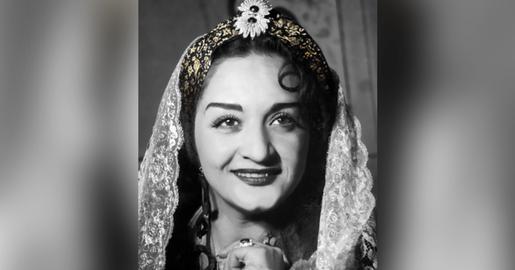
Shahla Riahi became the first woman film director in Iranian cinema in 1956, at a time when Hollywood did not have that many women directors.
Riahi was born Ghodrat-Zaman Sharbat-Chi Vafadoost in Tehran in 1926. Her father, who was known as Sheikh Agha, was the head of the Justice Department in the north-eastern city of Mashhad. In 1926, her father traveled to Tehran as a representative to the assembly that transferred the Iranian crown from the moribund Qajar dynasty to military strongman Reza Pahlavi. Sheikh Agha already had a family in Mashhad, but he took a teenage girl as his second wife in Tehran. Upon returning to Mashhad, he learned that his Tehran bride was pregnant, but he never got to see his daughter because he died of a heart attack a few days after she was born.
Before Shahla was born, her mother told her grandmother she had dreamed that her child would become famous. After she was born, she registered her family name as Sharbat-Chi, her own surname, but, after a while, she got her a new identity card with his father’s family name, Vafadoost.
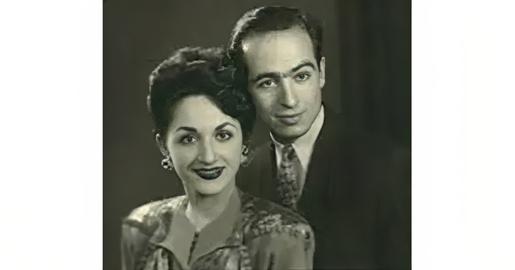
Shahla’s mother, who was not even 17, remarried after her birth and she grew up in her grandparents’ care. But her mother’s second marriage changed her life. Her stepfather had a nephew named Esmail Riahi. When the two met years later, Esmail fell in love with Shahla and asked to marry her. They married in 1941.
Esmail was a schoolteacher, but he had also appeared in a movie and several plays. In 1944, he introduced Riahi to a director, Moez-o-Divan Fekri Ershad, a pioneer of Iranian theater and cinema. Ershad was about to stage a play about Caliph Harun al-Rashid and chose Shahla to play the female lead. At 18, she started an acting career that would last for decades.
She did not have an easy start. Her family was religious and conservative. When they learned she had appeared on stage, they reacted furiously. Her mother, grandmother and half-sisters all wore black and declared she was dead to them. They also sent one of her sisters to spy on her. “She donned a chador and in the evening came to the theater where I was performing to see what I was doing and report back to my brother,” Riahi once said in an interview. “My brother, who was in the military, sent me a message from Mashhad, saying, ‘I will come to Tehran to either get your divorce or kill you both.’”
Esmail, however, fully supported her. She continued acting, and in 1951 she made her screen debut in the film “Golden Dreams,” a fantasy film directed by Fekri Ershad.
“A Different Kind of Movie”
Riahi’s success as a film actress came quickly. With her penetrating eyes, she often played calm and self-sacrificing women. In 1956, she decided to direct her own movie, “Marjan.” “Marjan was a different kind of movie,” she later said. “It was really a turning point in Iranian cinema. It set an example for ‘village movies.’ Until then, [Iranian] movies were all about singing and dancing, fighting, chases, etc, but...the subject of this movie was designed to make you think.”
The movie tells the sad tale of a gypsy girl named Marjan whose tribe settles near a village. From poverty and desperation, her father steals a lamb belonging to the village school. The schoolteacher captures the father and locks him up in the school. When Marjan goes to the village to visit her father, she meets the teacher and they gradually fall in love. But then the teacher moves to the city. Marjan follows him but is unable to find him. She starts to work as a nurse in a hospital. Unbeknownst to her, the teacher has already married a girl from the city. When his wife is brought to the hospital to give birth, the two meet again, but he does not recognize her. Marjan returns to her tribe, dejected and heartbroken.
Critics praised the film, but it was not a commercial success. Shahla’s first experience as a director was also her last, but she continued acting in numerous plays, movies and TV dramas. She appeared in English plays such as “Romeo and Juliet,” “The Merchant of Venice” and “Lady Windermere's Fan.” In all, she acted in more than 70 movies and 20 TV series, the last of which was made in 2003.
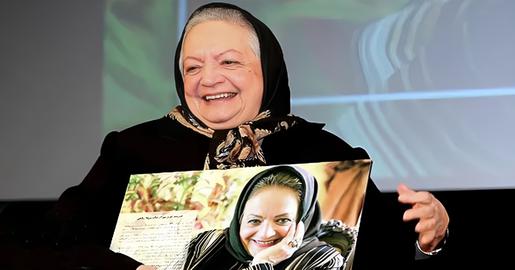
After her husband Esmail died in 2010, Shahla's mental health declined and, in the last years of her life, she could not remember anything about the groundbreaking role she had played in Iranian cinema. According to her daughter, Shahla woke up at night and searched for her husband, who had stood with her throughout nearly 70 years.
Shahla Riahi died on December 31, 2019, at the age of 93, after spending 10 months in hospital.

Interested in writing for IranWire?
Share your stories.


comments