



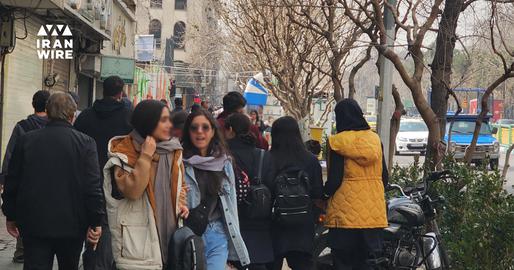
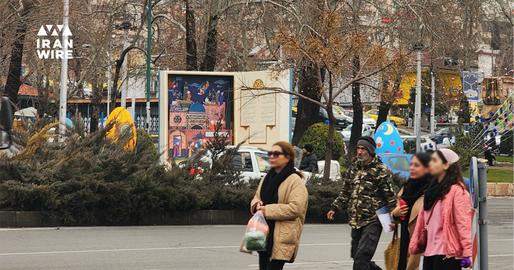
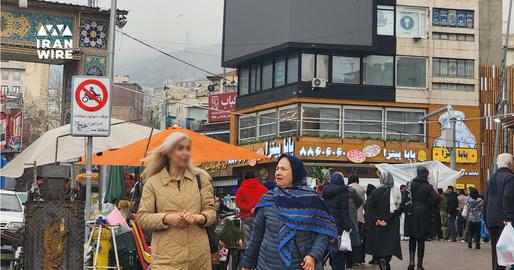
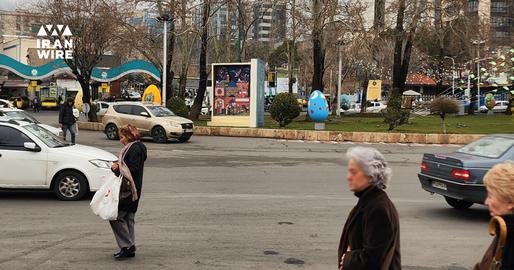
Streets have become centers of women’s visible resistance in Iran.
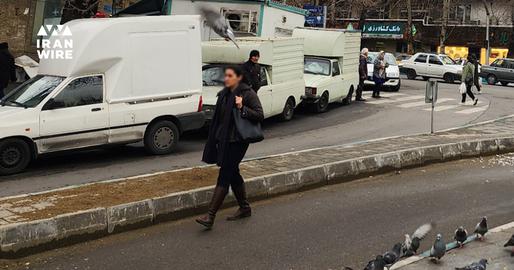
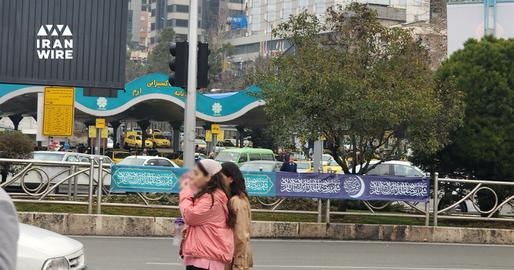
In Tehran, women without mandatory hijab now walk openly from Railway Station to Tajrish Square and across the city.
Enghelab (Revolution) Street, the site of the first women’s protest against mandatory hijab on March 8, 1979, continues to be significant in this movement. Hijab officially became mandatory by law on August 9, 1983.
Ten years after this law, physician Homa Darabi set herself on fire in Tehran’s Tajrish Square in protest against mandatory hijab.
Today, women throughout Tehran walk past morality police patrols with indifference. IranWire interviewed several women of different generations about their experiences challenging these restrictions.
Generation Z on Revolution Street
Enghelab (Revolution) Street, from its beginning until today, has been one of the most important symbols of protest, both for the government and the people.
For the government, it has served as a venue for official ceremonies, including the 1979 Islamic Revolution celebrations, while for the people, it has been a site of pro-freedom and pro-democracy protests throughout the past century.
Notable demonstrations include the women’s march against mandatory hijab in 1979, coinciding with International Women’s Day on March 8, and subsequent protests, including the million-person Green Movement march on June 15, 2009, the Tehran Ashura protests of 2009, the December 2017 protests, the November 2019 protests, and the Woman, Life, Freedom movement protests.
These days, the majority of women and girls go without mandatory hijab. This is especially true for the generation referred to as Generation Z, who played a crucial role in the Woman, Life, Freedom movement.
Sarina, Nika, Hadis, Hasti, and Yalda were among those killed from this generation during the Woman, Life, Freedom movement.
Hana, without a headscarf, is walking on this street with her mother, who wears a loosely arranged headscarf.
Hana is 17 years old, and her mother appears to be forty. When asked about the most important event that happened in the month after the February 1979 revolution, neither of them knows about the large women’s march against mandatory hijab and have not read or heard anything about it.
However, they both agree on one thing: the bitter and tragic fate that the 1979 revolution has created for both of them, one from the eighties generation and the other from Generation Z.
Hana says, “I wear my own style of clothing, my mother wears hers. No one objects to the other, not even my father. Each of us has accepted a different lifestyle, but sadly, this acceptance came at the cost of the blood of many in my generation.”
Asman, Zahra, Nazanin, and Maryam are four girls between seventeen and nineteen years old, studying gold work and painting at the Farshchian Art School and College.
They knew about International Women’s Day but were unaware that forty-six years ago on this day, the largest women’s march against mandatory hijab took place on Revolution Street.
The girls, who are not wearing hijab, have come to Revolution Street during their break between classes and are talking with their male classmates.
All of them are smoking cigarettes and discussing the history that has unfolded from that great march to the present day.
Asman says, “Although I’m happy about such an event, I must also have a critical view of that generation, asking why they didn’t resist to prevent this clothing choice from becoming mandatory hijab.”
Nazanin says, “Although these days we go without hijab on the street, when we enter college, we are forced to wear headscarves. We are constantly moving between this dual life, and it’s not a good thing at all.”
Zahra and Maryam extinguish their cigarettes and, agreeing with Asman and Nazanin, say, “International Women’s Day became an opportunity for us, the generations of the 90s and 2000s, to reread the history that has passed over this country.
“This rereading might help us prevent the repetition of another tragic history. Hope for a better tomorrow is what has kept us alive.”
The Echo of Homa Darabi’s Name in Tajrish
Tajrish Square, though pictured with Imamzadeh Saleh shrine and the traditional market for the religious or older generation, is also the path to Darband, Niavaran Palace complex, and Sa’dabad.
However, beyond all these nostalgic places, for a large segment of political activists, especially human rights and women’s rights defenders, it is associated with the name of Homa Darabi.
Darabi was one of the student activists in the student movement of 1960, imprisoned as one of the most prominent students and main activists.
She, who was herself one of the revolutionaries of 1979, was dismissed from her professorship in the academic year 1990-1991 due to stricter enforcement of hijab rules, under the accusation of “not observing Islamic propriety.”
Later, her medical office was also closed. On February 21, 1995, she set herself on fire in Tajrish Square in protest against mandatory hijab.
Most women and girls who pass through this historic square remain unaware of this incident. Despite walking here without a mandatory hijab, they do not know what happened.
Two women around 60 years old, with their gray-white hair flowing over their shoulders, were the ones who mentioned the event.
Recalling that day, they told IranWire, “It was a bitter day. We found out with a delay of a few days. In those days, we had unwillingly accepted mandatory hijab, but when we heard about Ms. Darabi’s case, we still didn’t dare to remove our headscarves.
“Time had to pass until the fall of 2022, when the generations of the 90s and 2000s removed their headscarves, burned headscarves - for that courage we had in the 1979 revolution and then showed in the International Women’s Day march—to rise again from the ashes.
“Now we too, alongside various post-revolution generations, have removed our headscarves. Now we have reclaimed our lost courage.”
In addition to women and girls with optional clothing, the presence of girlfriends and boyfriends, couples, and parents with their children in optional clothing are among the recurring images of Tehran’s streets, all walking toward freedom with the dream of that bright day.
Every street or square is reminiscent of one of the many killed over the past forty-six years, especially the more than five hundred killed in the Woman, Life, Freedom movement.
Farnaz and Alireza, a young couple in their mid-thirties to forties, are walking hand in hand on Keshavarz Boulevard, a place that evokes the name of Nika Shakarami.
Farnaz says, “Finally, we got rid of the headscarf. If in the past, parents constantly told us to wear our headscarves, today even they have put aside these dos and don’ts.
“No matter where we go - metro, restaurant, cinema, shopping center, etc - we have chosen this lifestyle and clothing.
“Everywhere in the city, the number of women and girls who go without mandatory hijab is growing day by day. No force can compel this large population to return to the times before the killing of Mahsa, Nika, and Sarina.”

Interested in writing for IranWire?
Share your stories.



comments