



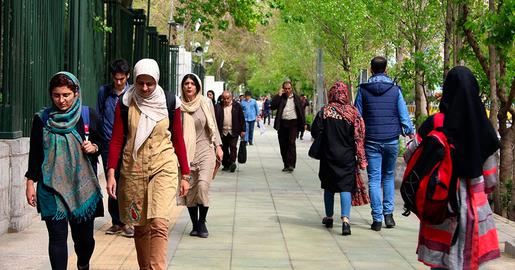
Iranian authorities have launched a coordinated messaging campaign emphasizing the importance of maintaining hope among the population.
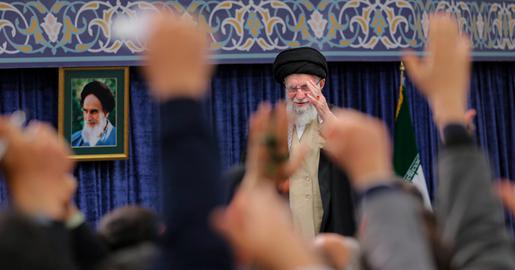
The initiative gained momentum after Supreme Leader Ali Khamenei’s January 8 address to a group in Qom, where he warned that “the enemy seeks to extinguish hope in the hearts of our youth and make them despair.”
Khamenei called on all those with public platforms to make preserving hope their “greatest and foremost objective” while avoiding messages that could spread despair.
Following Khamenei’s speech, government officials and parliamentarians echoed this message.
MP Ahmad Rastineh called hope “the key to this nation’s success,” urging everyone to “keep it alive” and share it across society.
The coordinated emphasis on hope comes when Iran faces significant economic challenges and social unrest, though officials frame public despair as primarily driven by external forces rather than domestic conditions.
The Supreme Leader of the Islamic Republic has repeatedly emphasized hope in his recent remarks.
In August last year, he stated that hope is a quality so essential that government officials who lack it should not hold office.
Khamenei said, “Hope for the future and a positive outlook on the horizon are critical indicators. Those who see the future as bleak and believe nothing can be done should not be entrusted with key responsibilities.”
He even began his annual Persian New Year address by saying, “If the light of hope is extinguished in hearts, no movement will happen. We have vast potential for progress: talented youth, a ready and willing nation, unparalleled natural resources, and a unique geographical position.”
Khamenei also instructed the judiciary to integrate hope into its handling of public affairs. He urged judges and the judiciary head to address people’s issues and restore hope.
The judiciary head, Gholam-Hossein Mohseni-Eje’i, echoed similar sentiments recently, telling Islamic Republic officials, “Instill hope in the people through your actions and words.”
Emphasizing hope has seemingly become a guiding principle for government leaders, often reiterated as a reminder to one another to maintain and convey it despite challenges.
President Masoud Pezeshkian is no exception. He stated, “We all have a duty to strengthen and deepen solidarity and work with full effort to resolve the people’s problems and challenges.”
He added, “The strongest weapon for addressing domestic issues and resisting foreign enemies is fostering solidarity and unity in society, as well as creating hope and reassurance among the people.”
In Iran, the Supreme Leader’s statements serve as a benchmark, with any deviation from the Islamic Republic’s preferred narrative often branded as “spreading despair.”
Shortly after Khamenei’s call to inject hope into society, MP Esmail Kowsari claimed that Israel was nearing economic collapse.
However, this week, while addressing the disparity between U.S. and Iranian military budgets, he acknowledged, “If our hands were not tied, we would have done True Promise 3 and 4,” referring to more strikes on Israel.
For many, this statement indirectly underscored the dire state of Iran’s economy, even in matters of national security - an apparent contradiction to the Supreme Leader’s directive on hope.
Meanwhile, Mohammad Dadkan, the former head of Iran’s Football Federation, has publicly voiced his skepticism.
He said, “Every year, officials claim a better future lies ahead, but today, no one is addressing the people’s suffering.”
He added that even in China - a country Tehran considers an ally - Iranian citizens are viewed as “terrorists and gangsters.”
Addressing Iran’s authorities, Dadkan said, “You cannot run this country. So leave. Is it an inheritance from your parents? You’ve ruled for 46 years, and it hasn’t worked. Step aside. Let the people take charge.”
The growing discontent reflects the widening gap between the government’s rhetoric of hope and the harsh realities faced by ordinary Iranians.
While officials insist on fostering optimism, many feel such narratives are a distraction from the deepening crisis gripping the country.
It seems that many in Iran are increasingly concerned about the growing number of negative developments and believe that hope has faded within the country. Even on platforms related to immigration and travel, reflections of this despair are evident.
One Instagram page focused on such topics recently posted, “When leaving is no longer called migration but a ‘rescue operation,’ it means hope is fading… Dollar at 82,000 tomans … every day farther from dreams.”
The dire economic conditions and ongoing energy crisis have left a significant portion of Iranian society with little optimism for improvement.
Meanwhile, the space for criticizing government policies appears grim and increasingly restricted.
One group highlighting this dwindling hope is the Islamic Iran Solidarity Party. In a statement this week, the party criticized the repression of dissent.
It said, “Punitive measures, threats, ineffective and divisive legislation targeting citizens and intellectuals - such as insisting on the enforcement of the Hijab and Chastity bill, resisting the complete lifting of internet filtering, and silencing reformers - are the final blows to the slogans of national unity and public trust.”
Iran’s scientific community, already battered in recent years, also appears to be losing hope under current pressures.
Recently, a group of academics released a statement protesting legal action against Mohsen Ranani, a prominent economist.
The statement condemned judicial orders to delete his previous publications, which led to the suspension of his website and channel.
The academics expressed their concerns, saying, “We hope that he, along with other intellectuals and all citizens of this land, will soon experience the profound sweetness of ‘freedom after expression’ without fear of arrest or reprisal.”
Despite widespread public concern, the government shows no signs of altering its approach. Hope, in today’s Iran, seems to have transformed into a tool for suppression and control. Any voice speaking truth to power risks being accused of “spreading despair.”
For many, the promise of hope has become yet another mechanism to silence the reality of an increasingly dire situation.

Interested in writing for IranWire?
Share your stories.


comments