



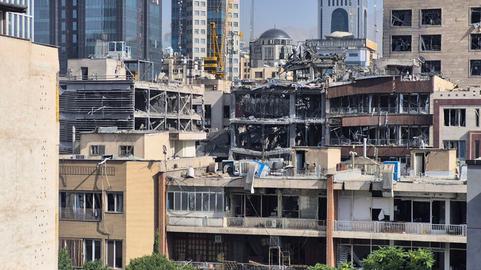
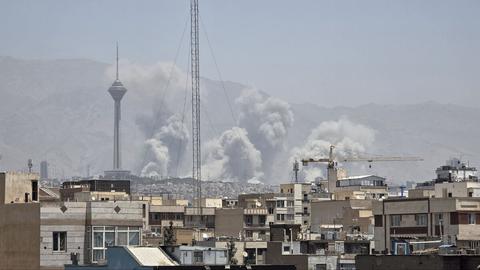
When Israel began bombing Tehran, families who had left Kurdistan years ago for work, education, or better opportunities suddenly found themselves forced to return home.
For many, the journey back was far from easy - it left behind bitter memories of a difficult and stressful experience, exposing the hidden costs of war between Iran and Israel.
"Everyone was telling me to leave quickly, and my family was insisting I return before things got worse," said a female university student who had to return to Kurdistan after the war began.
"Bus tickets usually cost about 500,000 tomans ($5.50), but I had to buy one along with other passengers for 3 million tomans ($33) per person. I just wanted to get out of Tehran somehow. I couldn’t sleep that night and followed the news the entire trip. I didn’t have a moment’s peace."
Kurdistan province has struggled for years with unemployment, lack of job opportunities, and widespread poverty.
The absence of industrial infrastructure, persistent brain drain, and high youth unemployment have pushed many families to migrate to cities like Tehran, Tabriz, or even Iraq’s Kurdistan Region for basic survival.
But the Iran-Israel war and the sudden bombing of Tehran disrupted the lives of hundreds of families, including students pursuing higher education in the capital.
While the entire country was in shock during the initial days of the war when both official and unofficial sources issued evacuation warnings for Tehran, families from Kurdistan had no choice but to return home.
One family, whose only son had been accepted into a Tehran university two years ago, had sold their home in Kurdistan to rent an apartment in the city.
The father worked at a restaurant, and the mother at a food packaging company.
"Ever since our son got into university, we packed up our entire life and moved to Tehran," the father said. "Now the university is closed, exams are suspended, and we've returned to our city.
“But we no longer have a home or work here. We’ve been staying with relatives for 10 days. We can’t return to Tehran, and staying here isn’t easy for us either."
A man who moved to Tehran nearly 10 years ago to open a fast-food restaurant, occasionally visiting his hometown, has a more complex story.
"When the war started, I was somewhat happy for the opportunity to return to my family, but I was also worried about what would happen if my shop was destroyed. All of my money is there," he said.
"The day they issued the evacuation warning, I closed the shop and hit the road. I was traveling for more than 15 hours."
“But when I arrived, I realized I couldn’t stay long. I only stayed three days and returned. Thank God the shop was safe, but two delivery workers and another employee who worked with me didn’t want to return because of the war conditions."
“Now I have to do all the work myself and only for the customers who can come to the restaurant in person."
A government office employee in Tehran considers himself lucky that he had returned to Kurdistan for a vacation when the war began.
"Thursday was a holiday, Friday the war started, and Saturday was also an official holiday. I had already returned to my city. When I saw the situation wasn't good, I stayed," he said.
"By Sunday, the office announced remote work and said offices would operate with only 30 to 50 employees. I stayed in my city until the day after the American attack on nuclear facilities, thinking the volume of attacks would decrease, and then returned to Tehran.
“But the worst bombings were in those last two days. The sound of each explosion felt like a knife cutting through my brain. When I woke up Tuesday morning and saw the ceasefire news, I finally breathed a sigh of relief. But those few days, I truly couldn’t even sleep properly from fear."
Meanwhile, many drivers, workers, and migrants working in Iraq’s Kurdistan Region experienced severe anxiety, especially when the internet was suddenly cut nationwide on Wednesday.
"Until then, I had video calls with my family several times a day," said one worker. "But when the internet was cut, I couldn’t stand it for even one day. The next day, I immediately returned to be with my family."
A driver from one of Kurdistan’s cities described his brief return experience.
"I could only afford to stay unemployed for two days. I left my son at his grandfather’s house until the situation calmed down and returned to work alone."
"But my son's condition isn't good at all. In his calls, he asks me questions, like the one he keeps repeating: 'How many more days do I have to stay here, unemployed and uncertain?' I tell him to be patient for a few more days. God willing, everything will be fine."
In the end, the war may have ended with a ceasefire, but the bitter reality of economic inequality, forced migration, and job insecurity still looms over the people of Kurdistan.
They returned not by choice, but to save their lives. Now that they’re back, many are stuck in limbo - with no way back and no clear path or hope for the future.

Interested in writing for IranWire?
Share your stories.


comments