



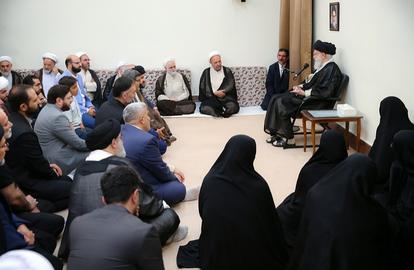
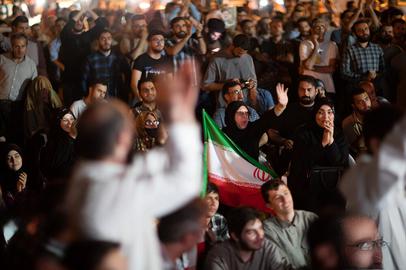
The acknowledgment by the leader of the Islamic Republic of low participation in the election is unprecedented.
Despite this acknowledgment, he provided various reasons for the decrease in participation, avoiding acceptance of the main cause.
Notably, this time he did not attribute the low turnout to the "enemy" discouraging the people.
It appears that Ali Khamenei, like some others, believed the polls that predicted over 50 percent participation in the elections.
In the election, Ali Khamenei's emphasis on participation often included subtle endorsements of his preferred candidates.
Now, he might need to abandon the strategy of "participation with low-certain results" and adopt a new approach.
Khamenei's acknowledgment of low turnout is unprecedented in several ways.
The only previous second-stage elections in Iran were in 2005, and he did not see the need to issue a message between the two rounds.
He has previously denied low participation and even praised the turnout in the 2021 election, despite having the lowest participation rate in Iranian presidential election history at 48.8 percent, with spoiled votes taking second place.
Perhaps he believed that participation in this year's election would mirror that of 2021, influenced by the polls.
Both domestic and some foreign institutions' surveys indicated a participation rate above 50 percent.
However, signs in the statistics suggested otherwise, such as a high number of respondents who did not clearly express their opinions or were unwilling to answer questions.
The IRNA news agency noted that many respondents in the polls indicated they would participate but did not name their preferred candidate.
In the last survey, this figure reached 18.5 percent of all participants.
The expected participation rate for the second phase of the election remains uncertain. Media reports indicate that no domestic opinion polling institutes have published their poll results for the second phase since last Wednesday.
Although the leader of the Islamic Republic acknowledged that the low voter turnout was unexpected, he did not accept the main reasons for non-participation and relied on the same justifications as before.
He said, "What is certain is that if anyone thinks that these people who did not vote because they were against the system, they are very wrong. This impression, this understanding is 100 percent wrong."
Khamenei emphasized that people have various obstacles preventing them from voting, such as personal problems and lack of time, and mentioned that some might not like certain officials.
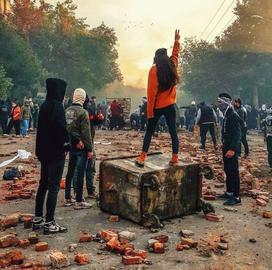
However, he did not address the widespread dissatisfaction with the entire establishment or the recent protests.
The only notable difference from his usual rhetoric was the absence of blaming the "enemy" for discouraging participation.
Similar reasons for low participation were echoed by fundamentalist media, attributing it to issues like "lack of attention to the needy" or the performance of Hassan Rouhani's government.
Other media pointed to the economic situation as the main reason.
However, the impact of the 2022 protests on reduced participation has been rarely discussed in these analyses.
Khamenei's acknowledgment has opened the door for political figures and media to discuss the low turnout more freely.
In a debate with Saeed Jalili, Masoud Pezeshkian said, "60 percent of the people did not vote and do not accept us." Supporters of Pezeshkian have also reiterated this point.
While Khamenei's words may not significantly change the election atmosphere, they could influence the actions of institutions under his supervision.
In previous elections, the government followed a strategy of low participation with reliable results.
Despite this, Khamenei had previously urged even those who do not support the system to vote "to preserve the reputation of the country."
In 2013, he said, "It is possible that someone does not want to support the Islamic system for any reason, but they want to support his country. Everyone should come."
Now, it seems his institutions might be moving away from the strategy of low-result participation and aiming to increase turnout as they have in the past.
Interested in writing for IranWire?
Share your stories.


comments