



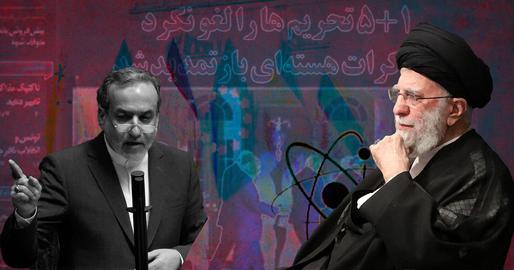
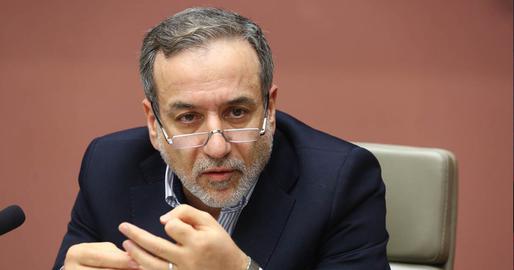
Abbas Araghchi, the newly appointed Foreign Minister of the Islamic Republic, has stated that reviving the 2015 nuclear deal is no longer feasible.
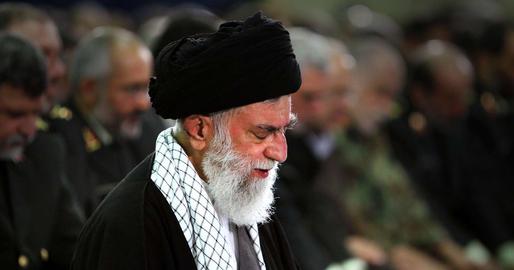
He emphasized that any new agreement would need to build on the existing framework and the experiences of past negotiations. This implies that, for a new agreement to be viable, Supreme Leader Ali Khamenei would need to prepare Iran's negotiation team for renewed talks, which would not be possible without talking with the United States, a key member of the 5+1 group.
In his first public remarks after receiving a vote of confidence from the parliament and assuming his role as minister, Araghchi clarified that while reviving the deal in its current form is impractical, Iranian media interpreted his comments as declaring the nuclear deal dead.
The agreement, officially known as the Joint Comprehensive Plan of Action (JCPOA), was reached in the summer of 2015 after 22 months of negotiations involving Iran, the United States, France, the United Kingdom, Russia, and China. The deal marked a period of exceptional diplomatic engagement between the Islamic Republic and the West.
Initial private talks between Iran and the U.S. in Oman laid the groundwork for the agreement. The discussions, which involved the foreign ministers of both countries, continued for 16 days - marking the longest U.S. Secretary of State visit abroad and the most extensive talks in Iran-U.S. relations.
Despite hopes that the JCPOA would normalize the Islamic Republic, Khamenei’s later statements reaffirmed support for proxy militias and a ballistic missile program, fueling tensions with neighboring countries and the West.
Following the JCPOA’s implementation, Khamenei’s anti-American rhetoric and criticism of the agreement as a tool for U.S. influence gained traction. This criticism contributed to Donald Trump labeling the JCPOA as the worst agreement in U.S. history, leading to his administration’s withdrawal from the deal over a year into his presidency.
Since then, Iran has gradually distanced itself from the JCPOA's restrictions, avoiding the term “withdrawal” while reducing the scope of IAEA inspections. The IAEA now reports a significant lack of insight into Iran’s nuclear activities. Tensions escalated further after the U.S. assassination of Qasem Soleimani, commander of the IRGC’s Quds Force.
A year after Soleimani’s assassination and with the inauguration of President Joe Biden, indirect negotiations for the JCPOA’s revival resumed, ordered by Khamenei and conducted by Araghchi during a visit to Vienna.
In his first statement as Foreign Minister, Araghchi noted that Iran’s conditions for revitalizing the JCPOA had prevented progress. Although former Foreign Minister Mohammad Javad Zarif had indicated that removing the IRGC from the U.S. terrorist list was part of the draft agreement, Khamenei, during his last meeting with Hassan Rouhani’s administration, deemed the draft unenforceable.
While Abbas Araghchi led negotiations under the supervision of the Supreme National Security Council, which Khamenei approves and occasionally attends, he was later sidelined. A new draft agreement was prepared by Ali Bagheri Kani, Araghchi’s successor, during Ebrahim Raisi’s administration. Bagheri Kani, who is Khamenei’s son-in-law’s brother and a trusted advisor, negotiated with the Americans, often with the Russian ambassador in Vienna also involved. Despite these efforts, no substantial results were achieved.
Though Abbas Araghchi initially led negotiations under the Supreme National Security Council’s oversight, he was later replaced by Ali Bagheri Kani during Ebrahim Raisi’s administration. Bagheri Kani, Khamenei’s son-in-law’s brother and a trusted advisor, engaged in talks with the Americans, often alongside the Russian ambassador in Vienna. Despite these efforts, the negotiations yielded no significant outcomes.
Meanwhile, the Islamic Republic’s support for Russia’s military aggression in Ukraine, including supplying drones, led to additional sanctions from the European Union and the United States.
The U.S. withdrawal from the JCPOA and the lack of adherence to the agreement by Iran and the European Union have resulted in missed deadlines for resolution. Iran’s sanctions remain in place, trust in the country’s nuclear program has declined, and the situation has become more complex with the looming threat of nuclear weapon development.
Four months before taking office, Araghchi warned at a conference in Qatar that Iran might reconsider its nuclear doctrine, potentially building nuclear weapons. This concern was reflected in a report by the IAEA and formally added to Iran’s issues in a resolution approved shortly after Raisi’s death.
Following this resolution, Britain, France, and Germany issued a joint statement calling the report “worrying” and suggesting that by October 2024, there would be a crucial opportunity to find a diplomatic solution to the “Iranian nuclear crisis.” This date marks the expiration of Security Council Resolution 2231, after which it would be easier to reinstate sanctions against Iran.
Resolution 2231 had suspended Security Council sanctions against Iran but included a mechanism allowing any of the five permanent members (the U.S., U.K., France, China, and Russia) to revive these sanctions if they believed Iran was not complying with the JCPOA.
With only one year remaining and a new U.S. president expected to be elected by January, reaching an agreement appears increasingly unlikely. The next four months are crucial for preparing the Iranian government for what Khamenei has previously termed the “lifting of sanctions with honor,” and also “heroic flexibility.”
Given the uncertain political climate in both the U.S. and Iran, Araghchi’s statements did not indicate a focus on improving relations with Europe. His remarks suggest a continuation of the status quo with European countries and uncertainty within the Iranian government regarding Khamenei’s final stance on the JCPOA.
The 85-year-old Khamenei will soon need to decide whether to negotiate directly with the United States within the 5+1 framework or brace for the implications of Resolution 2231’s expiration next year and the return of the UN Security Council’s sanctions.

Interested in writing for IranWire?
Share your stories.


comments