



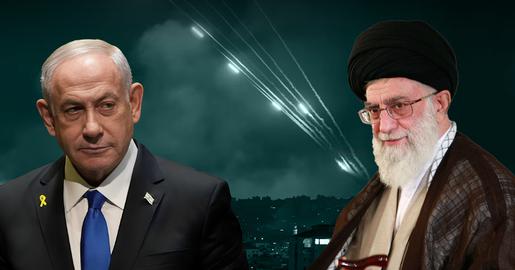
Tensions between the Islamic Republic of Iran and Israel have reached unprecedented levels, with Israel vowing imminent retaliation for a second missile strike from Iran, while Iran has issued its own threat of a stronger response.
Armed conflicts often emerge from a series of legal and political disputes and do not escalate into war immediately.
At times, as both sides persist in self-defense while overstepping the boundaries of legitimate defense, the situation can escalate into full-scale war.
Conflicts can originate from unresolved issues such as border disputes, political disagreements, or competition over resources like oil, water, or territorial claims, which may then escalate to aggressive military actions.
A provocative military act, such as an attack, invasion, or significant breach of territorial integrity, can also trigger such aggression. An example of this is Iraq’s military actions in 1980 before its full-scale invasion of Iran in September of that year, or Israel’s provocations targeting the Islamic Republic’s interests in Syria, Lebanon, and even within Iran, such as the assassination of Ismail Haniyeh, the leader of Hamas, who was an official guest of the Iranian government in Tehran.
In some instances, the continuation of legitimate defense can also lead to war. After Israel’s deadly attack on the Islamic Republic’s consulate in Damascus in April, Iran launched its first missile attack from its own territory against Israel, describing it as an act of “legitimate defense.”
The barrages of missiles were launched at Israel after Haniyeh’s assassination in Tehran and the death of Abbas Nilforoushan, deputy operations commander of the Islamic Revolutionary Guard Corps (IRGC), in an Israeli airstrike in Beirut.
Israel has now said it will respond to Iran’s second missile attack, and Iran has warned of an even stronger military reaction. Under international law, specifically Article 51 of the United Nations Charter, a country has the right to defend itself in the event of an armed attack, which can set the stage for escalating tensions.
The concept of the “right to war,” known in legal terminology as Jus ad Bellum, refers to the legal conditions under which countries may engage in war. For instance, Iranian foreign minister Abbas Araghchi has said that while Iran does not seek war, it is not afraid of it if it comes.
The UN Charter generally prohibits the use of force, but there are two key exceptions: the right to self-defense in response to a military attack, and the use of force with authorization from the UN Security Council to maintain or restore international peace and security.
In the current scenario, Iran has invoked the right of “legitimate defense” to justify its two missile strikes on Israel, while Israel has indicated it will respond in a similar manner.
Before a full-scale war erupts, initial localized skirmishes may involve limited military action. Although force is used, it does not necessarily constitute war. For example, in January, after the Islamic Republic launched a missile deep into Pakistani territory, Pakistan retaliated similarly. Both countries violated each other’s territory within a few hours, but this exchange did not escalate to the point of war.
If diplomacy fails, such conflicts can expand, leading to broader military engagement. In some cases, the international community or the UN Security Council may formally recognize the conflict as war. When hostilities reach a certain threshold, marked by “organized and sustained” military operations, where both sides consistently use military force, the situation may be classified as war, even if neither side officially declares it.
Once military tensions between two or more countries escalate to the point of war, the legal framework governing peace shifts to international humanitarian law, or Jus in Bello. At this stage, the four Geneva Conventions apply, regulating how warfare is conducted, protecting civilians from the consequences of war, and imposing limits on the use of certain weapons.
These laws aim to minimize suffering. Violations, such as targeting civilians or inflicting unnecessary harm on soldiers, constitute war crimes. These can lead to further escalation and potentially result in international intervention, with military commanders and political leaders facing prosecution. For example, Russian President Vladimir Putin faces war crime charges over his military actions in Ukraine, and the International Criminal Court has issued a warrant for his arrest.
During armed conflicts, both affected nations and international organizations, such as the United Nations or regional bodies like the European Union and the African Union, often attempt to mediate and prevent the escalation into war. If mediation efforts fail and an armed conflict turns into full-scale war, the next step is typically working toward a ceasefire and, ultimately, lasting peace.
Iran and Israel have already experienced some degree of armed conflict. If future military developments escalate hostilities and exceed legal limits, and diplomatic efforts fail, the current fragile situation could transform into a war - something Iran has not encountered since accepting UN Security Council Resolution 598 in 1988.

Interested in writing for IranWire?
Share your stories.



comments