



Before the election and in the days and weeks that followed, President Masoud Pezeshkian made numerous promises, some of which directly opposed the preferences of the Supreme Leader of Iran.
These promises included pledges to lift internet filtering and provide free internet access.
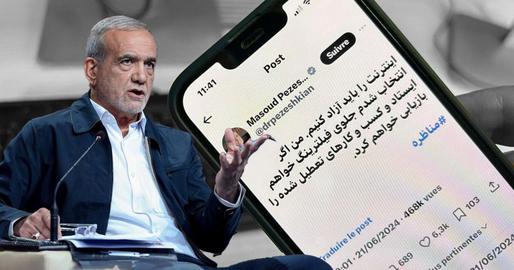
Following his approval to run for the presidency, Pezeshkian promised to lift internet restrictions in some of his campaign speeches and social media posts.
A week before the election in June, he posted on X - a social media platform filtered in Iran - saying, “The internet must be free. If elected, I will stand against filtering and restore the closed businesses.”
A few days before the second round of voting, he reposted a tweet by Saeed Jalili that was critical of authorities who used unfiltered internet themselves while prescribing “protection plans” for the public.
Pezeshkian added, “They enjoy good conditions for themselves, but leave the people with nothing.”
He also criticized the country’s “ineffective filtering system” in another tweet, vowing to reform it to bring thousands of online businesses back into the economy, which would benefit millions of Iranians.
He even went so far as to call internet filtering “oppression.”
Pezeshkian also declared in another post, “I guarantee that my government will stand firmly against morality police, filtering, and outside pressures in all its sessions.”
Is the Internet in Iran Now More Free?
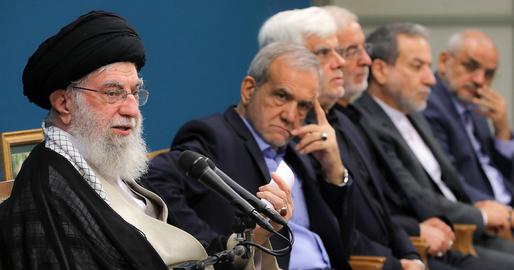
Less than a month into Pezeshkian’s presidency, Supreme Leader Ali Khamenei met with his cabinet and emphasized the need for “lawful governance” over social media platforms.
Khamenei reiterated his previous statements about the internet in Iran being “out of control,” and asked the administration to develop and enforce regulations if none currently exist.
Shortly afterward, Pezeshkian’s Minister of Communications, Sattar Hashemi—referred to by government supporters as the “young minister” and accused by conservatives of being a “show-off” - said, “Of course, the internet needs lawful governance.”
Hours later, he told reporters that removing filters “should be addressed with expert insights,” adding, “This is a public demand, and we are following up on it.”
At the same time, Pezeshkian himself backtracked in a meeting of the Supreme Cyberspace Council, saying, “For now, we cannot think about lifting the internet filtering.”
He also criticized the lucrative business some have made selling VPNs.
Despite these discussions, at least four citizens told IranWire they feel these statements from the Communications Minister and Pezeshkian have made little difference in practice.
One resident from southern Iran said that while internet speed hasn’t improved since Pezeshkian took office, filtering has eased somewhat, and Instagram is sometimes accessible without a VPN, albeit very slowly.
“We’re right to be cautious about any positive change, wondering if there’s something behind it,” the citizen added.
Another resident from Razavi Khorasan told IranWire that internet speed is still poor, and filtering hasn’t changed.
They often have to buy VPNs, which frequently disconnect. Relying on Instagram for business, the resident reported that uploading a short reel can take up to seven or eight hours.
A resident from Kurdistan said, “The internet situation hasn’t improved - it’s gotten worse due to recent attacks. We pay for expensive internet and quickly run out of VPN access.”
A user in northwest Iran said that both internet speed and filtering have worsened.
Working on theses and research articles, the resident said that even Google Notebook is filtered, saying, “Ebrahim Raisi’s time was easier - under Pezeshkian, we spend our time finding VPNs that work.”
One Tehran resident said, “Pezeshkian’s promises were just to keep people hopeful - everyone knows Khamenei makes all the decisions, and Pezeshkian can’t change anything.”
‘Pezeshkian Lacks Real Power to Change’
Alireza Manafi, an internet and digital security researcher, told IranWire that internet repression extends beyond filtering alone.
According to him, multiple layers of restrictions prevent people’s access to the internet, and lifting the filtering won’t solve everything.
Manafi said that disruptions to VPN protocols and encryption that were previously implemented remain in place.
He explained that restrictions, such as localizing access to certain websites - banks and government services - continue, as well as giving internal services advantages in speed and cost.
“These restrictions have been in place since Mahmoud Ahmadinejad’s administration, and each administration has pushed them further - they’re not easy to reverse.”
Manafi explained that Khamenei ultimately determines internet policy, adding, “When he describes the internet as insecure, a new law appears soon after in Parliament which tightens control over the internet.
“So, not only has there been no progress toward internet freedom in these 100 days, but there’s little hope for any, given that Khamenei dictates policies.”
Manafi also pointed out that hardline political groups are pressuring against any relaxation of internet controls.
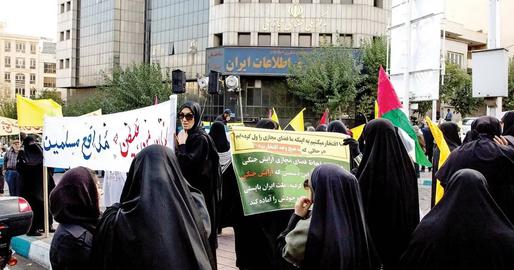
“The draft Internet Regulation Plan, led by Hamid Rasaei in Parliament, lacks details but resembles the so-called ‘Protection Plan,’ aiming to increase restrictions. Recently, a group even rallied against lifting social media filters.”
Manafi referred to a recent pro-government rally in Tehran, where a woman expressed her support for restrictions, saying, “My honor is being massacred on Instagram.”

Interested in writing for IranWire?
Share your stories.


comments