



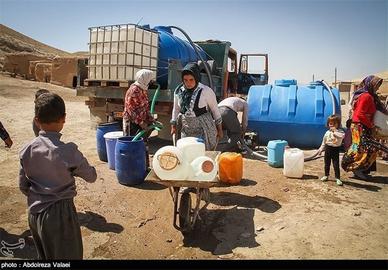
SAQQEZ - The tap sputters, then runs dry - this is becoming routine in a city surrounded by water.
Located among the verdant peaks of the Zagros Mountains, Baneh should be the last place in Iran facing water scarcity.
While Baneh typically enjoys around 800 millimeters of annual rainfall, the current agricultural year has delivered a shock.
By March 20, rainfall had plummeted to just 300 millimeters - less than half the 710 millimeters recorded during the same period last year.
The decline comes at precisely the wrong moment for a city whose population and water demands have surged dramatically over the past decade.
Baneh’s transformation from “large village to small city” happened with breathtaking speed.
The 2011 census counted around 90,000 urban residents and 42,000 in surrounding villages. By 2016, official figures showed the district’s population had swelled to 158,000, with 115,000 in the city proper.
With a growth rate of 3.7 per cent - the highest in Kurdistan Province - experts believe Baneh’s population now approaches 190,000.
The commercial boom, fueled by Baneh’s role as a trade hub in western Iran, brought prosperity but placed immense pressure on infrastructure never designed for such numbers.
The city’s water requirement is 400 liters per second, sourced primarily from the Abbas Abad and Sabadloo dams.
Yet even at full capacity, these reservoirs hold just 20 million cubic meters combined - Abbas Abad Dam containing 16 million and Sabadloo a mere 4 million.
For a rapidly expanding city in a year of diminished rainfall, these numbers spell trouble.
As summer approaches, government responses have so far generated more meetings than solutions.
The Kurdistan governor has elevated the crisis to the national level, forming a “special water stress working group” and requesting 1.25 trillion tomans ($15 million) from the First Vice President to finance an ambitious but controversial plan: transferring water from Saqqez city’s Cheraghveis Dam to Baneh.
Experts warn this approach could prove both logistically challenging and potentially dangerous, expanding water tensions to neighboring Saqqez, a city already facing its own water imbalance issues.
“The water crisis has roots going back many years,” one Baneh citizen told IranWire. “Each year, when rainfall conditions improve, officials forget about the issue and don’t remember until the next drought that Baneh has such a situation.”
Civil activists have organized, signing a petition to President Masoud Pezeshkian that identifies four critical factors behind the crisis: “non-compliance with consumption patterns,” “weakness of relevant agencies in managing and repairing the distribution network,” “lack of necessary studies and predictions,” and “several violations in illegal connections and unauthorized well drilling.”
Another resident points to the unchecked proliferation of garden homes surrounding the city, each drawing from deep and semi-deep wells without proper oversight.
“How can a city with 150,000 people be supplied with 20 million cubic meters of water?” the citizen asks. “This is how, with some mismanagement, they have created such a large crisis in one of the most water-rich cities with the highest rainfall in the region.”
Baneh’s rapid commercial development happened without corresponding infrastructure planning.
As one citizen said, “Perhaps turning Baneh into a commercial city was a mistake from the beginning because there was no plan behind it.”
The city’s growth trajectory tells the story of mounting pressures.
Initially benefiting from border market activity and free movement of goods, Baneh later faced border closures and limitations that gave rise to a number of kolbars.
Kolbars are porters who haul goods on their backs across long distances at Iran’s borders, mainly in the impoverished, mountainous Kurdish regions adjacent to Iraq.
In 2024, the number of deaths and injuries among border porters in Iran’s western provinces rose by 15 per cent, with 345 kolbars affected by violence and harsh conditions.
Casualties recorded in West Azerbaijan, Kurdistan, and Kermanshah provinces included 59 fatalities and 286 injuries.
Electricity shortages have already damaged parts of the market economy, leaving residents wondering what new hardships the water crisis will bring.
The proposed transfer of water from Saqqez’s Cheraghveis Dam - located around 25 kilometers from Baneh - has gained traction among some local media and officials.
Supporters cite Baneh’s purported water rights of 15 million cubic meters from the dam as justification.
Yet this solution comes with significant risk.
Cheraghveis Dam was inaugurated during former President Ebrahim Raisi’s administration specifically to supply agricultural water to Saqqez farmlands, drinking water for Saqqez city, industrial water, and environmental water rights.

Interested in writing for IranWire?
Share your stories.



comments