




When cultural heritage journalist Maryam Jalilvandfar posted about restoration contracts in Fars province on her Instagram page, she never expected to join the growing ranks of Iranian journalists facing legal action.
Yet her story about contract irregularities drew swift retaliation - a lawsuit from the Heritage Conservators Association of Fars province that exemplifies Iran’s expanding scope of press restrictions.
Gone are the days when legal challenges primarily targeted political reporters and op-ed writers.
Today, journalists covering everything from environmental issues to architectural preservation find themselves navigating an increasingly complex legal issues.
The case against Jalilvandfar is particularly telling.
Her post focused on technical aspects of restoration contracts - the kind of oversight reporting that, in many countries, represents the fundamental work of journalism.
The lawsuit against her sends a clear message to other journalists: no topic is too specialized or seemingly apolitical to escape scrutiny.
For over two decades, political journalists in Iran have frequently faced legal repercussions for their work.
The crackdown on political journalists intensified in the spring of 2000, but the scope of those targeted by prosecutors has since expanded.
Today, environmental, social, and cultural heritage journalists are also being summoned to court.
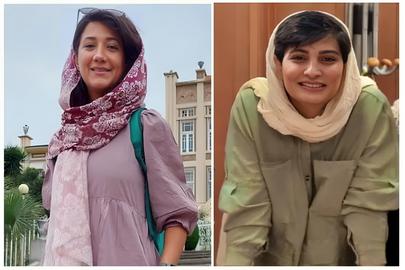
After the death of Mahsa Amini in the custody of the morality police, security forces and the judiciary, confronted with widespread public protests, cited the reports and photographs of Niloufar Hamedi and Elaheh Mohammadi as the cause of the protests, leading to the imprisonment of these two social journalists.
Since then, journalists across various fields have faced legal action for the smallest incidents.
Another example is the reaction of social journalists to the suspicious death of Armita Geravand, which led to a group of them being summoned to court.
What has happened now reveals just how much official institutions and their collaborators are working against critical reporting and transparency, even in non-sensitive fields.
Maryam Jalilvandfar, a long-time cultural heritage journalist, recently asked in an Instagram story how the Heritage Conservators Association of Fars Province managed to secure contracts with the province’s cultural heritage department while local restorers remain unemployed.
By simply asking this question, a cultural heritage association filed a lawsuit against the journalist and accused her of “spreading false information.”
Although the lawsuit and court case may not result in any judgment against the journalist, it reflects a larger image of the unsafe environment for media work in Iran - a space where even a simple question in an Instagram story cannot be tolerated.
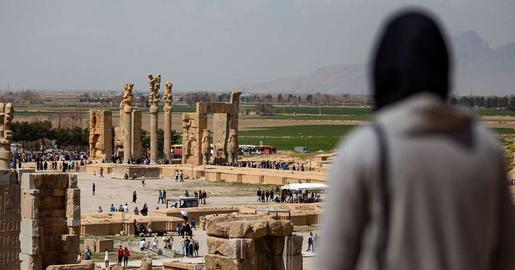
High visitor numbers at museums and historical sites in Fars Province demonstrate how rich and significant the province is in terms of cultural heritage.
Fars is home to the most important Achaemenid and Sasanian historical sites, as well as post-Islamic Iranian cultural remains, making it one of the top destinations for heritage tourism - seven times more visited than Isfahan Province.
In recent years, cases like the destruction of Shiraz’s historical sites during the 57-hectare development project around the Shah Cheragh shrine, the subway passing under historical buildings in Shiraz, harmful actions around sites like Persepolis, the capital of the Persian Empire, and poor restoration practices have drawn significant media attention.
Hasti Poudforoush, a historian, told IranWire that the negative changes and events in Fars and Shiraz align with the growing efforts by authorities to make the city look more religious.
She pointed to the 57-hectare development project around Shah Cheragh and its connection to the Imamzadeh Ebrahim shrine, adding that, in the project, 360 historic homes have been destroyed or abandoned.
In a country with over half a million historical sites, it is unrealistic to expect the government to protect and oversee the condition of all of them.
However, the work of local associations and the media has often filled in for the government’s oversight, preventing the destruction of sites and buildings of historical value.
Hasti Poudforoush said that in the 2000s, the activities of various research centers in cultural heritage and the establishment of the Cultural Heritage News Agency contributed to raising awareness and providing information, which led to public demands.
These demands eventually sparked million-strong campaigns against dam construction.
Despite this, recent media reports indicate that the Ministry of Cultural Heritage is now more inclined to hide certain actions rather than ensure transparency.
In recent years, reports have revealed the destruction of historical sites with approval from cultural heritage officials.
One heritage activist in Iran told IranWire that there are practically no active and effective heritage associations in the country.
He added that either these associations turn a blind eye to the actions of the Ministry of Cultural Heritage in exchange for small or large projects, or they stop functioning due to financial problems and other pressures.
According to the activist, critical news about cultural heritage is rarely seen in the media, which is likely connected to the way the Ministry of Cultural Heritage treats journalists.
Journalists in Iran face increasing dangers, with growing restrictions on cultural heritage reporting and rising risks of lawsuits.
The annual report by Reporters Without Borders on world media freedom in 2024 shows that Iran remains at the bottom of the press freedom ranking, positioned at 176th. Only Syria, North Korea, Afghanistan, and Eritrea have a worse situation than Iran.

Interested in writing for IranWire?
Share your stories.





comments