



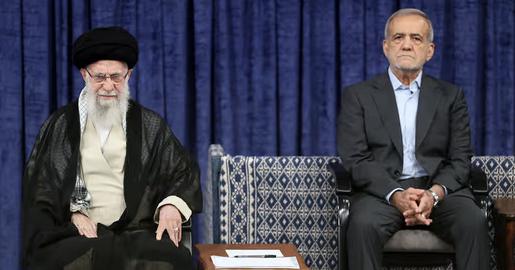
All 19 ministers of Iran's cabinet, introduced to parliament with the "approval" of Supreme Leader Ali Khamenei, secured a vote of confidence.
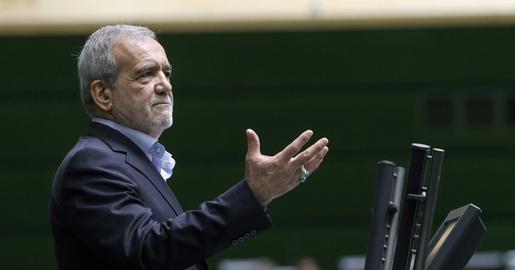
For the first time in the Islamic Republic's history, a president openly told parliament: "I don't want to tell the details. I want to say that we have coordinated and come here... approve it... we all agreed with the security organizations, the Revolutionary Guards, and the Intelligence Organization and presented this list of the cabinet."
Following this speech, the hardline parliament endorsed all the ministers.
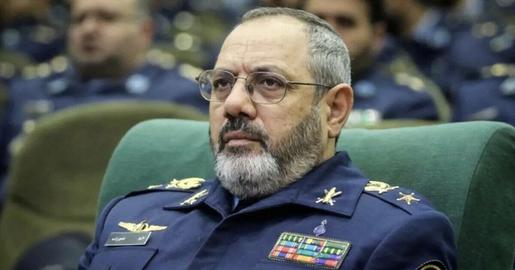
The candidate who received the most support from legislators was Aziz Nasirzadeh, the new defense minister, who secured 281 votes out of the 288 legislators present in the 290-seat chamber.
A day before the confidence vote, the Islamic Revolution faction, the largest in the parliament, conducted an internal vote where four ministers perceived as "close to the reformists" did not secure approval.
However, President Masoud Pezeshkian's references to the Supreme Leader during his speech swayed the vote in favor of the proposed ministers.
It has been speculated that since Akbar Hashemi Rafsanjani's presidency, appointing ministers for critical ministries such as foreign and interior affairs, intelligence, and defense has required the Supreme Leader's approval.
The Supreme Leader's involvement was explicitly acknowledged by Khamenei's office in a 2017 article titled "The main concern of the leader of the Islamic Revolution regarding the Cabinet," which highlighted his role in selecting officials.
For the first time since his support for Mahmoud Ahmadinejad's presidency in 2011 failed, Khamenei hinted at the possibility of reviving the post of prime minister.
He stated, "Today, our system is a presidential one, the people choose the president by their own direct vote, and so far, it has been a very good and experienced method. However, if in the near or distant future - though probably not in the near future - it is felt that a parliamentary system is preferable, as is common in some countries, there would be no issue" and the Islamic Republic system can adapt.
In August of that same year, Hamidreza Katoozian, then a Tehran representative in parliament, echoed this sentiment, suggesting that "the country can have a prime minister as the highest executive officer, elected by the parliament."
Although the idea has largely remained at the level of "officials' statements," the "necessity of fundamental legal change" and "shifting from a presidential to a parliamentary system" have been raised multiple times.
However, changing the constitution for this purpose is not straightforward. Article 177 of the Constitution, added during the 1989 revision, allows the leader of the Islamic Republic to propose constitutional amendments to the Constitutional Revision Council after consulting the Expediency Council. These amendments must then be approved by the council, signed by the leader, and finally ratified by a majority in a referendum.
It seems, though, that Khamenei, bypassing these legal formalities, has positioned President Pezeshkian as a de facto prime minister. The president introduced "all the members" of his government with Khamenei's approval. Political activist Abbas Abdi, who supports Pezeshkian, even referred to him as "Prime Minister."
Khamenei himself served two terms as president before the post of prime minister was abolished through a constitutional amendment. This means he never held the title of head of government or played an official role in selecting "all members of the cabinet."

Interested in writing for IranWire?
Share your stories.


comments