



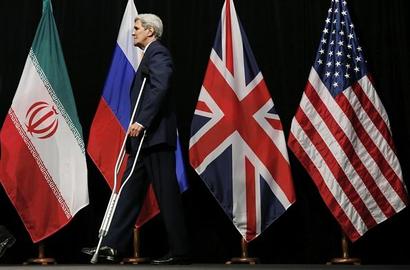
 file")
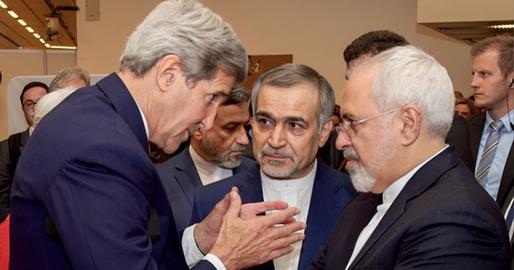
The UN nuclear watchdog chief said on Wednesday that a new agreement with Iran covers inspections at all nuclear sites.
International Atomic Energy Agency Director General Rafael Grossi said the technical agreement signed on Tuesday in Cairo with Iranian Foreign Minister Abbas Araghchi establishes inspection procedures and reporting requirements.
“This includes all facilities and installations in Iran, and it also contemplates the required reporting on all the attacked facilities, including the nuclear material present at those,” Grossi said.
Iran suspended IAEA cooperation after the June attacks forced inspectors to withdraw for safety reasons. Iran’s parliament later passed a law suspending cooperation with the agency.
Last month, Britain, France, and Germany triggered a UN “snapback” process to restore sanctions unless inspections resumed and Iran clarified its enriched uranium stockpile.
Grossi called the deal “a step in the right direction” and said Iran expressed willingness to remain in the Nuclear Non-Proliferation Treaty.
Iranian Foreign Minister Abbas Araghchi warned on Tuesday that Iran would void the agreement if hostile measures, including renewed sanctions, were imposed.
How Did We Get Here?
1956
The Atomic Energy Organization of Iran, previously operating from a research center at Tehran University, was officially established.
The United States provided Iran with a research reactor under the "Atoms for Peace" program.
Iran reached an agreement with Kraftwerk Union, a subsidiary of Siemens in West Germany, to build two 1,200-megawatt reactors in Bushehr. It also negotiated with the French company Framatome to build two 900-megawatt reactors.
Iran invested $1 billion in a uranium enrichment plant in France called Eurodif.
Negotiations began between Iran and the U.S. over establishing a complete nuclear fuel cycle, including uranium enrichment.
1958
Iran became a member of the International Atomic Energy Agency.
1968
Iran signed the Nuclear Non-Proliferation Treaty (NPT). Two years later, following approval by the National Assembly and Senate, it officially joined the treaty.

1979
With the Islamic Revolution, all nuclear cooperation between Iran and Western governments was initially suspended and then completely halted.
June: Less than five months after the February 1979 Islamic Revolution, officials of Iran's revolutionary government labeled the nuclear program a “clear betrayal of the people” and proposed converting the half-finished Bushehr nuclear plant into a grain silo.
IRGC Commander’s Declaration of Nuclear Weapons Need
1988
Mohsen Rezaei, commander of the Islamic Revolutionary Guard Corps, wrote to Ayatollah Ruhollah Khomeini about military needs during the war with Iraq, declaring that forces under his command required nuclear weapons, among other things.
Revelation and Inspections
2002
August: The People's Mojahedin Organization of Iran revealed the Islamic Republic was secretly constructing an industrial uranium enrichment facility in Natanz and had previously conducted secret uranium enrichment without notifying the International Atomic Energy Agency.
December: Mohamed ElBaradei, Director General of the Agency, visited Iran at the invitation of Islamic Republic officials and inspected the Natanz uranium enrichment facility.
2003
June: The IAEA Board of Governors called for transparency in Iran's nuclear program, suspension of uranium enrichment, and acceptance of the Additional Protocol allowing surprise inspections.
August: IAEA inspectors visited several centers in Iran. The extent of Iran's uranium enrichment program, previously undisclosed to the Agency, became clear during environmental sampling.
In these investigations, inspectors detected high-level contamination with enriched uranium. Some samples showed enrichment levels as high as 79 percent. Russia, Britain, France, and Germany called on Iran to suspend uranium enrichment in official letters.
October: Hassan Rouhani, Secretary of the Supreme National Security Council of the Islamic Republic, was appointed by Ali Khamenei to lead negotiations and manage the nuclear file.
In an unprecedented move, Jack Straw, Dominique de Villepin, and Joschka Fischer - the foreign ministers of Britain, France, and Germany - traveled to Iran.
During their visit, the Islamic Republic agreed to suspend uranium enrichment-related activities in exchange for preventing the nuclear file from being sent to the UN Security Council.
December: The International Atomic Energy Agency protested Iran’s concealment of the construction of second-generation centrifuges, for which blueprints had been purchased from Libya.
During Muammar Gaddafi’s cooperation with Agency inspectors, several hidden aspects of the Islamic Republic's nuclear program were revealed.
Hassan Rouhani announced that the same dealer who sold centrifuge blueprints to Iran had also sold nuclear facilities to Libya.
It was during this period that it became clear the Islamic Republic's nuclear program was based on information provided by Abdul Qadeer Khan, the father of Pakistan’s atomic bomb. He was imprisoned for some time but was later pardoned by Pakistani leaders.
2004
January: IAEA Director Mohamed ElBaradei announced that due to Iran’s continued incomplete and non-transparent cooperation, the case would be referred to the Security Council.
February: Pakistan announced that a group of prominent nuclear scientists from Islamabad, including Abdul Qadeer Khan, had illegally shared nuclear technology with several countries, including Iran.
Khan confessed to the illegal sale of information to Iranian entities and was removed from his role as scientific advisor to the Pakistani government.
November: Iran, in agreement with three European countries in what became known as the Paris Agreement, decided to suspend additional aspects of its uranium enrichment program, including the manufacturing of centrifuge parts and spares.
2005
February: Iran and the three European countries failed to agree on the definition of “objective guarantees” to ensure its nuclear program would not be used for weapons development.
March: Rouhani said that Khamenei wanted Iran to resume uranium enrichment before President Mohammad Khatami’s term ended and the next president took office.
The Islamic Republic, which once advocated for shutting down the Atomic Energy Organization after the 1979 revolution, now promoted the slogan “nuclear energy is our inalienable right.”
April: While the Islamic Republic's nuclear file was still in crisis at the IAEA, Iran decided to end its suspension of uranium enrichment.
June: At a meeting of Islamic Republic officials, including the president-elect Mahmoud Ahmadinejad, they decided to launch a yellowcake production plant, a raw material used to produce enriched uranium.
September: Hassan Rouhani was replaced by Ali Larijani. In response to the halt in uranium enrichment suspension, the IAEA Board of Governors requested a comprehensive report on Iran’s current and past nuclear activities.
2006
February: In an emergency session, the IAEA Board of Governors referred Iran’s case to the UN Security Council, based on a detailed report on its nuclear program from the Director General.
2010
June: As talks with the P5+1 stalled, the UN Security Council issued its seventh resolution on Iran’s nuclear program under Chapter VII of the UN Charter. The resolution imposed additional sanctions and mandated inspections of Iranian aircraft and ships.
This followed Iran’s decision to enrich uranium to 20 percent, citing fuel needs for the Tehran Research Reactor, initially provided by the U.S. during the Shah’s rule. Iran said Argentina had also provided the fuel, but later stopped.
December: The U.S., Britain, and the EU sanctioned the Islamic Republic's Central Bank, marking the beginning of crippling economic sanctions on Iran's nuclear program.
2010
June: As talks with the P5+1 stalled, the UN Security Council issued its seventh resolution on Iran’s nuclear program under Chapter VII of the UN Charter. The resolution imposed additional sanctions and mandated inspections of Iranian aircraft and ships.
This followed Iran’s decision to enrich uranium to 20 percent, citing fuel needs for the Tehran Research Reactor, initially provided by the U.S. during the Shah’s rule. Iran said Argentina had also provided the fuel, but later stopped.
December: The U.S., Britain, and the EU sanctioned the Islamic Republic's Central Bank, marking the beginning of crippling economic sanctions on Iran's nuclear program.
2012
February: Secret, direct negotiations between the deputy foreign ministers of Iran and the U.S. began in Muscat, mediated by Oman.
2013
March: Barack Obama, U.S. President, sent a message to Sultan Qaboos expressing his agreement with the principle of uranium enrichment in Iran.
April: The final round of negotiations between Iran, led by Saeed Jalili, and the P5+1 in Istanbul ended without agreement.
Pic: Saeed Jalili, Iran’s nuclear negotiator under Ahmadinejad, with EU foreign policy chief Javier Solana. These talks yielded no results.
September: With Hassan Rouhani’s election as president, negotiations between Iran and the U.S. elevated to the foreign minister level. Iran’s nuclear file was handed to Foreign Minister Mohammad Javad Zarif.
December: Iran and world powers reached an interim agreement allowing the Islamic Republic to enrich uranium below 4 percent. Iran suspended 20 percent enrichment, and some frozen assets were released monthly.
2015
March: Iran and world powers reached the main framework for a nuclear agreement in Lausanne, Switzerland, known as the "Joint Comprehensive Plan of Action" or JCPOA.
June: Iran and the IAEA, supported by the U.S., agreed to close the "Possible Military Dimensions of the Nuclear Program" (PMD) file.
July: The JCPOA agreement between world powers and Iran was finalized after 17 days of negotiations in Vienna between Iranian and American foreign ministers.
The UN Security Council adopted Resolution 2231, lifting sanctions against Iran's nuclear program on a scheduled timeline.
August: In a speech in Tehran, Ali Khamenei warned that the U.S. aimed to infiltrate Iran through the JCPOA. He said the Islamic Republic would continue supporting proxy groups and would not allow the U.S. to gain influence.
October: The IRGC conducted ballistic missile tests, one bearing anti-Israel slogans in Hebrew. The issue was raised at the UN Security Council.
December: Donald Trump, among the likely Republican candidates in the U.S. presidential election, called the JCPOA "the worst deal in history."
2016
January: The JCPOA was implemented, and all UN, EU, and U.S. sanctions were lifted.
2018
May: U.S. President Donald Trump withdrew from the JCPOA and reinstated previous sanctions. Iran declared its continued commitment to the agreement.
June: The EU pledged support for European companies cooperating with Iran against possible U.S. sanctions.
2019
September: During his trip to New York for the UN General Assembly visit, Hassan Rouhani said he was ready to meet Trump if sanctions were lifted.
2020
January: Coinciding with the assassination of Qasem Soleimani, the commander of the IRGC’s overseas Quds Force, in a U.S. operation in Iraq, the Islamic Republic ceased compliance with further JCPOA commitments.
November: Mohsen Fakhrizadeh, a key figure behind the nuclear program and one of the deputy defense ministers of the Islamic Republic, was assassinated on the outskirts of Tehran.
2021
January: After Joe Biden won the U.S. presidential election, Iran’s parliament passed the Strategic Action Law, following Khamenei’s directive.
It required halting the Additional Protocol, ending surprise IAEA inspections, resuming 20 percent enrichment, and increasing uranium stockpiles - effectively discarding core JCPOA commitments.
March: Talks between the Islamic Republic and the Biden administration to revive the JCPOA began in Vienna, with Robert Malley representing the U.S. and Abbas Araghchi representing Iran.
April: Iran announced uranium enrichment had begun at 60 percent purity.
June: After Ebrahim Raisi was declared the winner of Iran’s presidential election, nuclear talks between Iran and the U.S. were paused.
July: In his final meeting with the Rouhani administration, Khamenei criticized it as a “lesson” in trusting the West and rejected the draft agreement negotiated by Araghchi and Malley, saying Iran would not accept it.
August: In its final report on the JCPOA under Rouhani’s administration, Iran’s Foreign Ministry reported to parliament that Araghchi had secured a U.S. agreement to lift nuclear sanctions, remove the IRGC from the terror list, and lift sanctions on Khamenei and his office.
2022
January: Indirect talks between Iran and the U.S., led by Ali Bagheri Kani and Robert Malley, ended without results.
September: As Iran violently cracked down on protests, the U.S. said it was no longer interested in pursuing nuclear talks to revive the JCPOA.
2025
April: After Donald Trump returned to the White House, Iran and the U.S. resumed talks to reach a new nuclear agreement, despite Ali Khamenei previously calling negotiations with Trump's government “dishonorable and irrational.”
May: Donald Trump warned that if Iran continued uranium enrichment, military conflict would be inevitable.
June: Disputes escalated between Iran and the U.S. over uranium enrichment on Iranian soil. Khamenei called the U.S. stance “very wrong.”
Later in June, the International Atomic Energy Agency (IAEA) Board passed a resolution raising the possibility of referring Iran to the UN Security Council, following findings that Iran had failed to meet its nuclear obligations.
Iran’s stockpile of uranium enriched to 60 percent reached 408.6 kg - enough for nine nuclear weapons, according to international estimates.
Iranian Foreign Minister Abbas Araghchi warned of a “STRONG” response to what he called a “major strategic mistake by the E3” (Britain, France, Germany).
Nuclear talks between Iran and the U.S. are scheduled in Oman for Sunday as tensions escalate.
The U.S. began withdrawing non-essential embassy personnel from the Middle East amid intelligence that Israel was “fully ready” to strike Iranian nuclear sites.
June 22: The US military struck three sites in Iran. President Donald Trump said Iran’s key nuclear sites were “completely and fully obliterated,” and he warned Iran against carrying out retaliatory attacks, saying the US could hit more targets “with precision, speed and skill”.
“There will either be peace or there will be tragedy for Iran, far greater than we have witnessed over the last eight days,” Trump said in an address to the nation from the White House.
The Atomic Energy Organization of Iran confirmed that attacks took place on its Fordow, Isfahan and Natanz sites, but it insisted that its work will not be stopped.
August 28: France, Germany and Britain started proceedings to reimpose U.N. sanctions on Iran over its nuclear program.
The move is a 30-day process that will likely restore international sanctions against Tehran. The three nations triggered the "snapback" mechanism from Iran's 2015 nuclear deal by sending a letter to the U.N. Security Council.
The move comes after Iran halted International Atomic Energy Agency inspections following its June conflict with Israel.
The so-called snapback mechanism allows any party to the 2015 nuclear deal to restore previous UN sanctions. The US withdrew from the deal in 2018.
Britain, France and Germany, known as the E3, said they decided to activate the mechanism in a letter to the UN security council.
"The E3 are committed to using every diplomatic tool available to ensure Iran never develops a nuclear weapon,” the countries said in the letter. “That includes our decision to trigger the 'snapback' mechanism today.”
Interested in writing for IranWire?
Share your stories.


comments