



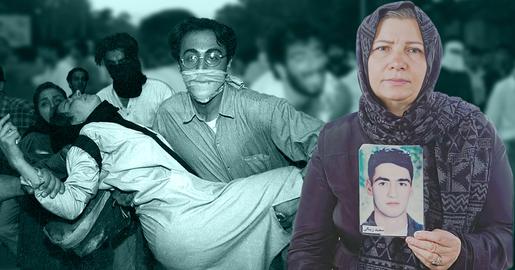
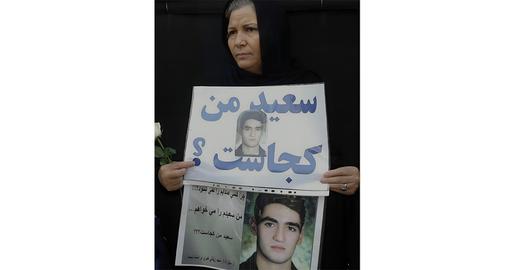

Saeed Zeynali was just 22 years old when he vanished on July 14, 1999.
A student with his whole life ahead of him, Zeynali disappeared in the wake of violent clashes between students and plainclothes forces at the University of Tehran.
Twenty-five years have passed since that day, and Zeynali's whereabouts remain a mystery.
He was reportedly taken from near his home, but no authority ever claimed responsibility for his detention.
His family has been left in a state of limbo, grappling with unanswered questions: Is he alive, perhaps imprisoned somewhere? Or did he meet a more tragic fate?
In the same tumultuous period, at least two young women also disappeared without a trace.
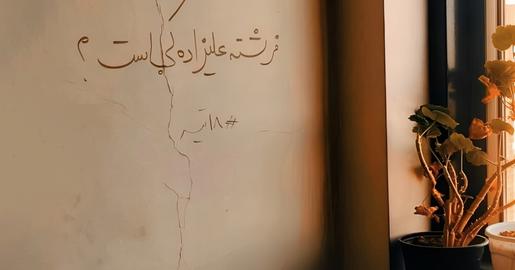
Tommy Hamifar, another student, and Fereshteh Alizadeh, studying at Al-Zahra University in Tehran, vanished in circumstances similar to Zeynali.
Although the Iranian government calls the events of July 9, 1999, and the following days a "riot" and "chaos," many view the protests of July 9 and the days following as a turning point in Iran's student movement and democracy.
The events marked the first confrontation between students and the government in the streets after two decades of severe repression, igniting a flame of hope for the survival of Iranian society following the killings and destruction of the 1980s.
The protests were fueled by revelations of the Ministry of Intelligence's involvement in the assassination and murder of intellectuals and dissidents.
The reformist newspaper Salam had exposed these crimes for months, leading to its ban after publishing a letter sent to the Intelligence Ministry by Saeed Emami, a key figure in the series of murders.
In the letter, Emami, also known as Saeed Eslami, recommended changes to the press law to then-Minister of Intelligence Qorban Ali Dori Najafabadi, expressing concern about the country's cultural situation and demanding that journalists be silenced.
On the evening of Friday, July 9, in protest against the banning of Salam newspaper, students at Tehran University began a rally.
Saeed Zeynali is the son of Akram Neghabi and Hashem Zeynali, parents whose worried eyes have been etched into the frames of Persian-language televisions outside Iran, websites, and human rights media for the past 25 years.
According to a source who spoke with the Abdul Rahman Broumand Foundation, Saeed left his house in west Tehran with his friend Shahram Cheraghi Zanjani on Wednesday, July 14, 1999.
He had reassured his mother, who was fearful of his arrest and tried to stop him from leaving, that he would return soon.
Concerned, Akram Neghabi went to the alley to bring Saeed back. However, a neighbour informed her that unknown individuals had forced Saeed and Shahram into a car, even providing the car's number to Saeed's mother.
However, a report by BBC Persian service from five years ago, marking the 20th anniversary of Saeed Zeynali's forced disappearance, quoted his mother saying: "Three officers came with guns and said they would take Saeed for 10 minutes of questioning.
"Saeed was 22 years old at the time of his arrest. Two or three months later, he called from prison and said he was fine and asked to follow his case. After that, I have not heard anything about my son."
Over these 25 years, despite persistent efforts by Saeed's parents, the authorities of the Islamic Republic have often remained silent, recently asking them to cease their pursuit of their son's fate.
They have visited numerous places, from the Ministry of Intelligence, IRGC Intelligence, and the office of the Supreme Leader, to the offices of Tehran's reformist representatives like Ali Akbar Mousavi and the 2009 reformist presidential candidates Mir Hossein Mousavi and Mehdi Karroubi.
The family has received contradictory information.
An intelligence agent who took a bribe from Saeed's family claimed that Saeed had lost his memory due to torture.
In contrast, the deputy prosecutor of Tehran told Neghabi in 2007 that Saeed was a "traitor" and a "hypocrite" who provided security information to the People's Mojahedin Organization and was imprisoned in the IRGC's intelligence protection.
He advised Saeed's mother to inquire about her son from the intelligence protection of the Revolutionary Guards and the office of the Supreme Leader, stating that Saeed "has not yet cooperated."
Gholam-Hossein Mohseni-Eje'i, the current head of the Judiciary and its spokesperson at the time claimed there was "no evidence" of Saeed's arrest and suggested he might have "disappeared."
However, Mohammad Reza Naqdi, now the deputy coordinator of the Revolutionary Guards and previously head of police intelligence protection in 1999, told Saeed's mother "Your son was arrested by our operational team."
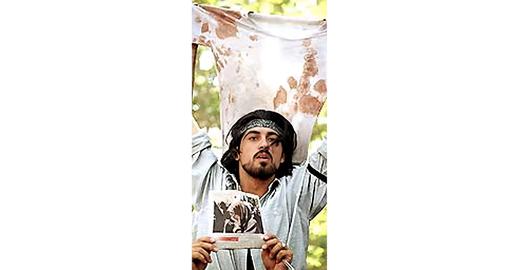
Ahmad Batebi, a young photographer whose picture with his friend's bloody shirt became a symbol of the Iranian student uprising in July 1999, previously said that he heard interrogators in solitary confinement discussing a prisoner named Zeynali.
However, Batebi does not know the first name of the prisoner mentioned by the interrogators.
Other victims included Ezzat Ebrahimnejad, Fereshteh Alizadeh, Tommy Hamifar, Mozhgan Tavakoli, Naimi, Javad Ghanbari, Sohrabian, Yavari, and Zakeri.
Reports from those days include accounts of students with broken heads, arms, and legs due to batons, beatings, falls from heights, and pellet wounds.
Additionally, around 300 students were arrested, including Ahmad Batebi, an art student photographed wearing his friend's bloody shirt, and Behrouz Javid Tehrani, now living in Australia.
Akbar Mohammadi, another detainee of the July 9 uprising, died in 2006 after years of torture and a hunger strike in Evin prison.
Saeed Zeynali is one of the most well-known victims of enforced disappearance in Iran, but many more suffer from this crime.
Youssef Silavi, an Arab citizen of Ahwaz, disappeared in November 2009.
He had returned from a trip to visit his daughters, who were studying in Damascus. According to his daughter Shima Silavi, Youssef’s half-full tea glass was left on the table, and his thawb was neatly hung, indicating he expected to return home shortly after a brief questioning.
However, he never returned, and his fate remains unknown.
Ebrahim Babaei, a political prisoner from the 1980s and 2009, disappeared after sending his last WhatsApp message to his daughter Shima on December 21, 2021.
In his message, he mentioned being in Mako City, waiting for a smuggler to help him cross the border.
He promised to inform her before leaving for the Turkish border but never did.
Shima Babaei, who left Iran due to her opposition to the mandatory hijab, said that her father faced threats and summons throughout this time.
He was even attacked by an interrogator and sentenced to 74 lashes for "insulting a government official" after being summoned to the Tehran security police in support of Shima's actions.
Aram Zafari, a young Kurdish man, disappeared in November 2017 after being summoned to the intelligence department.
He traveled to Bukan to get spare parts for his three-wheeler. Two days later, a man identifying himself as "Haji Kordeh" from the Kurdistan province intelligence called Aram's brother, asking him to inform Aram to go to the intelligence headquarters.
Aram told his family he would reach Kamiyaran, their city of residence, by 6 PM.
However, his phone was turned off then, and no news has been heard from him since. The family’s efforts to locate him have been fruitless, with the Kamiyaran intelligence department claiming ignorance of his whereabouts.
Hamidullah Arbabi, a young Baluch man, disappeared in March 2019.
His wife, in a video released in 2021, said that men in military uniforms and carrying weapons took him away.
They instructed her to go to the Chabahar Intelligence Department the next morning to learn the reason for his arrest and threatened to kill her husband if she publicized the arrest.
Since that night, there has been no news of Hamidullah.
Despite multiple visits, his family has not received any clear information from the police about his location or the investigation into his disappearance.

Interested in writing for IranWire?
Share your stories.





comments