



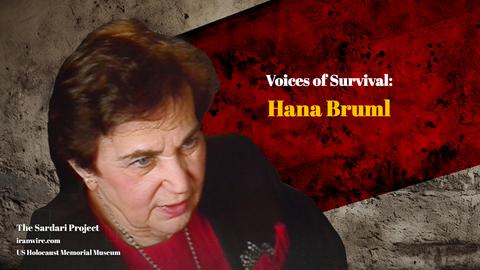
Hana Müller was born on May 30, 1922, to Richard and Hedvika Zappner Müller in Prague, Czechoslovakia. Richard was a tinsmith and owned a workshop. Hana’s maternal grandparents, Isidor and Marie, lived with her family. Hana was very close to her grandparents, especially her grandfather, who died when she was very young. Hedvika suffered several miscarriages and Hana was her parents’ only surviving child.
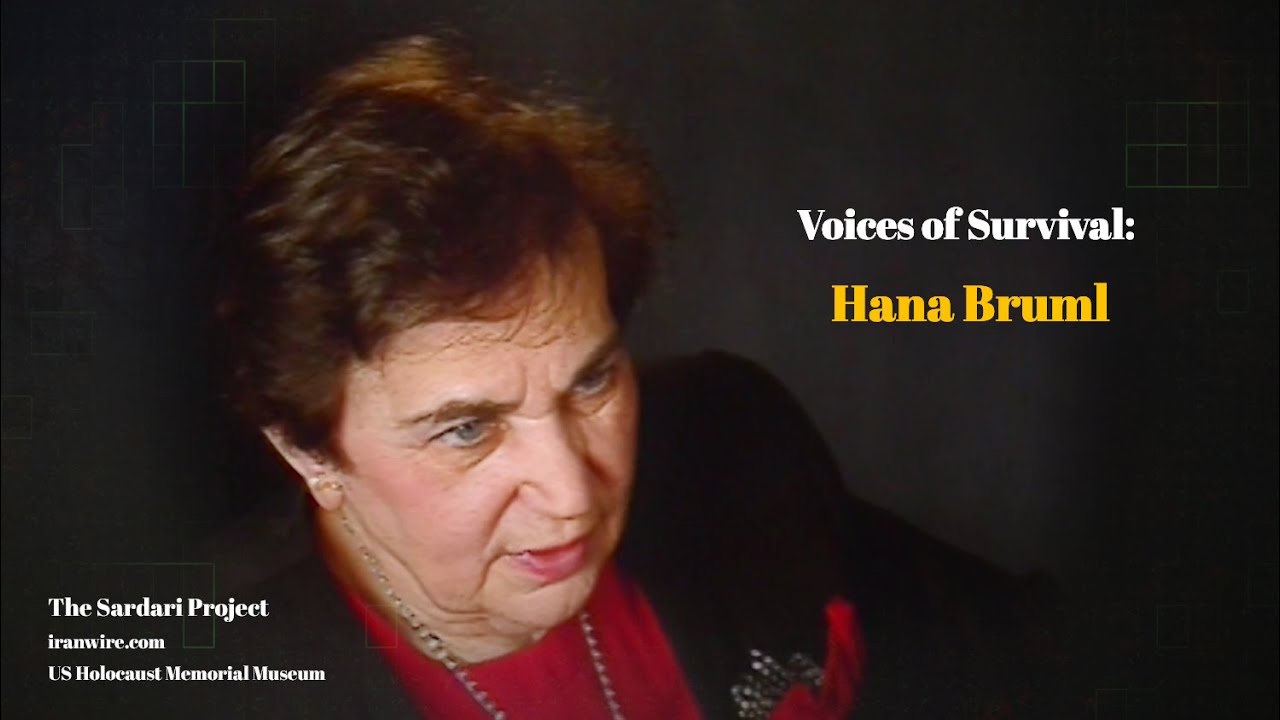
Hana attended both Jewish and public schools as a child and eventually attended business school. Following her graduation, she worked as a typist. She had an active social life and loved to go dancing.
In March 1939, Germany annexed the Czech provinces of Bohemia and Moravia, which included Prague. Other regions were absorbed by German allies, and Czechoslovakia ceased to exist. When Germany occupied the region, the Nazis implemented their antisemitic laws, removing Jews from many professions and confiscating their property. Hana’s father’s workshop was seized. He could not find other work and it became increasingly difficult for him to support his family. Hana tried to flee Europe, but she was unable to get a visa to the United States. Germany’s invasion of Poland on September 1, 1939, initiating World War II, made immigration far more difficult.
On November 14, 1939, Hana married her boyfriend, Rudolf Schiff. They could not afford their own apartment and at first lived separate from one another with their families. Eventually, they moved into a room in Rudolf’s parent's boarding house. Hana began working for the Palestine Office, which facilitated emigration to British-controlledPalestine for approximately 19,000 Jews by the end of 1939. Shortly after moving in together, Rudolf contracted scarlet fever and was hospitalized for several months.
By 1941, German authorities required Jews in the former Czech lands to wear a yellow Star of David badge at all times to identify them as Jewish. Deportations from Prague to concentration camps were announced daily in the newspapers. Rudolf and Hana learned that these transports were going to a ghetto in Terezin (Theresienstadt in German), about 40 miles north of Prague.
Theresienstadt served an important propaganda function for the Germans when authorities began deporting Jews from Germany. The publicly stated purpose for the deportation of German Jews was their "resettlement to the east," where they would be compelled to perform forced labor. Nazi propagandists portrayed Theresienstadt as a kind of model ghetto community where elderly or privileged Jews might be sent, thus masking the true nature of the deportations. Theresienstadt also served as a transit camp for Czech Jews whom the Germans later deported to killing centers, concentration camps, and forced-labor camps in German-occupied Poland, Belorussia, and the Baltic States.
On July 20, 1942, Hana’s parents, Richard and Hedvika, and her grandmother, Marie, were sent to Theresienstadt. Less than one month later, Hana and Rudolf received their own deportation orders. Hana’s grandmother died on August 3, 1942, in Theresienstadt and was buried in a mass grave.
Rudolf remained weak from scarlet fever and he was not assigned forced labor in Theresienstadt. Hana was assigned to work as a nurse in the camp hospital. Men and women were housed apart,and Hana lived with 8 nurses near the hospital. Rations were watery soup, and twice a week a dumpling. Hana traded her wedding ring for extra bread and at times bought food on the black market. She worked 12-hour shifts, six nights a week, assisting doctors, cleaning the hospital, helping patients, and administering whatever small quantities of poor-quality medicine was available. She often cared for the elderly and the terminally ill. The overcrowding, lack of food, and poor sanitary conditions in the camp hastened the spread of disease, and thousands died every month. Hana became an infectious disease nurse. She visited Rudolf when she could, but their marriage was strained and eventually they separated.
Of the approximately 140,000 Jews transferred to Theresienstadt, nearly 90,000 were deported to points further east and almost certain death. Roughly 33,000 died in Theresienstadt itself. Despite the horrific living conditions and the constant threat of deportation, Theresienstadt had a highly developed cultural life. The ghetto library had more than 10,000 volumes in Hebrew, and ghetto inhabitants gave more than 2,300 lectures on topics ranging from art to medicine, from economics to Jewish history.
On October 8, 1942, Hana’s parents were deported to the Treblinka killing center in occupied Poland, where they were murdered. Following her separation from Rudolf, Hana started a relationship with a Czech Jewish doctor named Bruno whom she planned to marry after the war.
On July 5, 1943, Rudolf’s parents, Richard and Marta Schiff, arrived at Theresienstadt, followed by his brother Karel. Five months later, the entire family, including Rudolf, was deported to the Auschwitz concentration camp in occupied Poland. They were murdered upon arrival.
In June 1944, succumbing to pressure following the deportation of Danish Jews to Theresienstadt, the Germans permitted representatives from the Danish Red Cross and the International Red Cross to visit the camp. Here Nazi officials perpetrated an elaborate hoax. Hana witnessed the careful measures taken to disguise conditions in the ghetto and to portray an atmosphere of normalcy. Inhabitants were forced to plant gardens, paint housing complexes, renovate barracks, and develop and practice cultural programs for the entertainment of the visiting dignitaries. Prior to the Red Cross visit, the SS authorities intensified deportations of Jews from the ghetto to alleviate overcrowding.
The Jewish administration of Theresienstadt, under pressure from the Germans, treated the visiting delegation to a soccer game in the camp square, complete with cheering crowds, and a performance of a children's opera in a community hall built specifically for this occasion. In the wake of the inspection, SS officials produced a film about the “benevolent” treatment the Jewish “residents” of Theresienstadt supposedly enjoyed. Nazi propaganda cynically described Theresienstadt as a "spa town" where elderly German Jews could "retire" in safety. When the film was completed, SS officials deported most of the "cast" to their deaths at Auschwitz.
On October 1, 1944, Hana’s boyfriend, Bruno, received deportation orders and she volunteered to go with him. They were put on a dirty, overcrowded railcar to Auschwitz. When they arrived, Hana was kept alive for forced labor but Bruno was sent to his death in the gas chambers. At the camp, Hana was directed to a room full of women. Camp administrators ordered them to undress and inspected them for pregnancy. Noticeably pregnant women in Auschwitz were sent directly to their deaths. Hana’s hair was shorn and she had to take a cold shower. While she was showering, someone stole her last possession, a pair of warm boots. She was issued a filthy striped uniform and wooden clogs. She shared a pallet and a blanket with 4 other women in her barracks.
Later that month, Hana was deported to the Kudowa-Sackisch forced labor camp, within the Gross-Rosen concentration camp system. She slept in an unheated barrack and there was little food. She and her friends sustained hope by fantasizing about the food they would eat after the war. Hana worked 12-hour shifts in a factory manufacturing airplane parts. In April 1945, the factory ran out of raw material and ceased production.
On May 5, 1945, understanding that Germany was going to lose the war, the camp’s guards opened the gates and released the prisoners. Hana made her way to Prague to look for her family. There she learned that she was the only survivor.
In Prague, Hana met an artist, Karel Bruml, who survived Theresienstadt and several other concentration camps. They immigrated to the United States, where they married. In 1947, they settled in Washington D.C. Hana earned a doctorate degree in clinical psychology and worked at the Northern Virginia Mental Health Institute for several years, eventually becoming chief psychologist.
Hana and Karel, who changed his name to Charles once in the United States, often returned to Prague to visit friends. Hana died at 78 years old in August 2000.

Interested in writing for IranWire?
Share your stories.





comments