



Per Johan Valentin Anger was born December 7, 1913, in Göteborg, Sweden, to a religious Lutheran family. Per’s father was an engineer and his mother, a language teacher. Per was the eldest of three children, and the family was very close. He studied law at the University of Stockholm and the University of Uppsala, graduating in 1939. He was drafted into the army but soon after, the Swedish Foreign Service offered him a position at their legation in Berlin. He began in January 1940, young and inexperienced. He initially worked on trade between Sweden and Germany but he became involved in intelligence work after the legation received information that Nazi Germany was planning to attack Norway and Denmark.
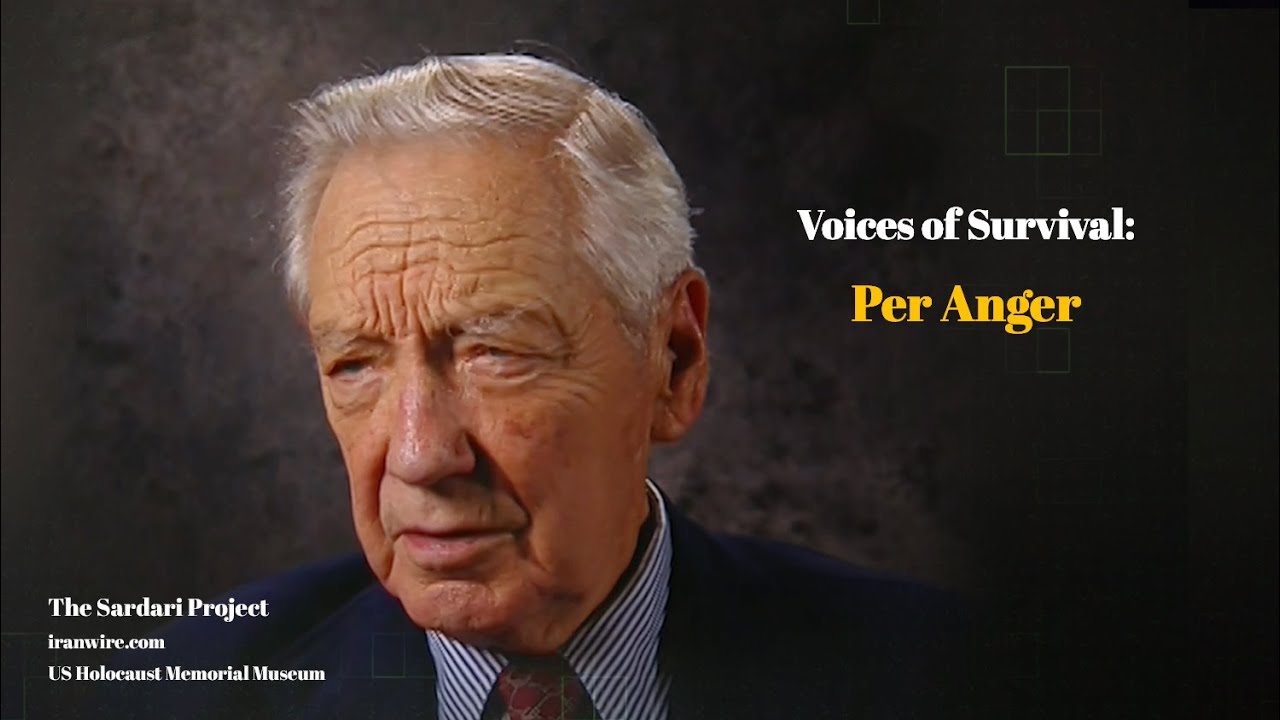
In November 1942, Per began his service as second secretary at the Swedish legation in Budapest, where he focused on Swedish-Hungarian trade relations. He married his wife, Elena Wikström Anger, in 1943. They eventually had three children: Jan, Peter, and Birgitta.
Hungary had been an ally of Germany, but German defeats and mounting Hungarian losses led Hungary to seek an armistice with the western Allies. To forestall these peace feelers, German forces occupied Hungary on March 19, 1944, and forced the Hungarian head of state, Miklos Horthy, to appoint a pro-German government under Döme Sztójay.
The Sztójaygovernment was prepared not only to continue the war but also to deport Hungarian Jews to concentration camps and killing centers in German-occupied Poland. Shortly after the occupation, Hungarian officials began to round up Hungarian Jews and to transfer them into German custody. At this point, Per turned his efforts to aiding Hungarian Jews, including through Swedish provisional passports and special certificates meant to protect Jews from internment and deportation. Provisional passports were travel documents typically issued to Swedish citizens living abroad who had lost their regular passports. Neither the provisional passports nor the certificates issued by Per had any legal basis for protection. Much of Per’s humanitarian work was done with Raoul Wallenberg.
Raoul Wallenberg arrived in Budapest in July 1944. After studying in the United States in the 1930s and establishing himself in a business career in Sweden, Wallenberg was recruited by the United States War Refugee Board (WRB) in June 1944 to travel to Hungary. Given status as a diplomat by the Swedish legation, Wallenberg's task was to do what he could to assist and save Hungarian Jews.
Wallenberg began distributing certificates of protection, or Schutzpasse, issued by the Swedish legation to Jews in Budapest shortly after his arrival in the Hungarian capital. He used WRB and Swedish funds to establish hospitals, nurseries and a soup kitchen, and to designate more than 30 “safe” houses that together formed the core of the "international ghetto" in Budapest. The international ghetto was reserved for Jews and their families holding certificates of protection from a neutral country.
The Hungarian fascist Arrow Cross movement seized power with the help of the Germans on October 15, 1944. The new government resumed the deportation of Hungarian Jews, which Horthy had halted in July before Jews in Budapest could be deported. As Soviet troops had already cut off rail transport routes to Auschwitz, Hungarian authorities forced tens of thousands of Budapest Jews to march west to the Hungarian border with Austria. During the autumn of 1944, Wallenberg, with the assistance of Per, repeatedly—and often personally—intervened to secure the release of those with certificates of protection or forged papers, saving as many people as they could from the marching columns.
In December 1944, Per and his colleagues declined offers to be evacuated from Budapest to Sweden for their safety, instead staying behind in order to continue their rescue efforts. Per saw Wallenberg for the last time on January 10, 1945. Soviet officials detained Wallenberg soon after on suspicion of espionage.
The Soviets also detained Per and his other colleagues. They were allowed to return to Sweden by April 1945. After the war, Per continued his diplomatic career, including as the Swedish ambassador to Australia and Canada. He also initiated a search for Wallenberg, which he continued for the rest of his life. A Soviet government report in 1956 suggested that Wallenberg had died on July 17, 1947, while imprisoned by Soviet authorities at the infamous Lubyanka Prison in Moscow. Subsequent eyewitness sightings of Wallenberg in the Soviet penal system after 1947 have called this statement into question. The exact date and circumstances of Wallenberg’s death are unknown and may never be clarified. In October 2016, 71 years after his disappearance, Swedish officials formally declared Wallenberg legally dead.
When Soviet forces liberated Budapest in February 1945, more than 100,000 Jews remained, mostly because of the efforts of Wallenberg, Per, and their colleagues. In 1963, Yad Vashem recognized Wallenberg as Righteous Among the Nations and later recognized Per as Righteous in 1982. In 1995, Per was honored with the Hungarian Republic’s Order of Merit. Per died on August 25, 2002 in Stockholm, Sweden.

Interested in writing for IranWire?
Share your stories.





comments