



Joanna Lustig was born into a Jewish family on April 24, 1918, in Vienna, Austria. She lived with her parents, Julius and Hedwig Lustig, and brother, Xaver, who was eight years older than she. Joanna’s family called her by the nickname “Hanni” and they lived together in a large, beautiful apartment in Vienna.
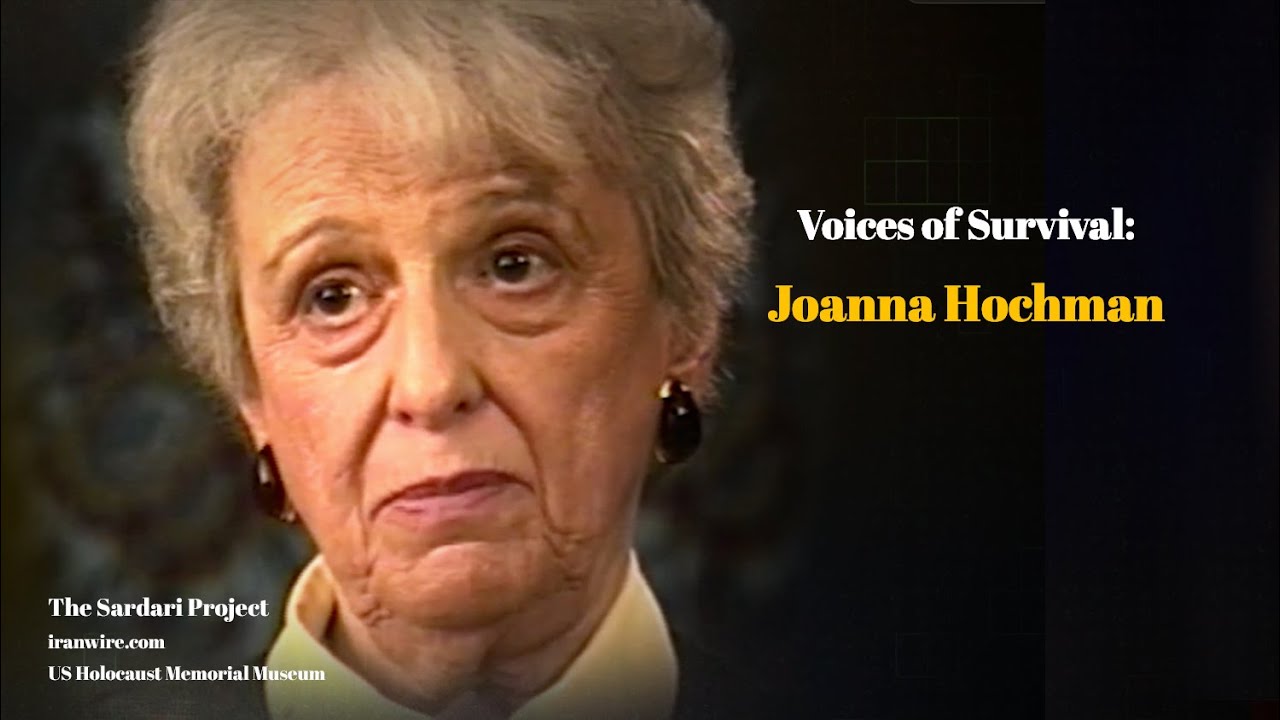
Joanna attended an all-girls public school and was friends with both Jewish and non-Jewish children. The family was religiously observant until Joanna’s father died from a blood clot when she was 10 years old. Joanna was never particularly drawn toward her religion but she remembers being afraid of antisemitism as a child and heard antisemitic lies about Jews drinking the blood of Christians during the holiday of Passover. After finishing high school, Joanna trained as a druggist and managed a pharmacy that belonged to her family.
Hedwig suffered from anxiety and was, at times, hospitalized to address her symptoms. Joanna felt responsible for taking care of her family, especially after her father died. At the same time, she witnessed the rise of extremism in Austria and wished to flee the country, particularly after the annexation of Austria by Germany in March 1938. Following this, the Germans quickly implemented anti-Jewish legislation. Joanna married her first husband in April 1938. The couple met through a mutual friend while riding on the streetcar in Vienna. Joanna’s husband was an economist but had issues finding a job due to the antisemitic laws barring Jews from many professions. The Nazis eventually confiscated Joanna’s pharmacy.
Kristallnacht (known as the November Pogrom or the Night of Broken Glass) in November 1938 was particularly brutal in Austria. Most of the synagogues in Vienna were destroyed, burned in full view of fire departments and the public. Jewish-owned businesses were also vandalized and ransacked. Thousands of Jews were arrested, including Joanna’s husband, and imprisoned or deported to the Dachau or Buchenwald concentration camps in Germany. Jewish emigration increased dramatically in response to the German incorporation of Austria and to Kristallnacht. Between 1938 and 1940, 117,000 Jews left Austria.
Joanna and her brother began planning to immigrate even before Kristallnacht. Xaver, who was married and had two young children by 1938, had visas for himself and his family for Argentina. They left in April 1938. Joanna could not accompany them because she did not have a visa and did not want to leave her mother alone in Vienna. Hedwig very much feared the idea of crossing the ocean. In August 1938, Hedwig remarried and moved to Bratislava, Czechoslovakia with her new husband.
Most Latin American nations were relatively open to immigrants prior to the Nazi seizure of power in Germany. Afterwards, however, as the search for refuge intensified, both popular and official resistance to the acceptance of European Jews and other foreigners increased. Growing antisemitism was undoubtedly one reason for the refusal of many Latin American nations to admit Jewish refugees into their countries, as was fear of economic competition.There was also sympathy among some Latin Americans of German descent for Nazi ideology and racial theories.
Joanna’s husband was released from prison one week after his arrest during Kristallnacht and the couple hoped to join Xaver and his family in Argentina. They ran into issues when they obtained their Argentine visas, however. After Kristallnacht, the German government made an immediate pronouncement that “the Jews” themselves were to blame for the pogrom. They therefore imposed a fine of one billion Reichsmark (some 400 million US dollars at 1938 rates) on the Jewish community in Germany, which by this time included the annexed state of Austria. Joanna’s family’s assets were frozen and she was unable to pay the necessary taxes to leave Austria. Their Argentine visas expired as they desperately scrambled to find a way to access their funds.
Ultimately, the couple was able to pay the 5,000 Reichsmark fine imposed on their family and they received papers to leave the country. The next day, they traveled by train to Genoa, Italy, where they boarded a ship to Montevideo, Uruguay. On January 29, 1939, they entered Uruguay on a tourist visa, which they were eventually able to extend. Joanna worked several different jobs in Montevideo, including as a nanny, a French tutor, a saleswoman in clothing retail, and as a model. Joanna stayed in Uruguay for three years before she was able to join her brother in Argentina on August 13, 1942. Her first marriage broke down and the couple eventually divorced.
Joanna lived in Argentina for 22 years, where she married for a second and third time. With her second husband, William Krieger, Joanna had two children, Monica and George (Jorge). When Joanna was pregnant with Monica, she learned her mother and stepfather had been killed in the Auschwitz concentration camp in occupied Poland on June 17, 1944.
Joanna was married to her third husband, David Dolfi Hochman, for 49 years. David, who was born in Poland, studied medicine for five years in Vienna before escaping to Bolivia, the only country that would accept him as a refugee. He worked there in copper mines and was eventually able to bring the rest of his family to safety in Bolivia. Joanna and David met at a Viennese party in Argentina.
Fearing rising violence and uncertainty in Argentina, Joanna and her family immigrated to the United States in 1964. They settled in San Francisco, California. Joanna took a job at the Claremont Hotel, where she worked for many years. Because she had lived in so many different places throughout her lifetime, Joanna referred to herself as a citizen of the world. She died on February 12, 2013 in Berkeley, California, at age 94.

Interested in writing for IranWire?
Share your stories.





comments