



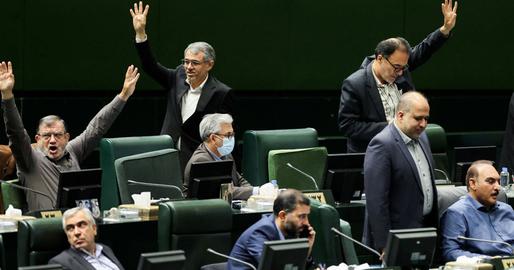
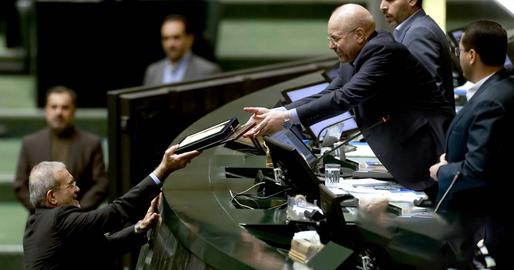
Iran’s parliament approved emergency legislation on Sunday imposing severe prison sentences for spreading what authorities deem “false information” on social media.
The bill, titled Combating the Spread of False Content in Cyberspace, was fast-tracked by President Masoud Pezeshkian’s government and approved with emergency status by lawmakers, bypassing normal legislative procedures.
The legislation was originally drafted in October 2023 under pressure from Iran’s Supreme Council of Cyberspace with judiciary participation, then approved as a judicial bill and sent to parliament on July 20.
Legal experts have criticized the bill’s reliance on highly interpretable terms that could criminalize routine social media activity.
The legislation defines “false content” as information that “has no real basis or is distorted, hidden, or incompletely presented in a way that customarily causes public confusion, doubt, or deception and damages others’ reputation.”
Under this broad definition, even news reports or social media posts could face prosecution for being deemed “incomplete” or “distorted.”
The bill’s structure allows judicial officials, security personnel, and prosecutors to easily interpret any social media content as “false” and file criminal cases, according to critics.
Standard penalties for “deliberately spreading false content” include sixth-degree imprisonment or fourth-degree fines, plus media activity bans lasting three months to two years.
The legislation imposes harsher punishments on “influential individuals, celebrities, or those in specialized positions”—including influencers, media outlets, and film and television stars.
These public figures face 10 to 15 years of imprisonment for the same charges.
During crisis or wartime conditions, all penalties increase by one degree. Additional punishments include social media account suspension, damage compensation, publishing corrections or retractions, and employment bans in related fields.
Iran’s presidential legal deputy initially criticized the bill, saying the original version “had numerous flaws” and arguing it was unnecessary given existing criminal laws.
However, the administration ultimately approved the legislation under judiciary pressure.
The new bill shares structural similarities with the Cyberspace Protection Plan, which faced massive public opposition during street protests.
That legislation was temporarily abandoned but is now returning through the current administration under judiciary and Supreme Cyberspace Council pressure.
Supreme Leader Ali Khamenei designed the cyberspace council that pushed for the current legislation.
The law’s interpretable language conflicts with freedom of expression and information access rights outlined in Iran’s constitution and violates international human rights standards for free speech.
Critics warn the legislation creates new tools for suppressing critical media, independent journalists, and ordinary social media users, representing what one analyst called “another major nail in the coffin of free expression”—something authoritarian governments cannot completely suppress despite technology and social media restrictions.

Interested in writing for IranWire?
Share your stories.


comments