



Iran's Fars News Agency receives millions of dollars in state funding while presenting itself as an independent news outlet, according to a new report.
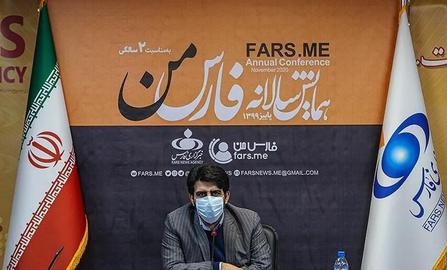
The State Media Monitor released a report on July 3 examining the operations of Fars News Agency, describing it as the "propaganda mouthpiece" of the Islamic Revolutionary Guard Corps (IRGC).
The organization found that Fars received over $9 million in 2023 only for producing Persian-language content, with its budget increasing significantly over the past two years.
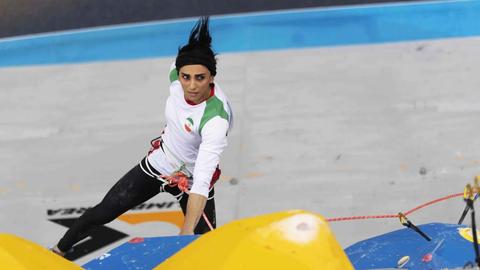
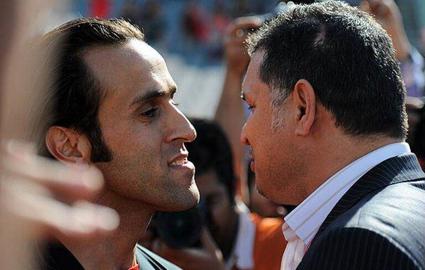
Fars has also led propaganda campaigns against high-profile Iranian sports figures, including Ali Daei, Ali Karimi, Mehdi Mahdavikia, Rasoul Khadem, Elnaz Rekabi, and most recently, referee Alireza Faghani.
The latest controversy began at 12:33 a.m. on July 14, less than 30 minutes after the Club World Cup final ceremony in the United States.
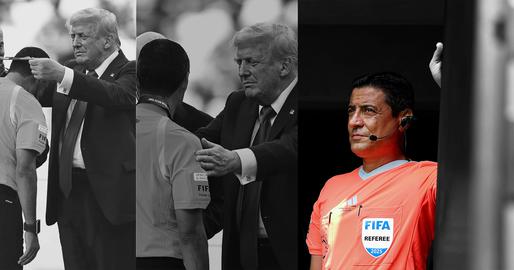
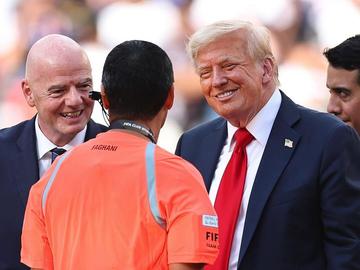
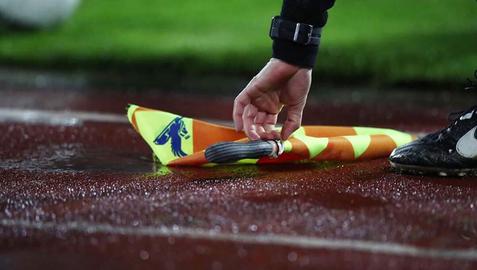
Fars was the first Iranian state media outlet to criticize Faghani, who officiated the final, for shaking hands with U.S. President Donald Trump, receiving a commemorative medal, and taking photos with him.
Under the headline “Faghani’s Unfair Refereeing Against Iranians,” Fars wrote, “While only a few days have passed since the Israeli and American attack on Iranian soil and the martyrdom of more than a thousand Iranians, Alireza Faghani warmly chatted with Trump after receiving an award from him and posed with him in a commemorative photo.”
Other government-aligned media quickly followed Fars’ lead. Masoud Foroughi, deputy editor of Farhikhtegan newspaper, called Faghani “unpatriotic,” an “enemy of territorial integrity,” and part of the “enemy army.”
Tasnim News Agency, another IRGC-affiliated outlet, scrutinized every moment of Faghani’s presence at the ceremony under the headline “Cry of Unpatriotism,” describing him as “salt on Iran’s wounds.”
Javan newspaper, Howzeh News Agency, and Mehr News Agency also criticized Faghani for simply standing near Trump, shaking hands, and taking photos with him.
Two sports journalists told IranWire that no direct government order had been issued to media editors to criticize Faghani until late Monday night, suggesting Fars initiated the campaign independently.
Fars has a history of launching similar attacks on Iranian sports figures. In December 2021, the agency targeted Mehdi Mahdavikia after he participated in a symbolic FIFA match where players wore jerseys displaying flags of all FIFA member countries, including Israel.
Despite other athletes from Islamic countries wearing the same jersey, Fars claimed Mahdavikia was on a "mission" from the United States, Israel, and Saudi Arabia to normalize Arab-Israeli relations.
The agency even urged security institutions to open judicial and security cases against the former national team star.
In 2017, Fars launched a hashtag campaign labeling Ali Karimi an “illiterate celebrity” for his social and environmental commentary, including criticism of air pollution in Khuzestan and the drying of Lake Urmia.
Fars also attacked Ali Daei, calling him a “liar” in defense of wrestling federation chief Alireza Dabir, and accused Daei of consistently spreading falsehoods about the country’s situation.
Other athletes targeted by Fars include Voria Ghafouri, Rasoul Khadem, and Elnaz Rekabi. However, public support for these figures has grown stronger following the attacks.
Research by the State Media Monitor suggests that without Fars’ initial criticism, Faghani’s interaction with Trump might not have drawn significant public attention.
The agency’s track record shows that its attacks on prominent sports figures have consistently produced opposite results in public opinion.
Even Fars’ support for government-aligned athletes like Alireza Dabir, Nima Nakisa, or Ehsan Hadadi has not translated into increased popularity.
With a budget exceeding $9 million annually, Fars News Agency’s sports coverage appears to systematically backfire, boosting the public image of targeted athletes while failing to build support for regime-friendly sports personalities.

Interested in writing for IranWire?
Share your stories.




comments