



The scorching sun beat down on Omar's back as he stumbled across the barren landscape, his eyes squinting against the harsh light.
He was a stranger in a foreign land, an Iranian citizen who had been deported to Afghanistan.
The irony was not lost on him – a man who once employed Afghan workers now found himself walking in their shoes, quite literally.
"Don't say a word, stay silent," Qais, his Afghan companion, had whispered urgently. "If you speak, the Afghan border guards will send you to the Islam Qala camp."
Omar’s throat tightened, parched from the journey, and choked with unshed tears.
How had it come to this? Just days ago, he had been a respected business owner in Iran, running a car wash where he employed several Afghan workers.
Now, he was pretending to be one of them, relying on their goodwill and street smarts to survive in a country he knew nothing about.
"When we crossed the border, my colleague Qais spoke for me, claiming I was his brother and saying I didn’t have a passport or ID," Omar said.
The border guard asked a few questions about Qais’s place of residence, his parents’ names, and his local imam to allow them to cross.
Omar, an Iranian citizen with a birth certificate, was deported to Afghanistan with several Afghan colleagues he calls "brothers." His story is one of mistaken identity, as he was without ID when police raided the car wash where he worked.
Omar and five Afghan citizens were arrested, had their money confiscated, and were beaten. After being transferred to Shahr-e Ray and Dogharoun camps, the abuse continued. On May 30, they were beaten again and forced across the border without ID or money.
Omar told IranWire that he repeatedly explained to the officers that he was Iranian and requested to make a phone call so his family could bring his birth certificate. But the officers responded with more curses and beatings.
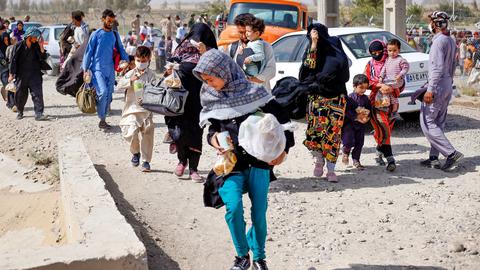
Precise deportation statistics are unavailable, but the Ministry of Immigrants and Returnees reported 9,000 Afghan nationals returned from Iran in July. Iranian authorities noted over 60,000 Afghans were deported last month, and nearly 1.3 million foreign nationals were deported in the year ending in May.
Among those deported from Iran are some Iranian citizens, as well as Afghans who hold Iranian identity documents or were born in Iran and know little to nothing about Afghanistan. This also includes children detained by police without their parents, who are quickly sent across the border.
The situation for immigrants in Iran, both legal and illegal, has worsened recently, with growing public anger and intensified crackdowns leading to detention, humiliation, and extortion of even legal immigrants.
In August, Tehran’s governor, Alireza Fakhari, announced that unauthorized foreign nationals would be deprived of urban and non-urban services.
On May 23, police raided the car wash where Omar worked. He told IranWire, "Afghans, whether they had a refugee card or not, never left the car wash. I always did the grocery shopping. They would stay and hide if they sensed a threat. That day, when the police stormed the car wash, they hid, but the officers found five of them. They beat everyone they found, and they beat them badly."
Omar said the police demanded money before checking IDs, and despite insisting he was Iranian, he was arrested with the others and sent to Varamin camp for deportation.
This week, the Iranian parliament announced a new plan to reduce the number of foreign nationals living in Iran by 10 per cent annually. The plan would also impose restrictions on where foreign nationals could live and work across the country.
Although no specific nationality is mentioned in this plan, Iranian authorities often use the term "foreigners" to refer to Afghan immigrants, whether they possess identity documents or not. Afghans make up the largest group of immigrants in Iran.
If the plan is approved, the Ministry of Interior will be required to take action against all illegal residents and deport them within one month of the law's enforcement.
The proposal, called the "Amendment of the Law Related to the Entry and Residence of Foreign Nationals in Iran," also limits the foreign population (including spouses and children) in each city, village, or province to no more than 3 per cent of the total population within three months of its implementation.
The plan requires ministries and municipalities to charge foreign nationals for services and mandates real estate agents to verify their residency status in property transactions, with penalties for non-compliance.
Furthermore, any employer who knowingly hires illegal foreign nationals or allows them to remain in the country illegally will be punished.
Omar told IranWire that his Afghan colleagues avoided leaving the car wash not only for fear of police arrest but also due to the public’s reactions. Employers often exploit this tense atmosphere, withholding wages from Afghan workers and threatening them with the police or public hostility.
Omar explained, "One of my brothers [Afghan friend] worked in construction before the car wash. In his third month, when he went to demand his pay, the employer called the police. But he managed to escape that time."
After their arrest, Omar and his colleagues were taken to Security Police Station 8 in Tehran, where officers confiscated their phone batteries, insulted, beat them, and then detained them in a cramped basement with 30 others for hours.
Some of the detainees handed over their identity documents, but the officers told them they would be transferred to the Asgarabad camp in Varamin, where those with proper documents would be released. That evening, all the detainees were handcuffed and taken to the camp.
However, upon arrival at the camp, they were told that their documents had not been delivered and that all of them would be sent across the border.
Omar said, "There was no water for three days in this heat – well, there was, but it was only well water. Everyone got diarrhoea. There was no food, no place to sleep, and only one usable toilet for hundreds of people."
Three days later, they were loaded onto a bus and taken to Dogharuon camp.
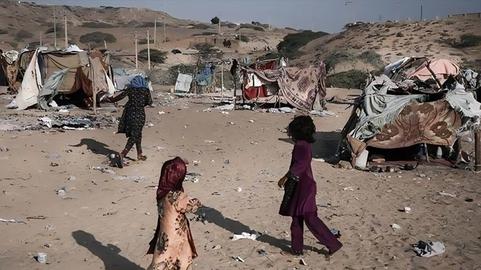
According to Omar, "Varamin Behesht" camp is located across from Dogharuon camp. At Dogharuon, the officers communicated through violence: "I told them again that I was Iranian, but they beat me. People were sick and hungry. Women and children wandered aimlessly, and small children were left alone without adult supervision. There was only beating and cursing."
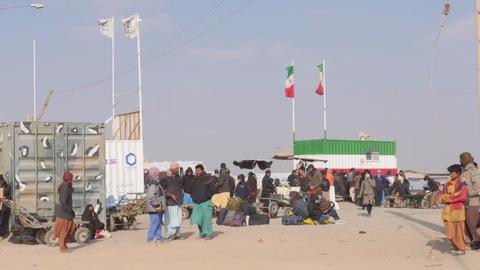
Omar never saw the Islam Qala camp, but he heard about it. It is a camp inside Afghanistan for people who cross the border but lack Afghan identity documents or cannot convince Afghan border guards of their nationality.
Omar explained that in Islam Qala, more than 60 people are crammed into a 12-meter room until local authorities or representatives from international organizations like the UNHCR verify their identities and allow them to enter Afghanistan. This process sometimes takes weeks.
Thanks to his colleagues, Omar was able to enter Afghanistan and reach Herat City, where they stayed with an acquaintance for a few days while waiting for friends or family in Iran to send them money.
He said, "Iranians who are mistakenly deported and have birth certificates can go to the Iranian consulate or embassy for help returning to Iran. But because I’m Baluch, I preferred to return to Iran illegally with my colleagues."
From Herat, the group traveled through Shindand, Farahrod, Dalaram, and Zaranj, eventually reaching Duk in Pakistan, where smugglers were waiting to cross people into Iran.
Omar said the smugglers demanded a large amount of money, but one of his colleagues knew someone who could smuggle them for less. Over 20 people crammed into the back of a van for a 12-hour journey.
When they reached Hamoon-Mashkil, a dry lake on the Iran-Pakistan border, the smuggler demanded more money and threatened to alert the border guards if they didn’t pay. The next morning, they continued to Jodar, then made the rest of the journey on foot to Tahlab in Iran.
Omar chose to stay in Sistan and Baluchistan. The Afghans with him, however, continued their journey toward the major cities of Iran.

Interested in writing for IranWire?
Share your stories.


comments
These are not Iranian are those Afghan kids who were born in Iran. Not all but lot of out of them are linked with terrorist and Talaban and hidden between them and hard to identify.
Same is the case in Pakistan. Government. Government have no other options.