



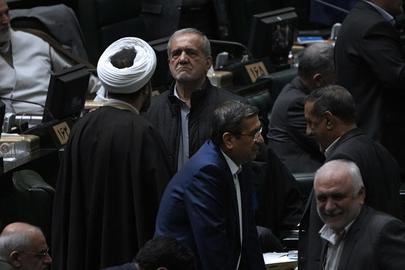
A proposed law targeting online disinformation, submitted by Iranian President Masoud Pezeshkian to parliament, has sparked widespread criticism from legal experts and media activists who view it as a threat to free speech.
The bill, formally titled “Combating the Spread of False News Content in Cyberspace,” was approved by the government on June 29 and sent to parliament on July 21 with Pezeshkian’s signature and that of Justice Minister Amin-Hossein Rahimi.
The legislation aims to combat what it defines as “distortion of reality, discrediting state institutions, creating public terror, weakening national cohesion, and disrupting social order.”
Originally proposed by the judiciary with 90 articles, the bill was reduced to 22 articles during government review.
Legal scholars and media activists have denounced the proposal as contradicting Iran’s constitutional principles, particularly Article 24 on press freedom and Article 175 on media freedom of expression.
Critics argue the bill’s broad and vague definitions of “false content” could enable security and judicial authorities to suppress dissenting voices.
The legislation prescribes severe penalties for influential individuals who spread “false news” during crisis situations, including long-term sentences during emergencies and increased punishments when content is shared by people “with fame or influential power.”
Violations could result in up to 15 years in prison.
Even some government supporters have expressed concern about the timing of the bill, given Pezeshkian’s campaign promises to expand internet freedoms, increase engagement with civil society, and strengthen the free flow of information.
One media activist close to the government wrote, “If we were going to restrict public space like this in the name of fighting fake news, then what’s the difference between Pezeshkian and the previous government?”
Some conservative lawmakers have defended the legislation, calling it “a response to narrative warfare and false news in cyberspace.”
No official parliamentary response has been announced regarding the bill’s prospects.

Interested in writing for IranWire?
Share your stories.



comments