



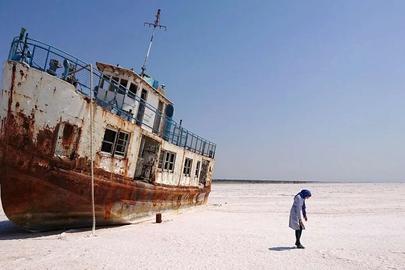
Iran’s Lake Urmia has shrunk to levels so low they can no longer be properly measured, an environmental official has warned, raising concerns that the salt lake could dry up completely by the end of summer.
Ahmad Reza Lahijanzadeh, deputy head of Iran’s Environmental Protection Organization, said the lake’s water level has dropped to a point where “no number exists to report” if it falls any further.
According to an August 2 report, the lake’s water level dropped to 1,269.74 meters, its surface area shrank to 581 square kilometers, and its remaining water volume fell to just half a billion cubic meters - down from about 2 billion cubic meters last year.
Lahijanzadeh said continued heat and evaporation could lead to the lake drying up completely by summer’s end.
He warned that such a scenario would trigger mass migration, salt storms, and economic collapse in the surrounding region.
The head of West Azerbaijan’s regional water authority confirmed that the lake’s level had dropped by 55 centimeters compared to the same period last year.
The decline coincides with the severe depletion of groundwater resources, largely due to more than 60,000 unauthorized wells operating across three key watersheds.
Experts blame the crisis on a combination of 35–62 per cent reduced rainfall in recent decades, rising temperatures, consecutive droughts, and poor water resource management.
The lake’s ecosystem has suffered severe damage, with native bird species and microorganisms now facing serious threats.
Once one of the world’s largest salt lakes, Lake Urmia has seen little in the way of effective restoration, despite repeated government promises to prevent its complete desiccation.

Interested in writing for IranWire?
Share your stories.



comments